DOS Game UI: Masterpieces and Missteps That Shaped Modern Gaming
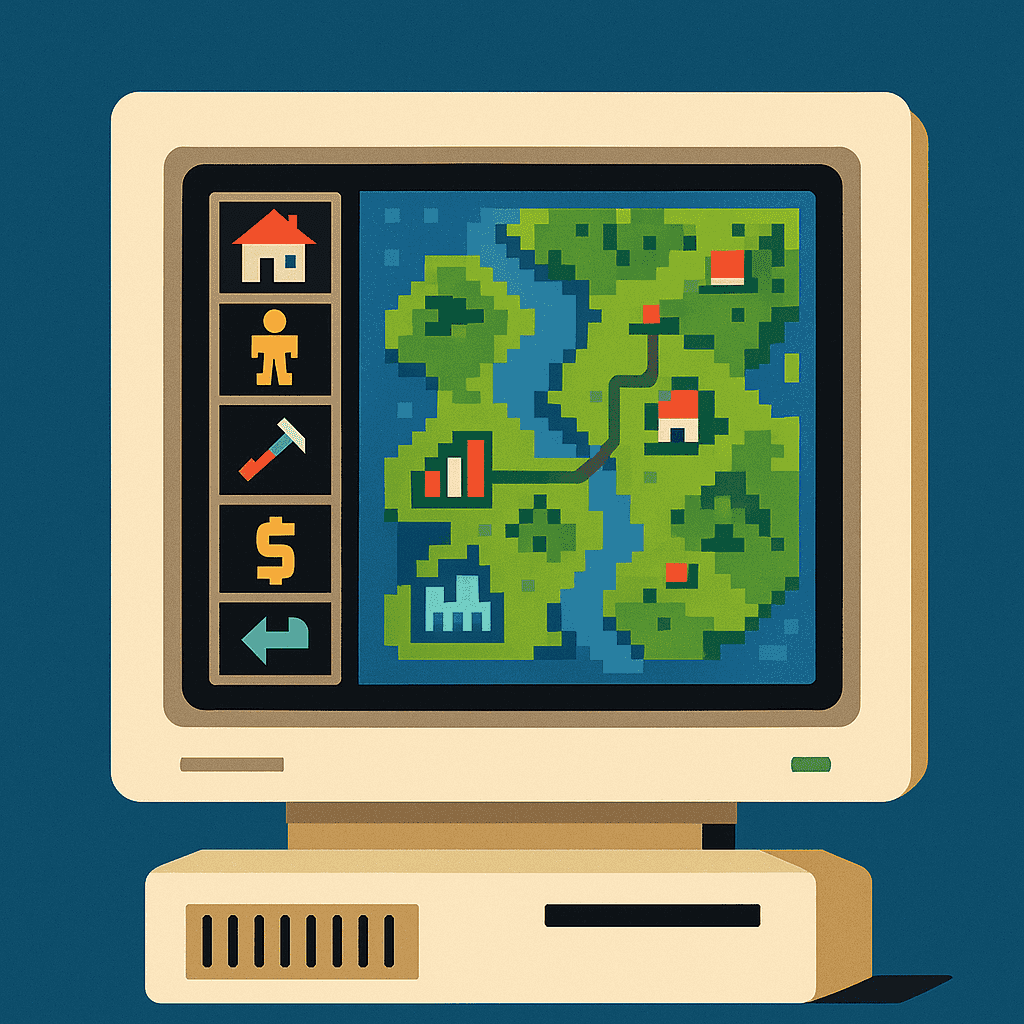
User interface (UI) and user experience (UX) are crucial to the success of any game. Long before slick touchscreens and VR headsets, DOS games laid the groundwork for what we now consider standard in gaming design. From intuitive menus to immersive environments, these classic titles provide a rich study in how early developers navigated the constraints of their era to create engaging experiences.
The Intuitive Brilliance of A-Train’s Management Interface
A-Train is a stellar example of how DOS games tackled UI/UX design challenges. Developed by Artdink Corporation in 1992, this railway management game offered players a remarkably intuitive interface for its time. The game provided clear visual feedback and an organized display of financial statistics, allowing players to focus on strategic planning rather than being bogged down by cumbersome controls. The seamless integration of city-building elements with transport management showcased a UI that was both functional and immersive, inspiring future titles in the simulation and strategy genres.
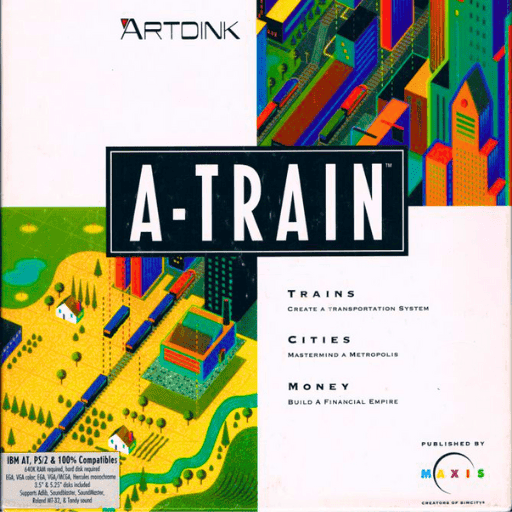
A-Train
Clue: Master Detective and Its Engaging Puzzle Interface
Released in 1989 by Leisure Genius, Clue: Master Detective provided players with a clean and engaging interface that facilitated an immersive mystery-solving experience. The game’s design leaned heavily on visual cues and clear pathways, ensuring players could navigate complex puzzles without feeling lost. Its clever layout and strategic depth proved how a well-crafted interface could elevate gameplay, leaving a lasting impact on puzzle and adventure games alike.
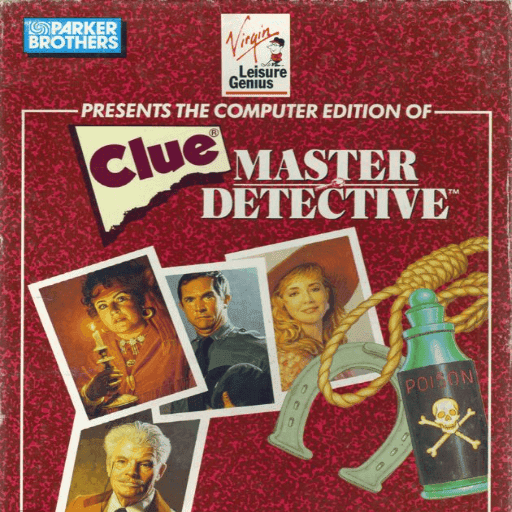
Clue: Master Detective
The UI Lessons from Transport Tycoon’s Complex Simulation
Chris Sawyer’s Transport Tycoon, released in 1994, is another example where UI design played a critical role in player experience. The game was a masterclass in presenting complex data in an accessible manner. Players could effortlessly manage sprawling transport networks through an interface that was both dense with information and surprisingly user-friendly. The balance between data and usability set a standard for future simulation games, emphasizing the importance of efficient UI design in strategy genres.
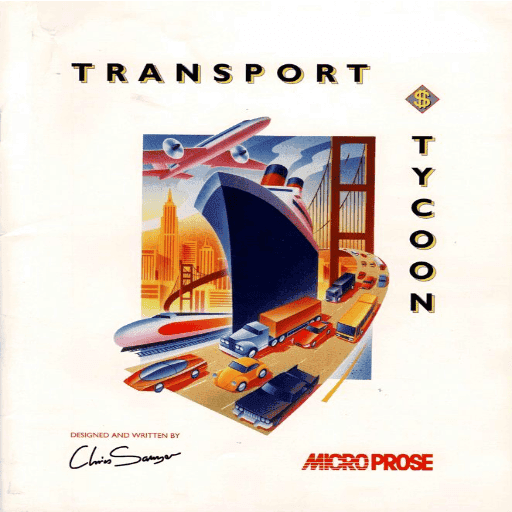
Transport Tycoon

The Missteps of Ports of Call’s Navigation Challenges
Not all DOS games struck the right balance. Ports of Call, despite its engaging premise, struggled with a UI that often left players confused. Released in 1992, this maritime business simulation faced criticism for its awkward navigation and unclear visual cues, which hindered the player’s ability to efficiently manage tasks. The lessons here emphasize the critical need for intuitive design, where user navigation should flow naturally, guiding the player without requiring a manual for every step.

Ports of Call
How DOS Game Interfaces Influence Modern UI/UX Design
The influence of early DOS game interfaces is evident in today’s gaming industry. As modern developers strive for seamless integration of complex systems, they often look back at these classic examples for inspiration. The lessons learned from successful designs like those in A-Train and missteps in games like Ports of Call highlight the timeless principles of simplicity, clarity, and player guidance. These principles continue to inform the development of intuitive, engaging gaming experiences across all platforms.
Reflecting on the UI/UX designs of classic DOS games reveals a fascinating landscape of innovation and experimentation. Developers today can draw valuable lessons from both the successes and failures of these early titles. As we continue to push the boundaries of gaming technology, remembering the foundational principles established in these pioneering games can inspire and guide the creation of the next wave of immersive and accessible gaming experiences.
Related articles
How Sound Revolutionized DOS Gaming: From Beeps to Immersive Worlds
Explore the evolution of sound technology in DOS games and how it transformed the gaming experience, from the PC Speaker to Sound Blaster.
Duke Nukem: The Antihero Who Defined 90s Gaming
Explore Duke Nukem's evolution and lasting impact on gaming culture as a quintessential 90s action hero.