Revenge of Defender and the Arcade Rush That Never Ages
Published by Epyx during the late-1980s wave of home-computer action hits, Revenge of Defender arrives with a mission that’s instantly readable: keep your colonies alive while alien forces pour in with relentless intent. It’s a game built around momentum. The screen pulls you forward, the threats pressure you sideways, and every second invites a quick decision—chase the kidnappers, clear the lane, or reposition to stop the next swoop. That clarity is exactly why the experience stays fresh: you’re never grinding for complexity, you’re chasing mastery.
There’s also a fascinating layer of identity to this release. In various regions it’s connected to the title StarRay, and the “Defender” wording signals a deliberate nod to the arcade tradition of high-speed rescue shooters. You can feel that lineage in the way the game encourages you to patrol wide stretches of space, react to alarms, and treat civilians as more than background decoration. They’re the reason you move, the reason you risk a dive into danger, and the reason a “good enough” run still feels unfinished.
Layered Skies, Alien Patterns, and the Joy of the Chase in Revenge of Defender
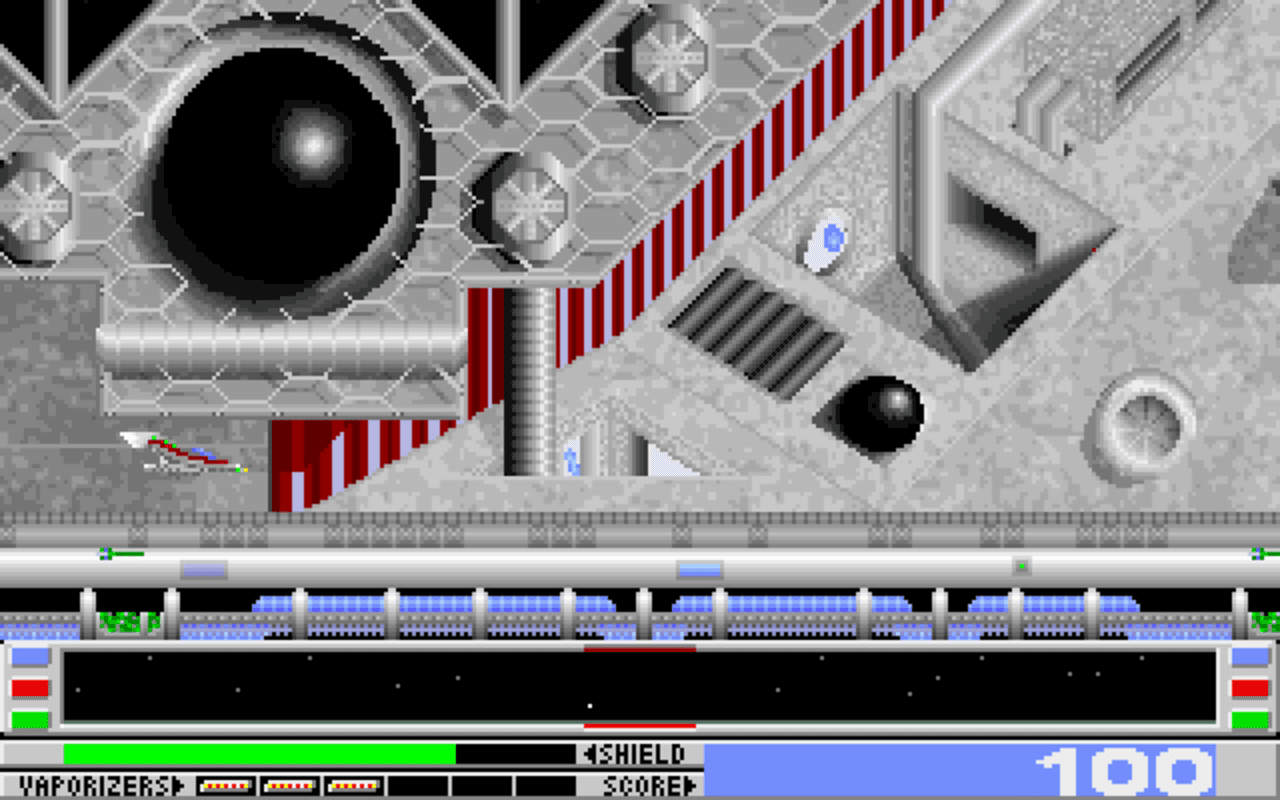
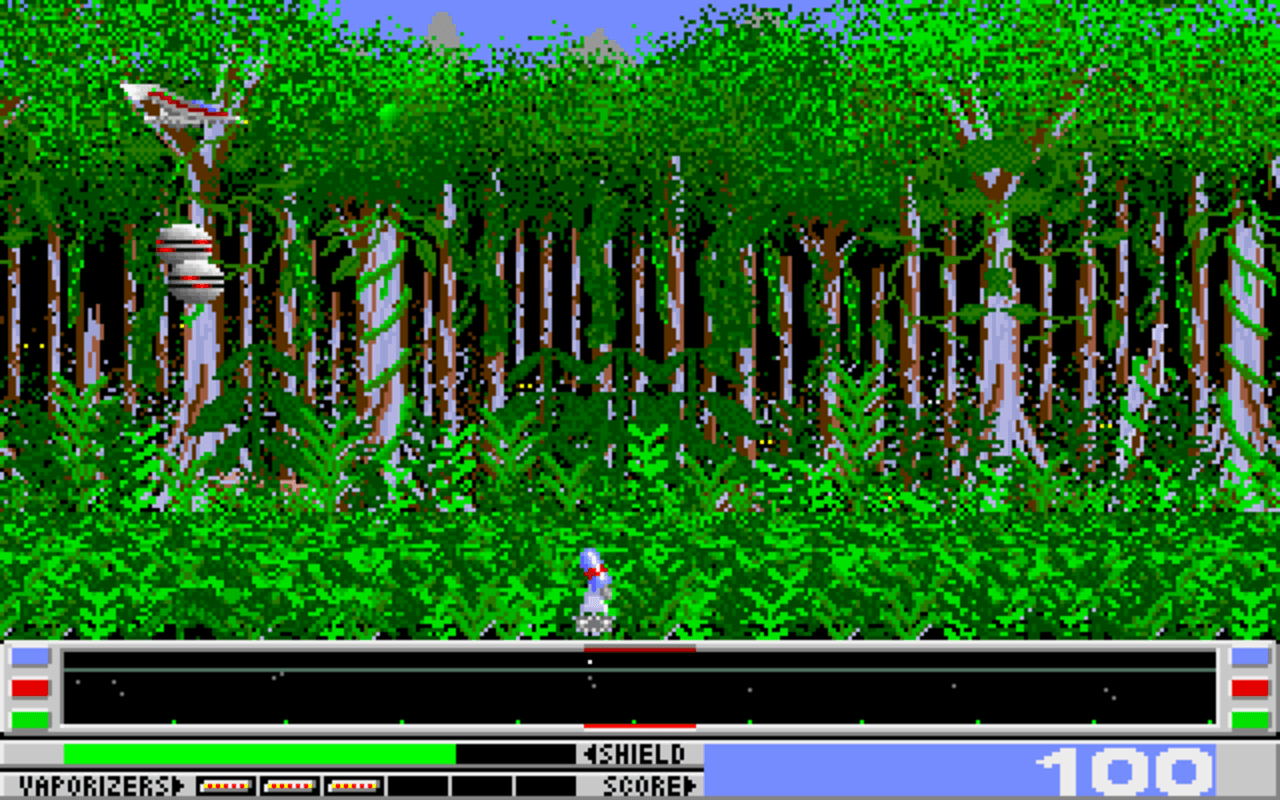
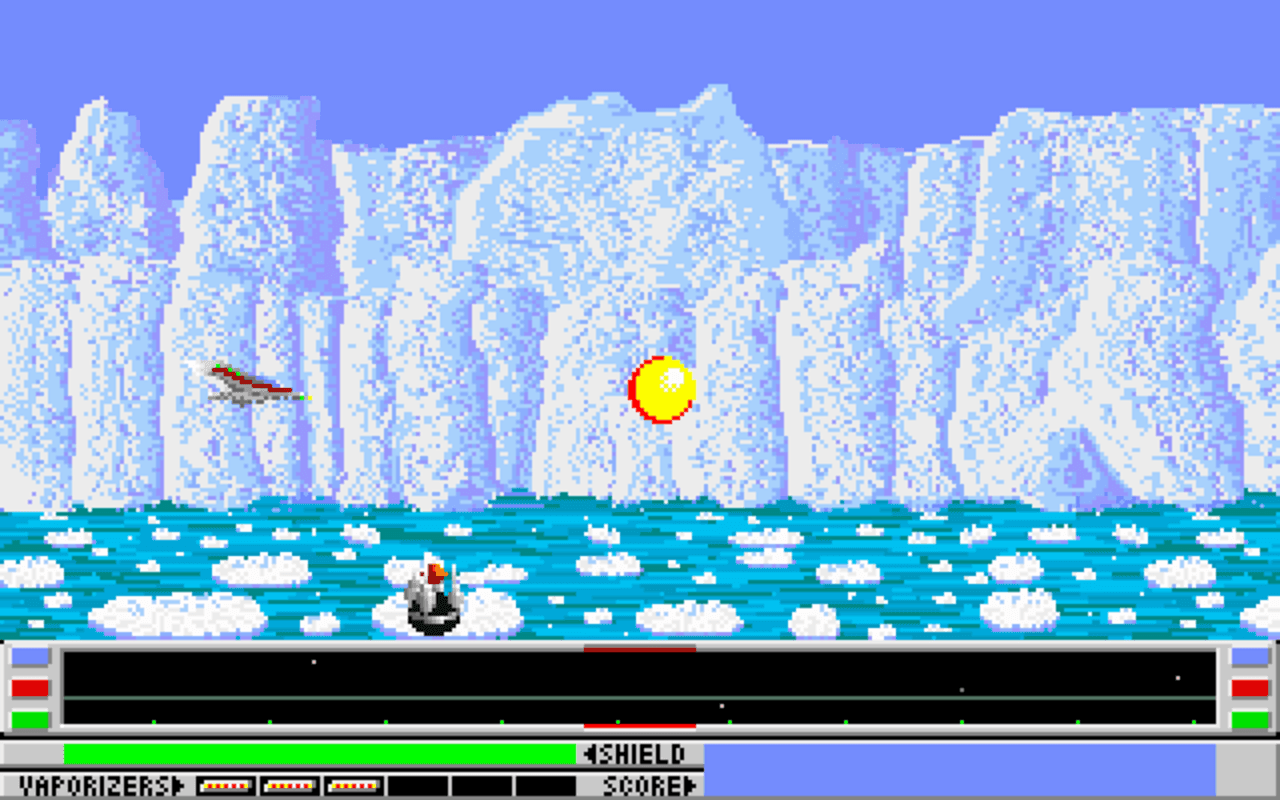
What makes Revenge of Defender especially memorable is how it paints urgency with a handful of strong ingredients. The scrolling layers create depth, giving each zone a sense of place even when the action becomes a blur of incoming shapes. Enemies aren’t just targets; they’re patterns. Some punish reckless pursuit, others bait you into drifting too far from your colonies, and the best moments happen when you thread the needle—cutting off a kidnapper at the edge of the screen, then snapping back to stop the next raid before it starts.
Across its sequence of stages, the game keeps the spirit of arcade escalation: new scenery, remixed threats, and a rising demand for clean movement. It’s the kind of action game where you gradually learn invisible rules. You start by reacting, then you begin predicting. Soon you’re not merely surviving waves—you’re shaping the battlefield, deciding where the fight happens, and turning “panic fire” into purposeful control.
Revenge of Defender also understands that rescue mechanics change how shooting feels. Blasting everything on sight is tempting, but it’s rarely optimal. The real skill is tempo: knowing when to hunt aggressively and when to guard patiently, when to commit to a risky intercept, and when to pull back because your colonies are about to be hit from the other side. That push-and-pull creates stories without needing long cutscenes. A single close save can feel like a whole narrative beat: loss narrowly avoided, control regained, and the next threat already arriving.
Play Revenge of Defender online for Classic Action
One of the best ways to appreciate this game’s crisp, immediate design is to play Revenge of Defender online free, in a browser, whenever you want. The straightforward arcade structure fits modern sessions perfectly: jump in, chase a better run, and enjoy the rhythm of rescue-and-retaliation without needing a long setup. It also translates well to mobile devices, where quick restarts and short bursts of action suit the game’s punchy pacing, letting you play online without restrictions and still get the full arcade-style thrill.
Because the rules are so readable, playing in a browser doesn’t dilute the experience—it highlights what the developers built so well in the first place: instant stakes, clean feedback, and a constant sense that you could do just a little better if you stay calm under pressure. Whether you’re chasing high scores, practicing smoother patrol routes, or simply enjoying the vintage sci-fi atmosphere, Revenge of Defender remains the kind of game that respects your time while demanding your attention.
Why Revenge of Defender Still Rewards Skillful Play
Revenge of Defender endures because it’s honest about what it wants from you. It doesn’t hide the goal behind busywork; it asks for awareness, aiming discipline, and a willingness to make fast choices. The satisfaction comes from improvement you can feel. Your first sessions are about staying afloat. Later, you start controlling space—keeping enemies from forming messy clusters, intercepting kidnappers earlier, and learning when a brief retreat prevents a bigger disaster.
It’s also a great showcase of how classic action design creates tension without cruelty. When things go wrong, it’s usually because you got pulled out of position, overcommitted to a chase, or forgot that protecting people is as important as destroying threats. That’s not random punishment; it’s the game teaching you priorities. And once you understand those priorities, the flow becomes wonderfully addictive: patrol, react, rescue, reset, repeat—each loop cleaner than the last.
Revenge of Defender stands as a confident slice of arcade tradition with a home-computer personality: vivid scrolling, readable objectives, and a rescue mechanic that gives every burst of action a purpose beyond simple destruction. If you enjoy shooters that feel like a test of nerve as much as aim, this game remains a satisfying, replay-friendly challenge.
Revenge of Defender is a brisk, colony-saving shooter that turns movement into strategy and rescue into the heart of the action. For controls, you typically steer your ship with directional inputs (keyboard arrows or a joystick) and use a primary fire button to shoot, focusing on quick turns, precise intercepts, and constant repositioning to keep colonies safe.
All used codes are publicly available, and the game belongs to its original authors.