Three Kingdoms Legend Meets Arcade Energy in Sango Fighter
Sango Fighter is a DOS fighting game developed and originally published by Taiwan’s Panda Entertainment Technology, and it stands out by rooting its action in the Three Kingdoms setting rather than a generic tournament world. The result is a brawler where history becomes personality: warriors aren’t just move sets, they’re rival icons with reputations to defend. Even if you only recognize the era from other games or classic stories, the theme lands immediately because the fighters look, pose, and attack like they belong to a mythic past.
At the same time, it’s unmistakably an arcade-inspired game. The side-view perspective, round-based structure, and emphasis on special moves echo the giants that defined the genre, and it has long been noted for feeling surprisingly close to that arcade punch on PC hardware. If you’ve ever wished your DOS library had more games that capture the swagger of a cabinet fighter, Sango Fighter was built for that exact craving.
A Roster Built for Rivalries, Not Just Variety
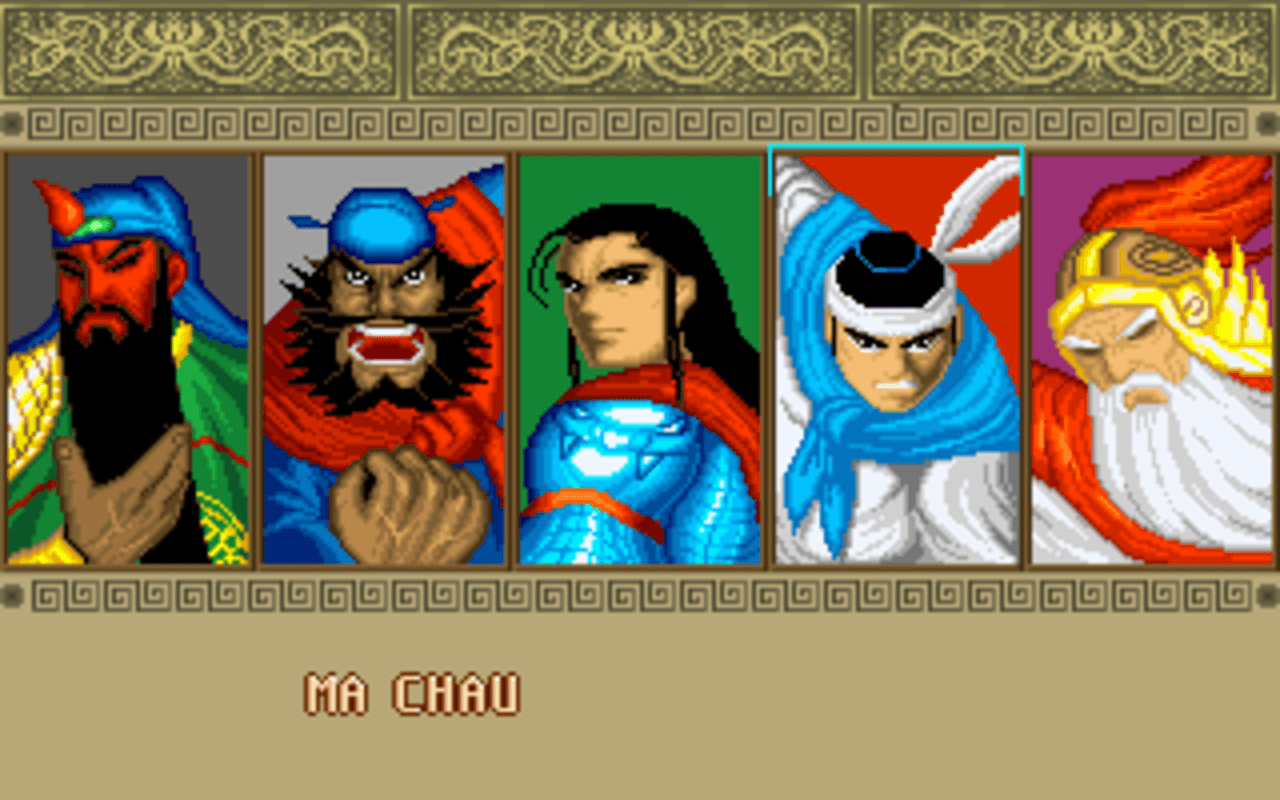
A fighting game becomes memorable when characters feel distinct in motion, and Sango Fighter does that with clear roles you can read in seconds. Some warriors are about power and intimidation, controlling space with slower but heavier threats. Others thrive on speed, testing reactions with quick strikes and sudden entries. There are also steadier all-rounders that reward calm play, letting you switch between pressure and defense depending on what the opponent shows you.
Because the cast draws from famous legends, matchups gain extra flavor. A duel doesn’t feel like “fast character versus heavy character” so much as “two reputations colliding,” and that framing makes rematches feel meaningful. You start noticing small habits—how a certain fighter likes to approach, how another relies on a particular special—and the game’s personality grows the more you play. The roster isn’t just there to pad out options; it’s there to spark grudges, comebacks, and that irresistible urge to run it back after a close round.
Timing, Spacing, and the Classic DOS Fighting Rhythm
Sango Fighter rewards the simple skills that never go out of style: spacing, patience, and well-timed commitment. At mid-range, you’re constantly negotiating distance—standing where your best move reaches while theirs barely misses, baiting an attack, then punishing the recovery. Up close, the pace tightens into quick decisions: keep pressure and risk a counter, or reset to safer ground and force the opponent to take the next risk.
The game’s rhythm is brisk and readable, which makes it friendly to newcomers. You can have fun immediately by trading hits and discovering flashy techniques. But it also has enough structure to reward learning. When you begin to recognize which attacks are safer, when to block instead of swinging back, and how to convert an opening into reliable damage, the game clicks into that satisfying loop where improvement is obvious and motivating. It’s the same reason genre classics remain replayable: the real excitement comes from outthinking someone in real time, not from memorizing a long checklist.
Atmosphere That Frames the Duel Without Getting in the Way
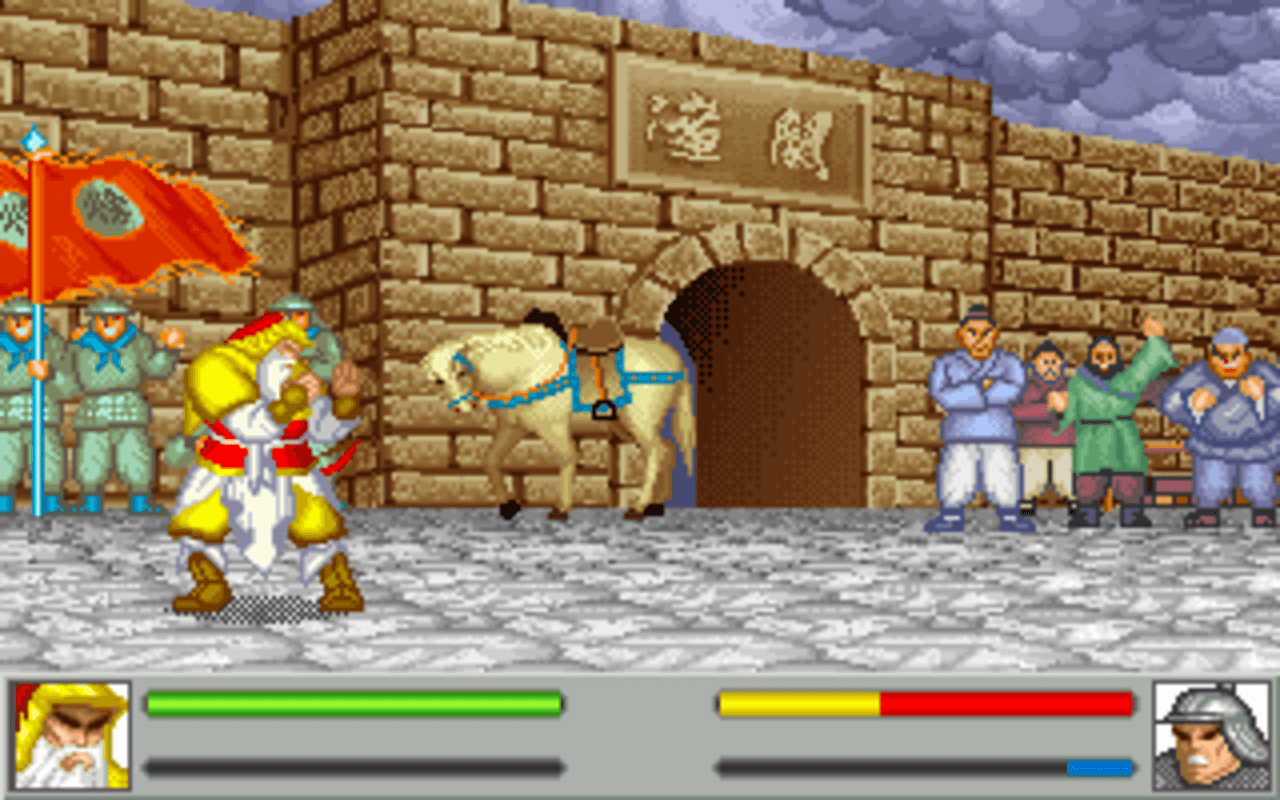
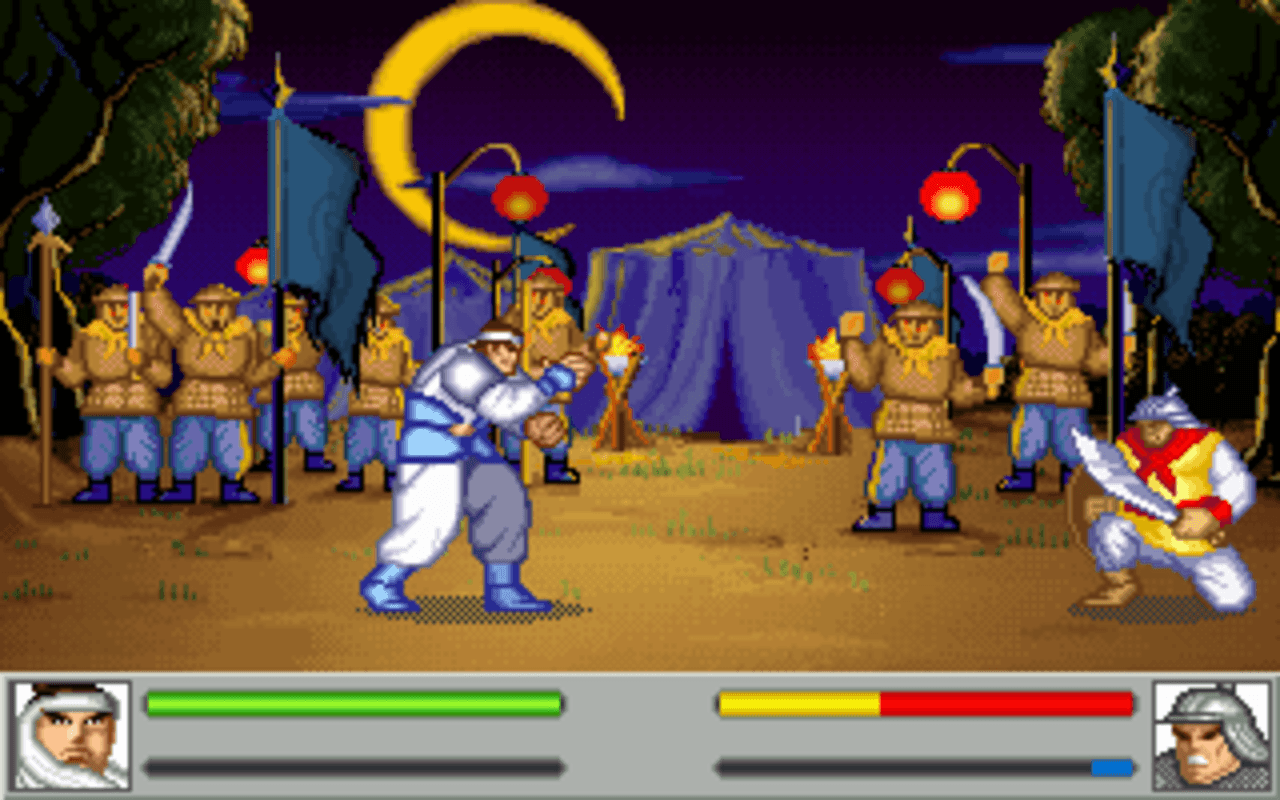
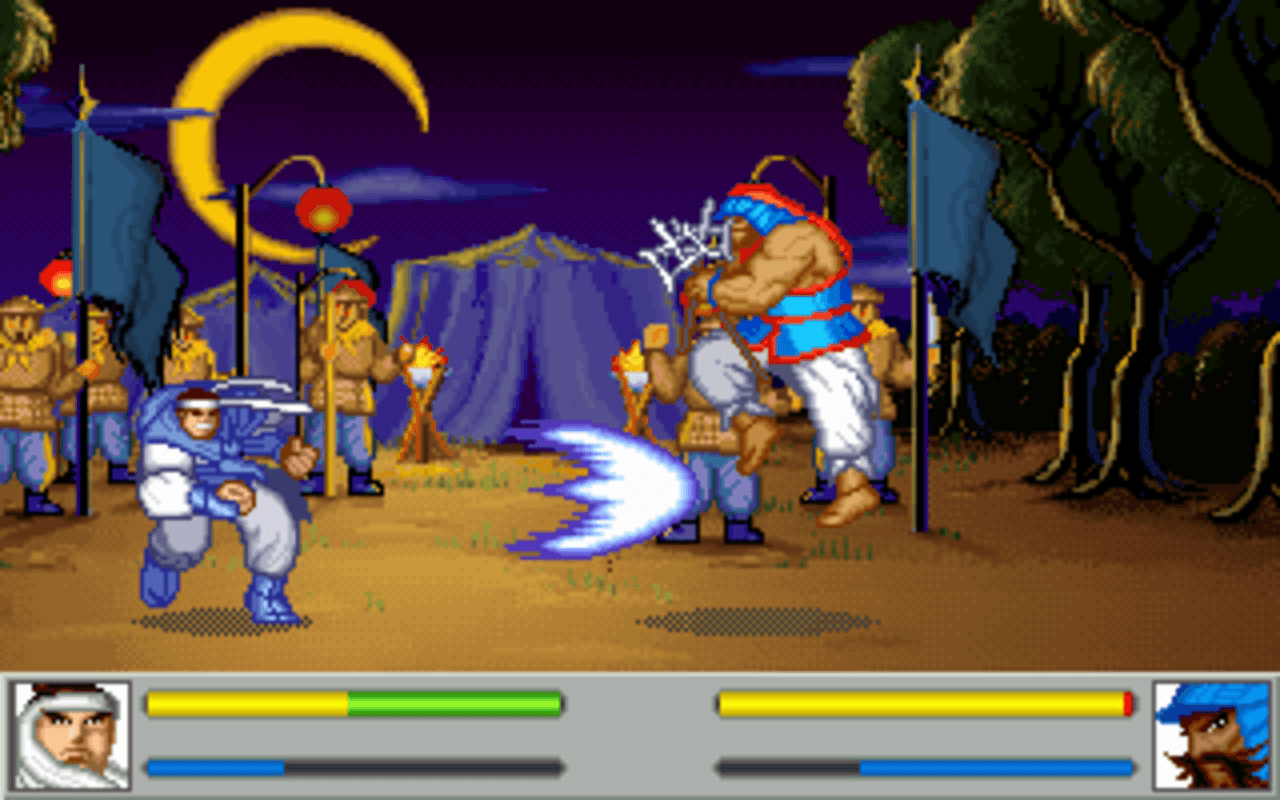
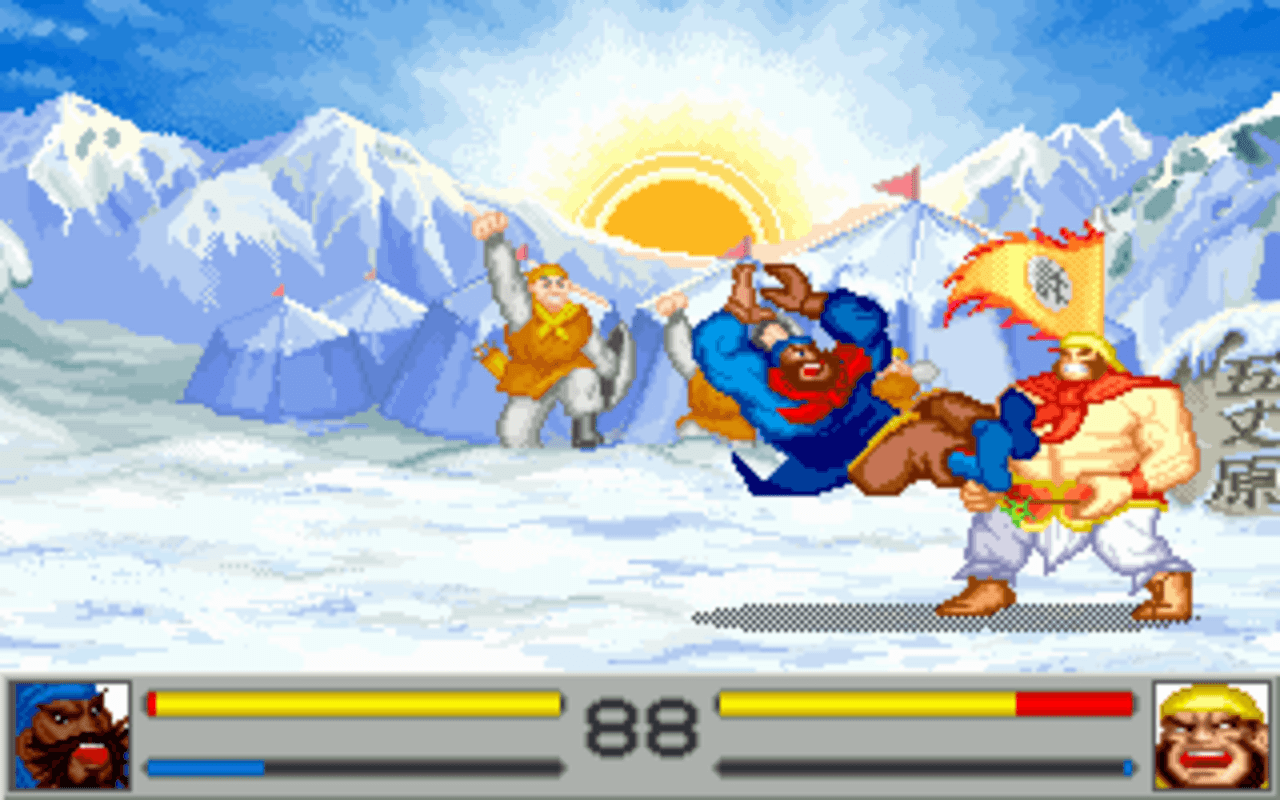
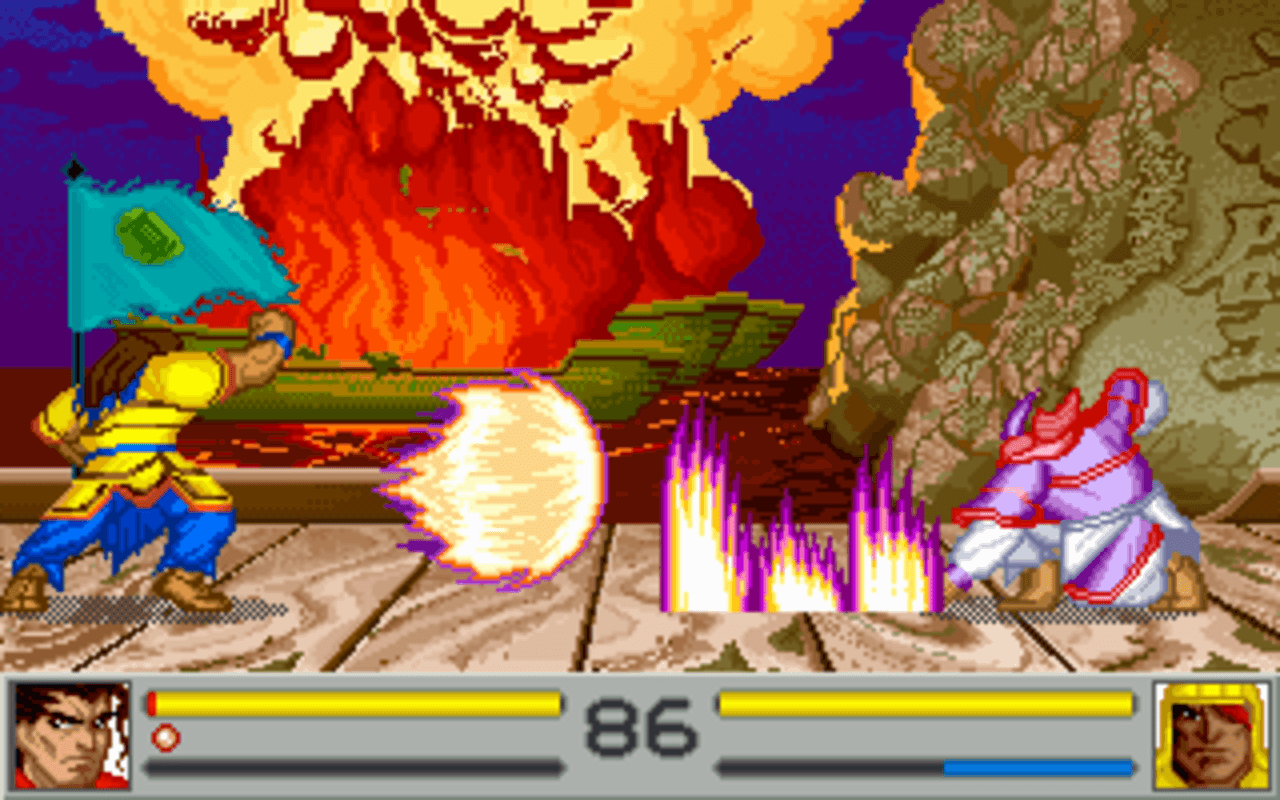
Visually, Sango Fighter leans into expressive sprites and dramatic poses that communicate intent clearly. You can often tell what’s coming by how a fighter shifts stance or winds up, which is exactly what you want in a competitive action game. Backgrounds aim for a stylized historical vibe—evoking forts, courts, and battlefront energy—while keeping the screen readable so the duel stays the star.
Sound helps sell impact. Hits feel punchy, special moves feel announced, and the music pushes momentum forward so each round feels like an event rather than a slow grind. Taken together, the presentation creates a “PC arcade” atmosphere: bold, energetic, and perfect for repeated bouts. The overall style is frequently compared to famous arcade fighters, but the Three Kingdoms theme gives it a different kind of drama—less neon tournament, more legendary showdown.
Play Sango Fighter online and keep the rivalry alive
One reason Sango Fighter remains easy to revisit is how naturally it fits modern play habits. You can play Sango Fighter online for free in a browser, jump into a match quickly, and enjoy the complete fighting-game loop without restrictions. It also translates well to many mobile devices, making it easy to play wherever you have a moment for a quick duel.
That convenience highlights what the game has always done well: compact intensity. A single match can be a satisfying burst of action; a short session can turn into a mini training arc as you adapt, counter, and refine your approach. Because rounds are brisk, the game encourages the best kind of learning—repetition with purpose. You lose, you adjust, you try again, and suddenly a matchup that felt impossible becomes manageable because you started recognizing patterns instead of panicking.
Why Sango Fighter Still Feels Worth Playing
Some retro fighters are remembered mainly as stepping stones, but Sango Fighter has staying power because it respects fundamentals and adds a theme that’s genuinely distinctive. Blocking matters. Range matters. Predictability gets punished. Those truths are timeless, and they’re the reason the game can still feel lively long after its original era. On top of that, the Three Kingdoms angle keeps the roster from blurring together, because each warrior carries a recognizable identity that shows up in animation, posture, and overall vibe.
In the end, Sango Fighter is both a piece of DOS history and a surprisingly engaging fighting game on its own terms: a confident, arcade-flavored duel where legends trade blows and smart decisions win rounds. To control the game, use the keyboard for movement and attacks, hold back to block, and practice directional inputs with attack buttons to trigger special moves consistently.
All used codes are publicly available, and Sango Fighter belongs to its original authors.