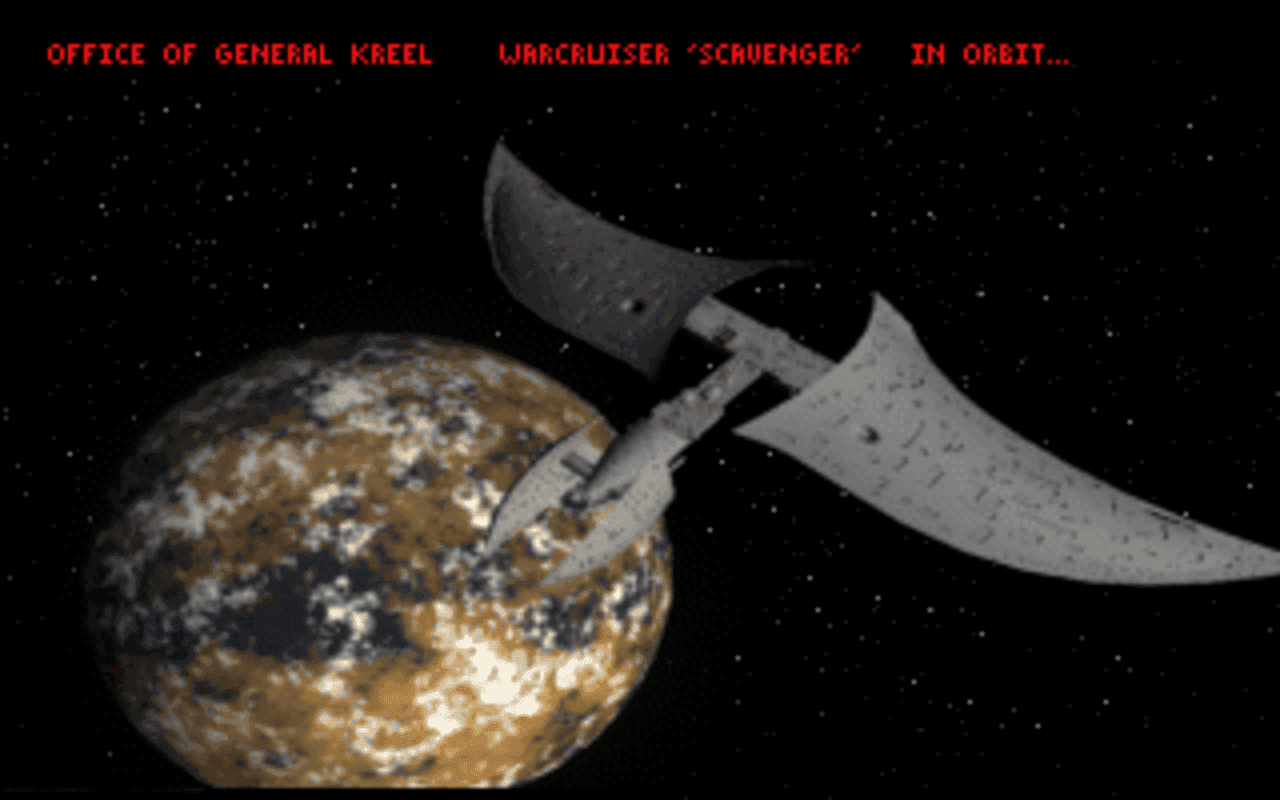
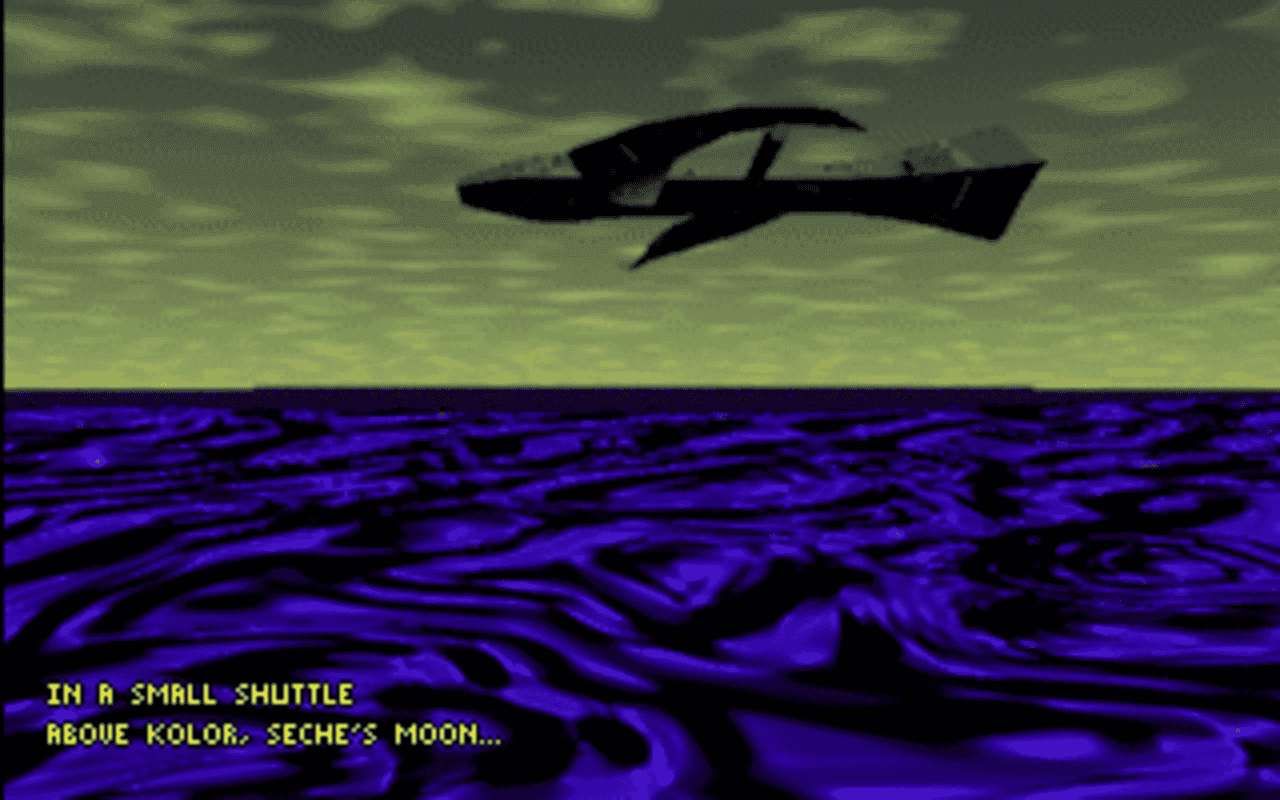
What immediately stands out about this game is how strongly it leans into narrative for a shooter. Before and after each mission, you are treated to extensive story sequences that feel closer to an illustrated novel than a typical arcade intro. Dialogues are sharp, often confrontational, and explore themes of grief, revenge, cloning, and mind control, all woven into a long-form sci-fi plot that stretches across three episodes and sixty missions. For a DOS action game, that density of writing is unusual and gives Traffic Department 2192 a distinctive identity.
The setting mixes neon-lit military hardware with grimy future-city streets, creating a world that feels dangerous and unstable. Velasquez herself is not a sanitized hero; she is angry, traumatized, and frequently abrasive, which adds bite to the cutscenes and makes the universe feel more lived-in. The result is a shooter that not only lets you blast enemies, but also invites you to care about who those enemies are and what they have done.
Weapons, missions and hectic arcade action in Traffic Department 2192
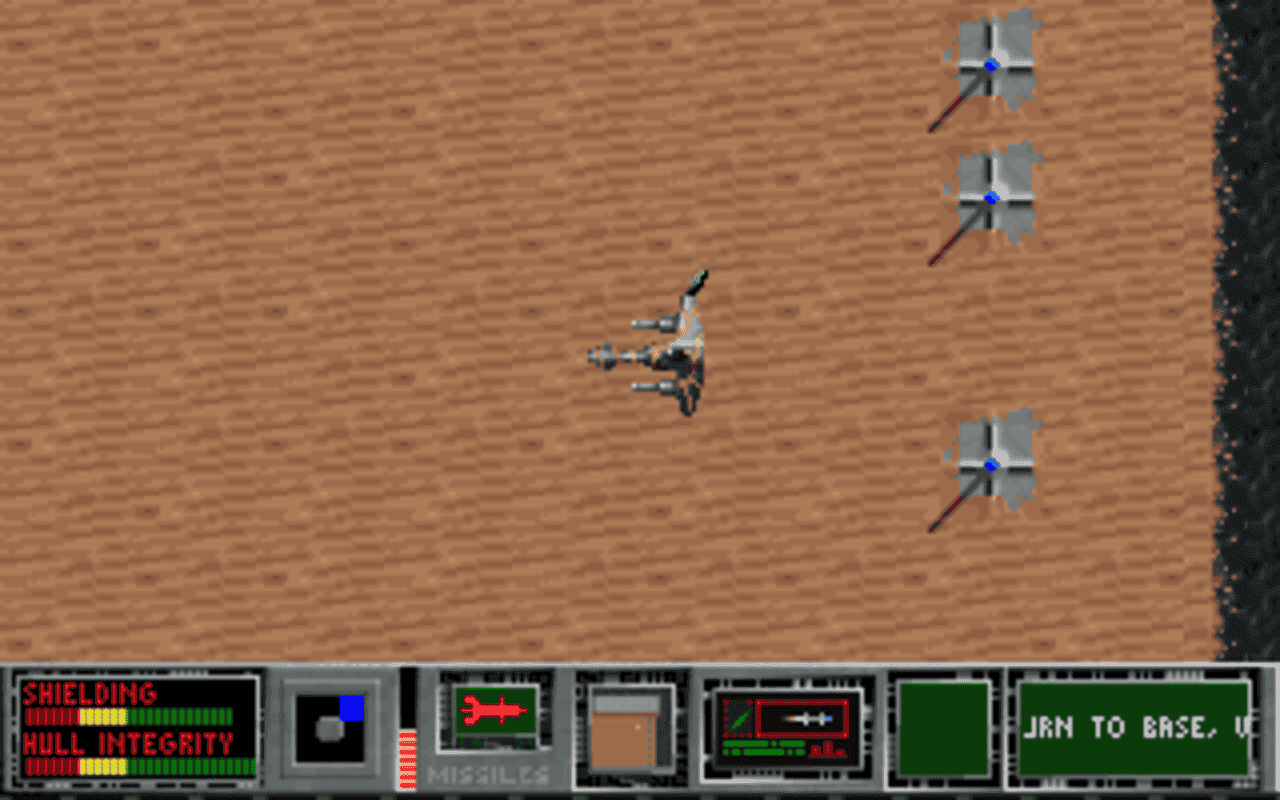
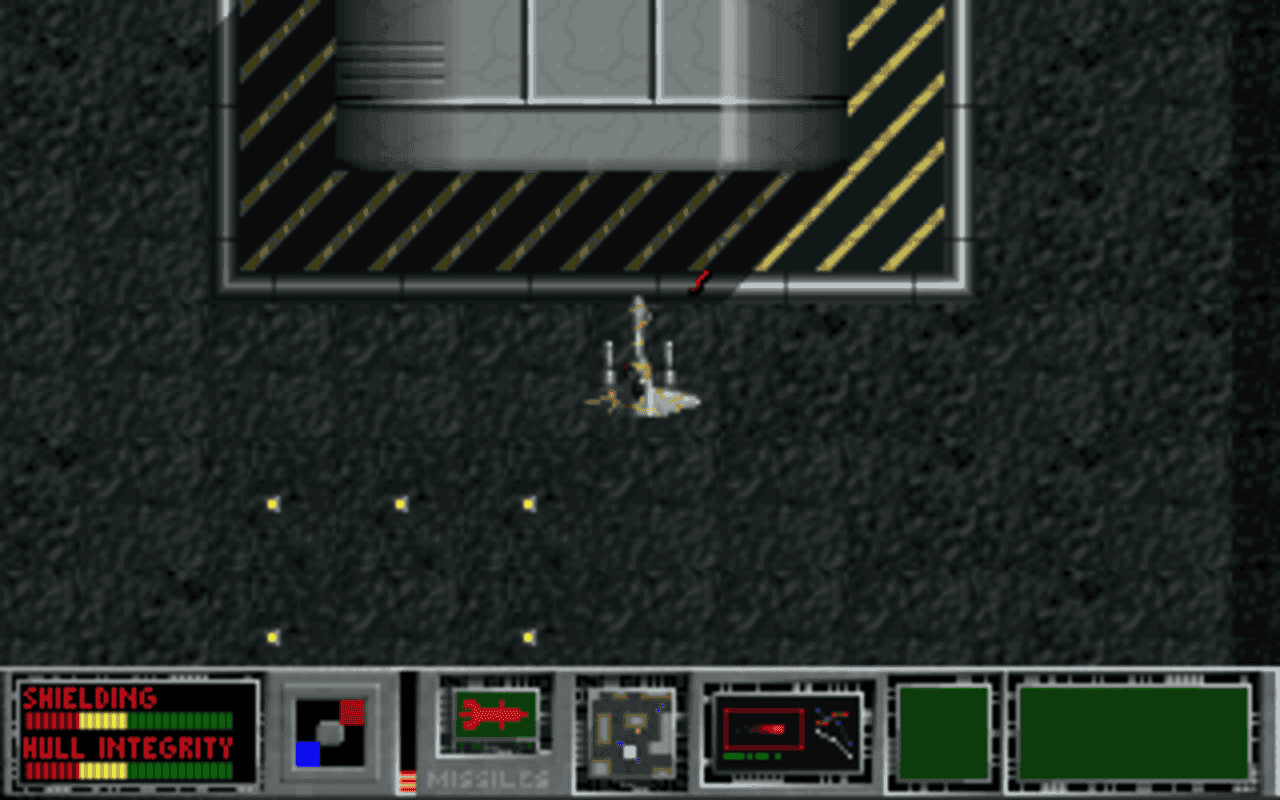
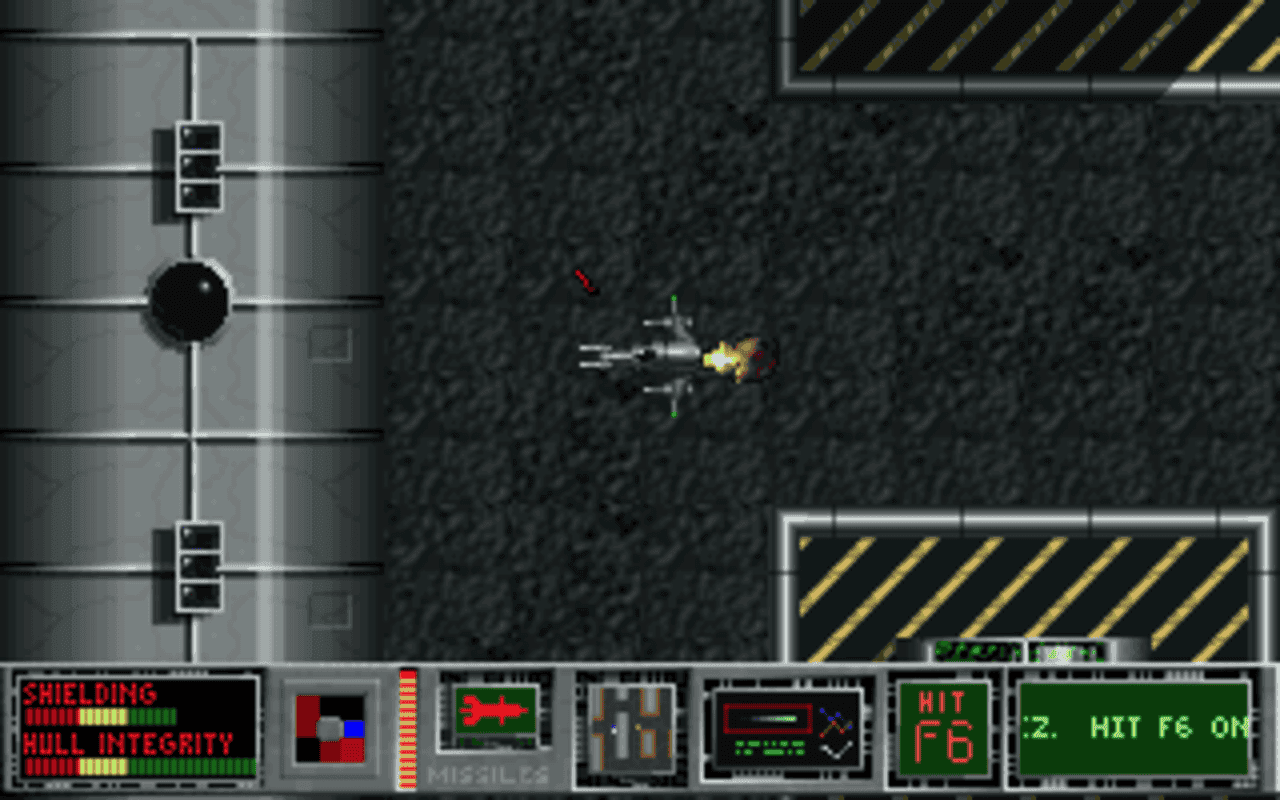
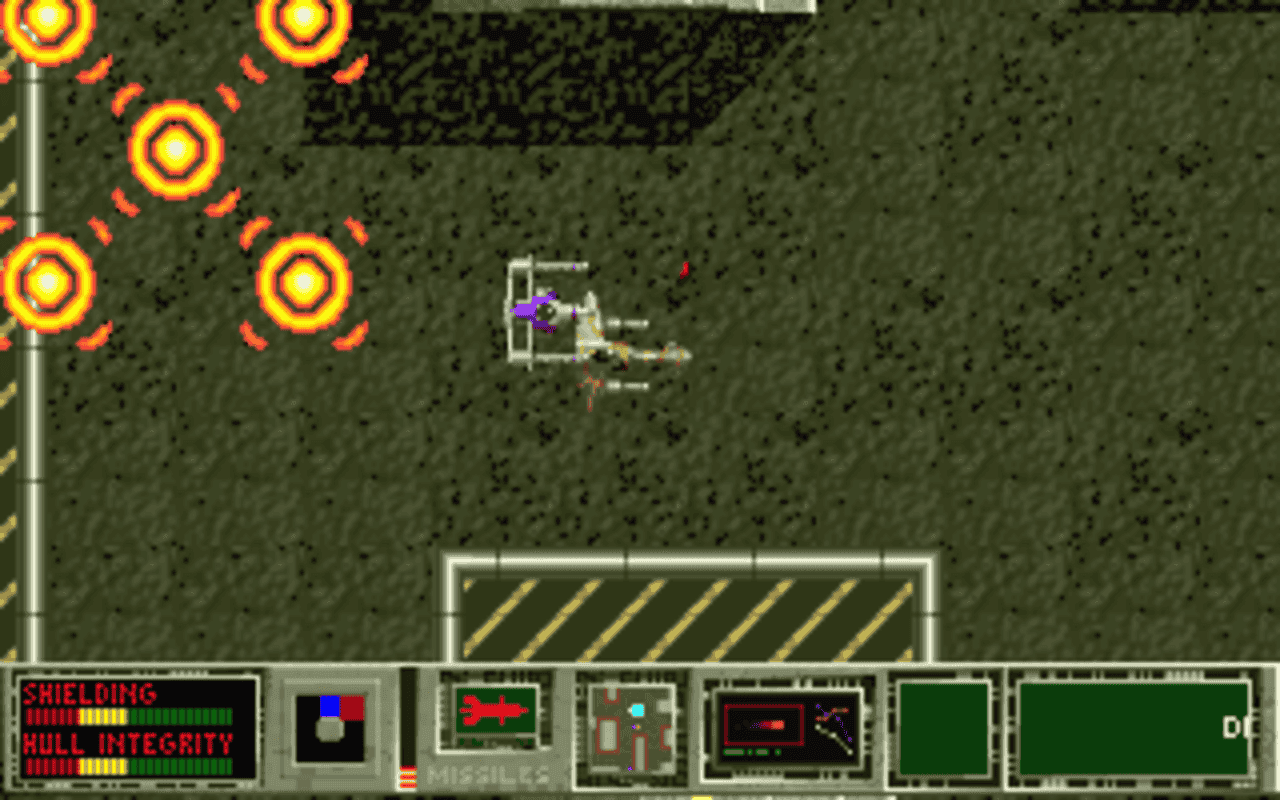
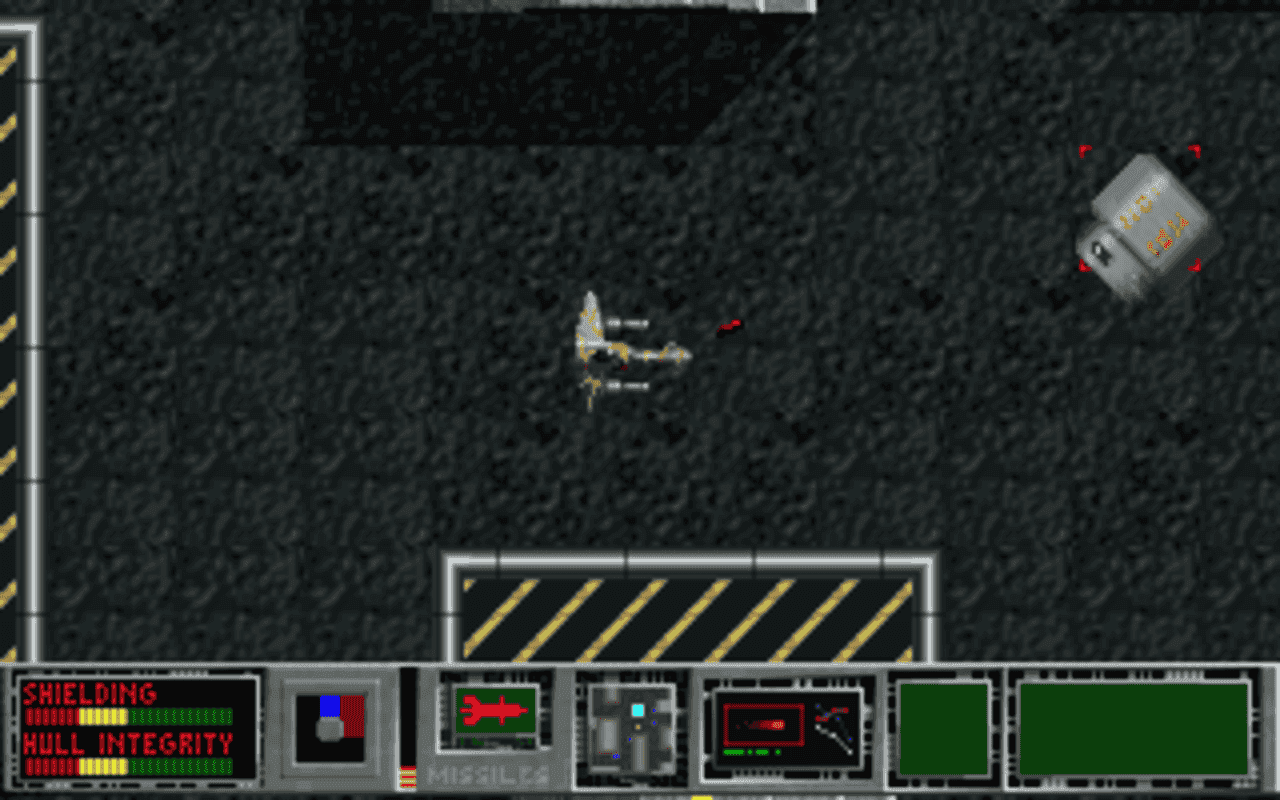
Beneath its story-heavy presentation, Traffic Department 2192 is fundamentally a pure arcade action game. Each mission places your hoverskid into a top-down map full of hostile vehicles, static defenses, and environmental hazards. Objectives range from straightforward search-and-destroy sorties to escort duties, infiltration-style runs, or tense extractions, but almost all of them revolve around surviving waves of enemy fire while navigating tight city corridors.
Your hoverskid slides and drifts in a way that feels weighty but responsive, giving combat a frenetic rhythm as you weave between buildings, make tight turns in narrow alleys, and strafe enemy convoys. The game uses a combination of primary weapons and special armaments, encouraging you to balance constant shooting with bursts of heavier firepower when the situation demands it. Even on easier configurations, it quickly becomes clear that this is not a relaxed shooter; enemies spawn aggressively, and stray collisions with obstacles or crossfire can cut a mission short.
Mission variety keeps the pace fresh. One mission might ask you to hold off an assault on a key installation, forcing you to cycle around a defensive perimeter and intercept incoming attackers. Another might send you deep into enemy territory, where the map is unknown and the safest route is discovered only through exploration and instinct. Mixed into this are story-critical missions where the stakes are explained in lengthy briefings, raising the tension even before your hoverskid launches.
Traffic Department 2192 also rewards situational awareness. Because it is a multidirectional shooter rather than a simple vertical scroller, threats can come from any angle. Reading the radar, learning common enemy patterns, and anticipating where reinforcements will appear are crucial skills. Players who enjoy mastering demanding arcade systems will find plenty to chew on here.
Play Traffic Department 2192 online
For many players, the most convenient way to enjoy this classic today is to play Traffic Department 2192 online through browser-based emulation. Thanks to its DOS roots and modest hardware requirements, the game adapts very well to modern environments where the original hardware is no longer common. Without needing anything more than an emulator in a browser, you can jump straight into the action and experience the full three-episode campaign.
Because the complete game has been released as freeware by its creators, Traffic Department 2192 can be legally played at no cost in many digital forms, including browser-based versions. That means you can explore the full storyline, experiment with different approaches to missions, and replay favorite levels as often as you like without any restrictions on content. The shareware limitations that once gated later episodes are no longer an issue in modern freeware distributions, making the entire experience accessible from the start.
One of the quiet strengths of this game when played online is how naturally it fits short or long sessions. You can drop in for a single quick mission, enjoying a burst of top-down combat on a phone, tablet, or desktop browser, or settle in for a longer play session focusing on the story sequences. Since each mission is self-contained, Traffic Department 2192 feels at home on mobile devices as well, where a few intense minutes of play can still feel meaningful. When you play Traffic Department 2192 online, you’re essentially stepping straight into a preserved slice of DOS action history, translated to the modern web without losing its identity.
Story, characters and atmosphere that define the game
While the combat is satisfying, the reason many players remember Traffic Department 2192 so clearly is its writing. The script, penned by Christopher Perkins, is extensive by any standard, reportedly reaching novel length across all missions. Each briefing and debriefing fleshes out the relationship between Velasquez and her colleagues, superiors, and enemies, revealing layers of loyalty, betrayal, and shifting alliances.
Velasquez herself is central to the game’s personality. She is blunt, impatient, and often profane, which sets her apart from the more generic protagonists of many shooters from the same era. She argues with her commanding officers, insults her foes, and comments bitterly on the situation around her. Underneath the anger is the trauma of watching her father’s death at the hands of the Vultures, a formative event that the game revisits in both dialogue and mission context.
The supporting cast adds texture to the world: fellow pilots who rib and support her, enigmatic figures with hidden agendas, and antagonists whose motives go beyond simple villainy. The overarching plot touches on cloning, cybernetic experimentation, and mind control, giving the world a slightly unsettling, cyberpunk-adjacent tone. Even if you arrive primarily for the shooting, the story has a way of hooking you and encouraging you to see each episode through to its conclusion.
Atmospherically, the game leans on moody music tracks, industrial sound effects, and static but evocative background art in cutscenes. The soundtrack, composed primarily by Robert A. Allen with contributions from John and Michael Pallett-Plowright, blends driving rhythms with more ominous themes, supporting both frantic dogfights and tense story beats. Combined with the noisy clutter of city combat—explosions, weapon fire, and warning alarms—the result is a world that sounds as chaotic as it looks.
Lasting appeal, controls and legacy of Traffic Department 2192
Even among DOS shooters, Traffic Department 2192 occupies a fairly unique niche. Its blend of challenging multidirectional combat, heavily scripted storytelling, and strong character voice makes it more than a simple nostalgia trip. The design encourages mastery: as you become familiar with enemy patterns, map layouts, and mission objectives, you start to move through the city with confidence, turning what at first felt overwhelming into a satisfying power fantasy.
Control-wise, Traffic Department 2192 typically uses the keyboard to steer your hoverskid around the map, accelerate, brake, and fire various weapons. The feel is closer to piloting a hovering combat craft than a traditional car, with momentum and sliding playing a substantial role in how you navigate tight corners and dodge enemy shots. New players may initially bump into buildings or take stray hits, but with a little practice, the drifting movement becomes a key part of the game’s charm.
Over time, the game has developed a small but dedicated fan community that appreciates its world-building and distinctive heroine, and its status as liberated freeware ensures that new players can continue discovering it. Whether you approach it as an arcade fan craving demanding top-down action or as a story-focused player curious about a cult DOS narrative, Traffic Department 2192 remains a striking example of how much personality can be packed into a classic PC shooter.
All used codes for Traffic Department 2192 are publicly available, and the game remains the property of its original authors and rights holders.