Is EcoQuest Actually Good, or Were We Just Kids?

Like many children of the 90s, I fondly remember spending afternoons clicking away on EcoQuest: The Search for Cetus. It was a time when the vibrant, pixelated underwater world offered both a sense of wonder and a gentle nudge towards environmental consciousness. But was it just the simplicity of being a child that made EcoQuest so captivating, or does it actually stand the test of time as a good game?
EcoQuest’s Adventure and Environmental Message
Released in 1991 by Sierra On-Line, Inc., EcoQuest: The Search for Cetus drew players into the oceanic adventures of a young boy named Adam. The narrative centers around Adam’s mission to save the underwater kingdom of Eluria, working alongside a dolphin named Cetus. The game aimed to instill a sense of environmental awareness, focusing heavily on themes of conservation and the impact of pollution. It was not just a game but a narrative tool for education, wrapped in an engaging storyline.
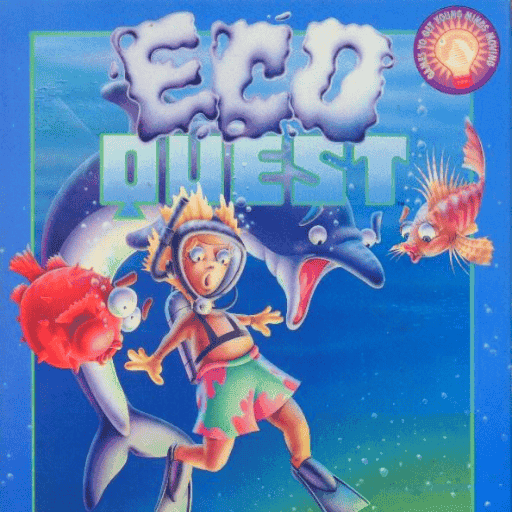
EcoQuest: The Search for Cetus
Revisiting EcoQuest’s Gameplay Mechanics
The gameplay of EcoQuest was a fusion of adventure and puzzle-solving, reminiscent of Sierra’s more famous titles like King’s Quest. Players had to interact with various underwater creatures and solve environmental puzzles. At the time, these mechanics were praised for their educational value, subtly teaching players about real-world issues through engaging play. However, revisiting these mechanics now might reveal a slower pace and simpler challenge compared to modern standards, yet there’s charm in its straightforwardness. The game was designed to be accessible to younger audiences, which might explain why it felt more immersive to a child than it might to an adult today.

Nostalgia vs. Reality: Does EcoQuest Hold Up?
For many, the memories of EcoQuest are wrapped in a haze of nostalgia. The colorful graphics, the whimsical characters, and the compelling storyline created a memorable experience. However, when revisited with a critical eye, certain elements may seem dated. The animations are simplistic, and the puzzles lack the complexity seen in current games. Yet, this simplicity is part of its charm, offering a relaxing experience that contrasts sharply with today’s fast-paced titles. This disparity between memory and reality highlights how nostalgia can often gloss over the imperfections, preserving only the feelings of joy and discovery.
EcoQuest’s Role in Educational Gaming
EcoQuest was part of a broader movement in the early 90s to create educational games that were both fun and informative. It stood alongside titles like Mario is Missing! and Where in the U.S.A. Is Carmen Sandiego?, aiming to blend entertainment with learning. Its focus on marine conservation was pioneering at the time, and it contributed to the early discourse on environmental issues in children’s media. This intentional design choice helped position EcoQuest as a meaningful educational tool, albeit one that is often remembered more for its adventurous spirit than its didactic content.
Reflecting on EcoQuest’s Legacy and Nostalgia
Reflecting on EcoQuest: The Search for Cetus, it becomes clear how nostalgia shapes our perceptions. While the game may not hold the same allure when measured against today’s standards, its legacy as a pioneering educational tool remains intact. It paved the way for future educational titles by proving that games could teach without sacrificing fun. Nostalgia may color our memories, but it also ensures that the core messages of games like EcoQuest continue to resonate, reminding us of the joy of discovery and the importance of caring for our world.
Nostalgia is a powerful lens through which we view our past experiences, often enhancing the fondness of our childhood memories. Playing EcoQuest today might reveal its dated graphics and simplistic gameplay, but its heart — the lesson of environmental stewardship — remains relevant. Whether it’s the thrill of befriending a dolphin or the satisfaction of solving a puzzle, EcoQuest stands as a testament not just to the games we played, but the lessons we learned from them.
Related articles

Doom vs. Commander Keen: Classic DOS Icons Compared
Explore the differences and similarities between Doom and Commander Keen, examining gameplay, narrative, technology, and impact.
Cannon Fodder: A Timeless Retro War Classic
Explore the iconic Cannon Fodder, a classic strategy shooter that combines comedy and tactical warfare. Learn why its unique design continues to captivate retro gaming fans.