The Mechanics of LHX: Attack Chopper: A Deep Dive into Flight Simulation

Released in 1990 by Electronic Arts Inc., LHX: Attack Chopper soared into the flight simulation scene, offering players an exhilarating experience that balanced realism with accessibility. This game placed pilots in the cockpit of the agile AH-64 Apache, the futuristic LHX prototype, and the versatile UH-60 Blackhawk, delivering missions across diverse warzones. Its blend of simulation nuance and arcade immediacy set it apart from contemporaries, establishing a legacy that has influenced flight sims for decades.
Breaking Down LHX: Attack Chopper’s Core Gameplay Mechanics
At the heart of LHX: Attack Chopper are the core gameplay mechanics that make it a standout title. Players are tasked with piloting a variety of helicopters, each with unique handling characteristics and roles in missions. The game employs a mix of keyboard and joystick controls, making it accessible yet sufficiently challenging for experienced pilots. This control scheme supports complex maneuvers, from evasive actions to precise targeting, which are crucial in both combat and rescue missions. The combination of different helicopter types and mission objectives creates a dynamic gameplay loop that keeps pilots engaged from takeoff to landing.
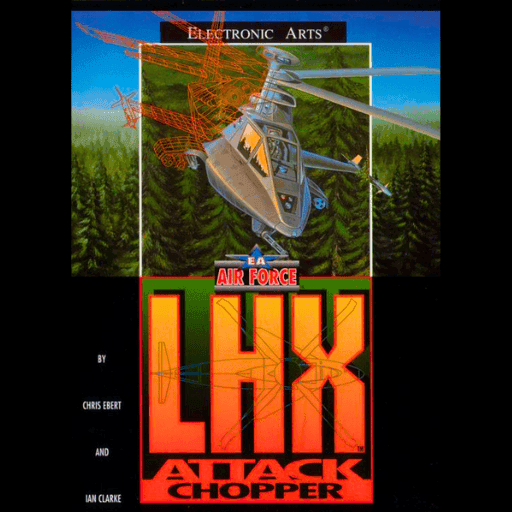
LHX: Attack Chopper
Immersive Flight Physics and Control Systems
LHX: Attack Chopper’s flight physics and control systems are particularly noteworthy. Unlike other flight simulators of its time, the game introduced a more intuitive model of helicopter aerodynamics, balancing realism with playability. Each helicopter responds to the player’s inputs with a believable sense of weight and inertia. The game’s physics engine allows for intricate maneuvers, such as strafing runs and hovering attacks, which require a deft hand at the controls. This system provided a level of immersion that set a new standard for flight simulations, as players could feel the subtle responses of their aircraft to every joystick movement.

Mission Structure: Enhancing Gameplay Immersion
The mission structure in LHX: Attack Chopper enhances the game’s immersive experience by offering a variety of objectives that challenge players to adapt their strategies. Missions range from reconnaissance and rescue to full-scale assaults on enemy positions. Each mission is set in a detailed environment, complete with dynamic weather conditions that affect visibility and performance. This variability not only increases replayability but also immerses players in the tactical decision-making process, as they must consider factors like ammunition, fuel levels, and the threat of enemy forces. The game’s ability to provide such a layered approach to mission planning and execution is a testament to its innovative design.
Innovations and Legacy of LHX: Attack Chopper
LHX: Attack Chopper introduced several technical innovations that left a lasting impact on the flight simulation genre. Its use of vector graphics allowed for smooth and detailed rendering of helicopters and landscapes, a significant advancement at the time. The game also featured a scenario editor, enabling players to create custom missions, thus extending its lifespan and community engagement. These innovations not only enhanced the player experience but also influenced the design of later flight simulators. Games like Gunship and Strike Commander borrowed elements from LHX, cementing its role as a pioneer in the genre.
Even today, LHX: Attack Chopper remains a compelling title for enthusiasts of the flight simulation genre. Its blend of realistic physics, varied mission structures, and innovative gameplay mechanics make it a timeless classic. Whether you’re a seasoned pilot or a newcomer, revisiting this game offers a thrilling glimpse into the evolution of flight sims. As modern technology continues to advance, the foundational elements of LHX still resonate, reminding players of the ingenuity that sparked a generation of virtual aviators.
Related articles
How to Play DOOM (DOS) | A Complete Beginners Guide
The original DOOM series has been increasing in popularity ever since. However, in 2025, people are struggling to understand how classic games worked, and that’s why, here’s the perfect DOOM beginner’s guide so that you can thrive.
Level Design Mastery in Darklands: A Journey Through Medieval Germany
Explore the intricate level design of Darklands, a DOS RPG that masterfully combines exploration, pacing, and storytelling.