A TV Mishap That Warps Your Whole Life in Altered Destiny
Accolade released Altered Destiny during the era when DOS adventure games loved to blend illustrated scenes with typed commands, and it proudly embraces that tradition while pushing its own surreal tone.
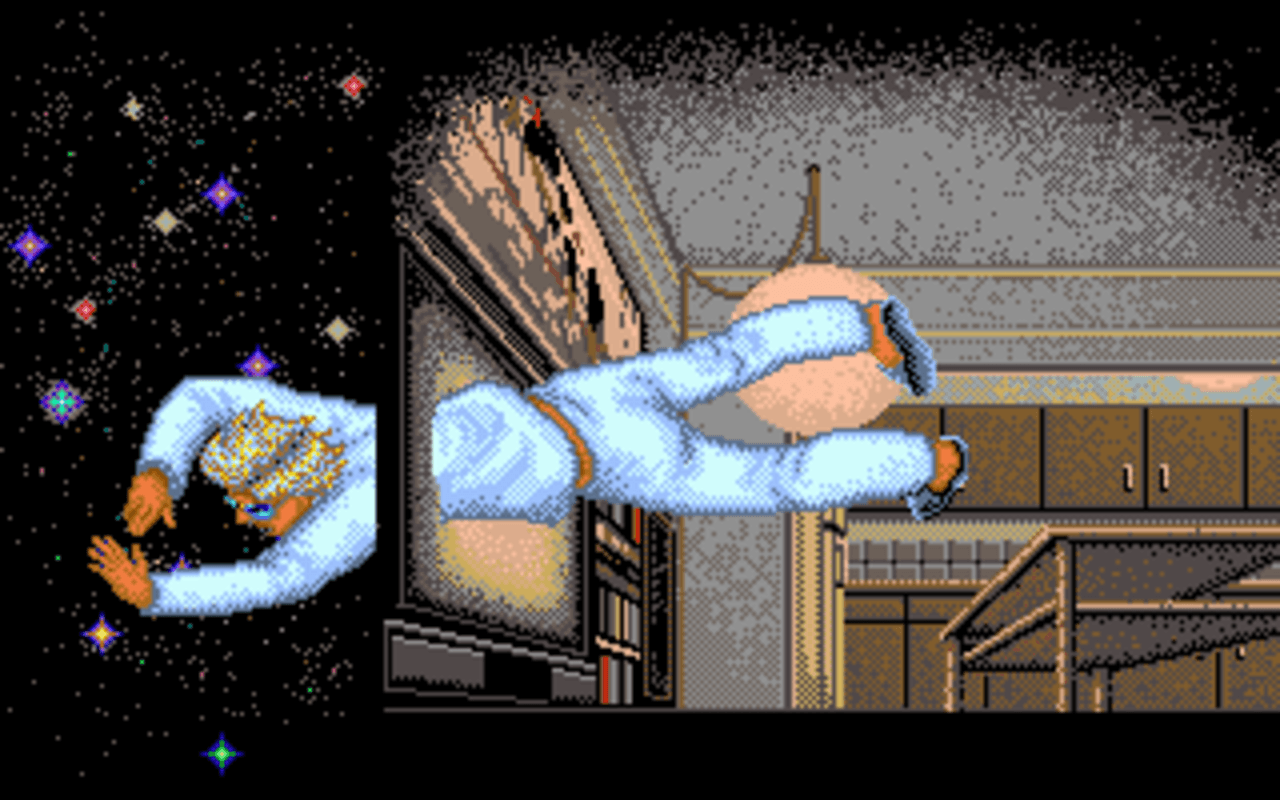
The story kicks off with the kind of everyday annoyance that feels instantly relatable: P.J. Barrett is just trying to get his television back from a repair shop. One mix-up later, he powers on the wrong set and reality snaps like a rubber band. In a flash, he’s pulled through the screen and dumped onto Daltere, a planet that looks like it was designed by an artist who dreamed in riddles.
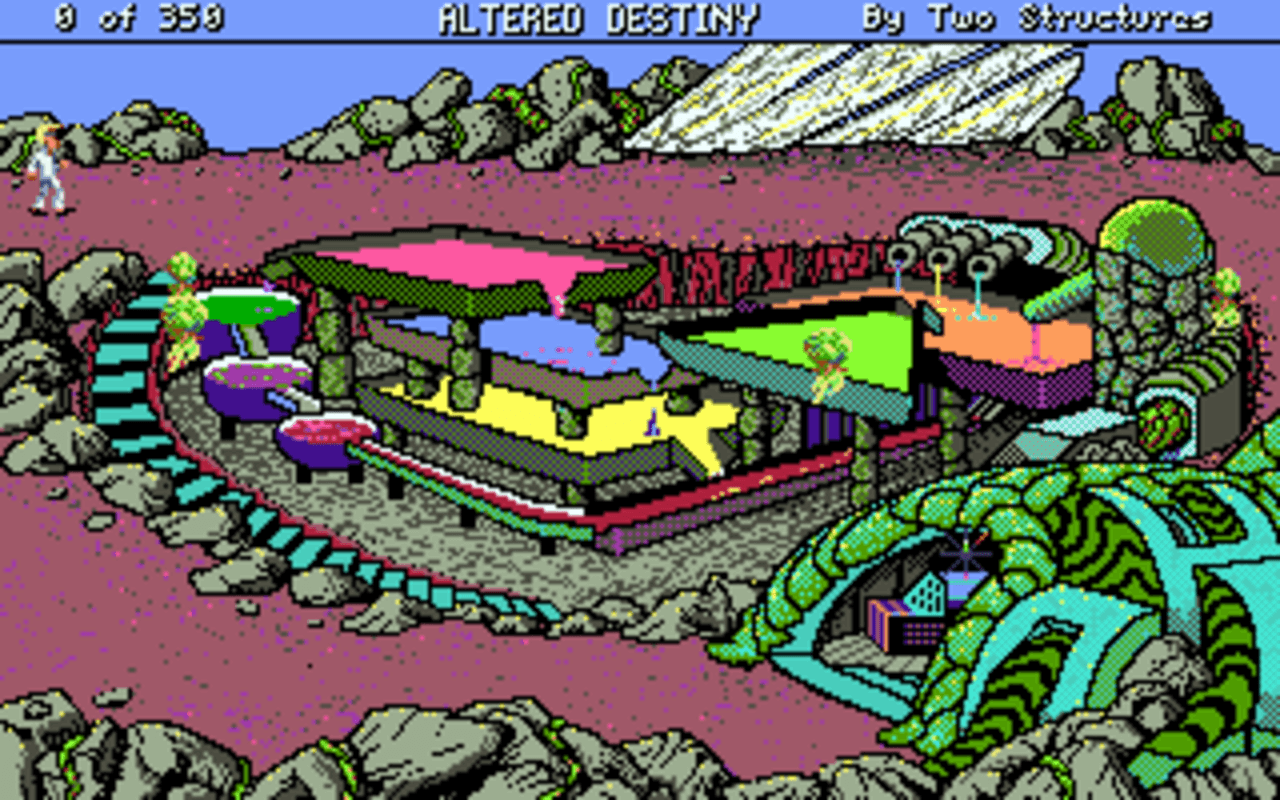
Daltere isn’t merely “alien” in the safe, decorative way. It’s a place that treats you like an intruder, with cultures, creatures, and hazards that don’t pause to explain themselves. That disorientation becomes part of the charm: you’re meant to feel slightly lost, because the hero is lost too. The plot quickly widens from personal confusion to galactic stakes, asking you to meddle with power struggles and recover a vital artifact before tyranny calcifies into permanence.
Parser-Driven Adventure Game Feel With a Mouse-Friendly Twist
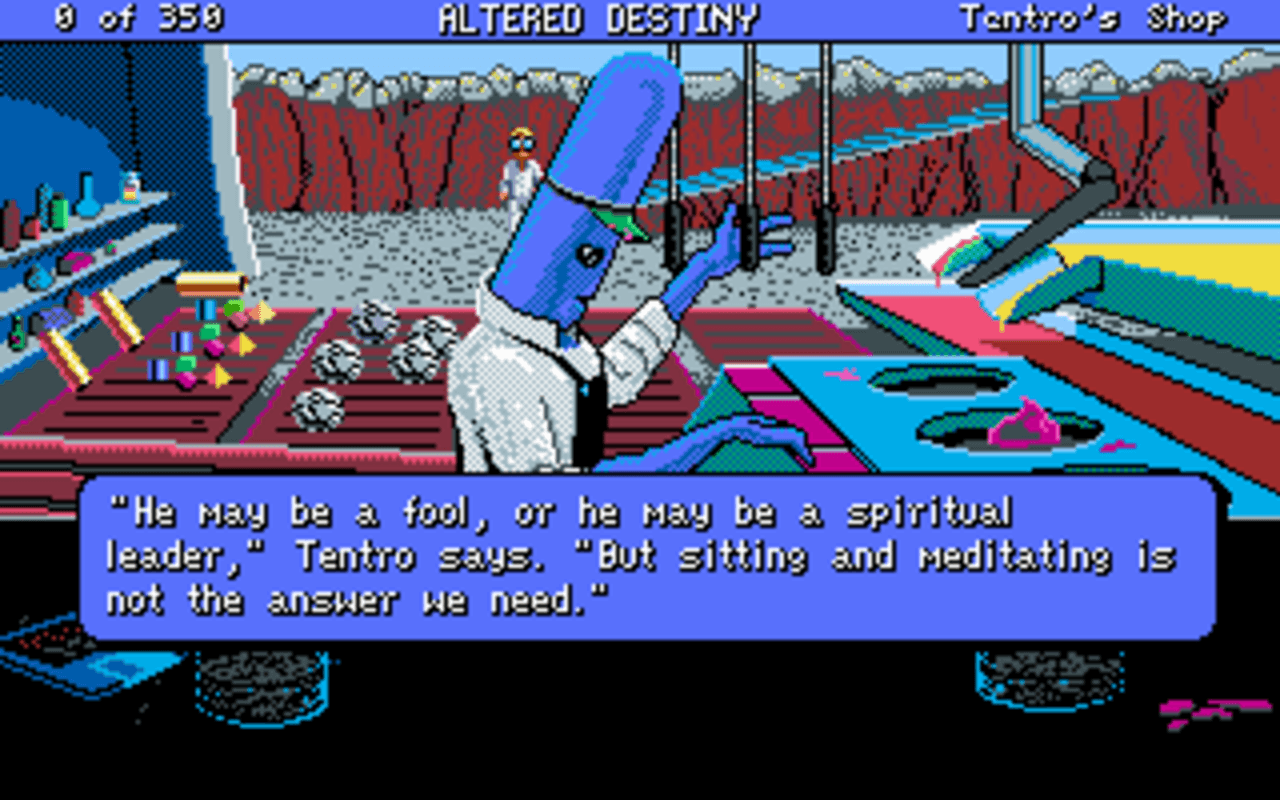
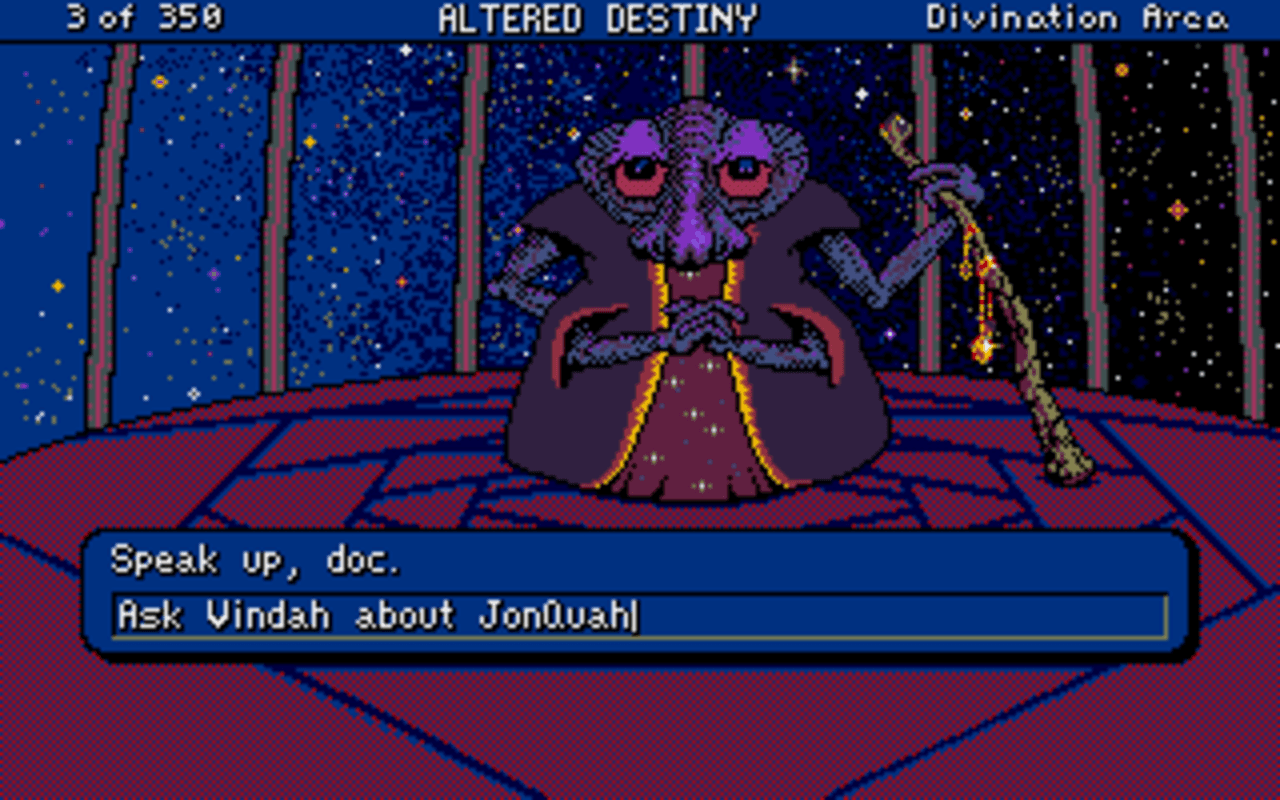
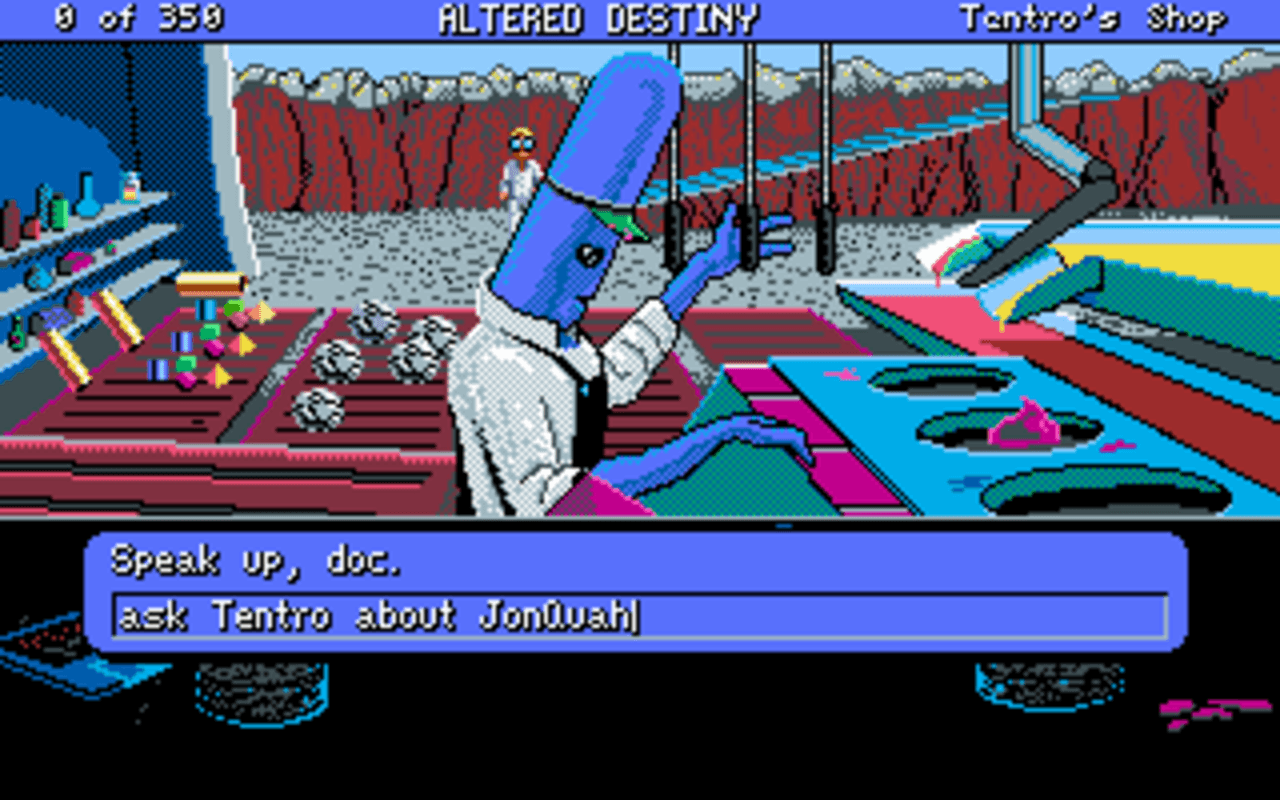
Altered Destiny lives in that classic crossroads where you can point to move, but you still need words to truly act. You guide P.J. around illustrated screens, then type commands to examine odd objects, speak to inhabitants, and attempt the kind of experiments that only adventure games encourage. The parser is a personality of its own: sometimes it feels delightfully permissive, and sometimes it demands you phrase an idea the “right” way, like a picky genie that insists on exact wording.
That friction is also where the game’s best moments hide. When you finally crack a stubborn interaction, it can feel like you’ve learned the local physics of Daltere rather than merely checking off a puzzle. There’s real satisfaction in realizing the world has rules, even if those rules are painted in neon weirdness. The interface encourages patience, experimentation, and a willingness to inspect everything twice—because the second look is often where the punchline or the clue lives.
Humor, Danger, and the Pleasure of a World That Doesn’t Behave
A lot of adventures flirt with comedy; Altered Destiny commits to it, but never lets you forget the planet is dangerous. The game is happy to surprise you with strange outcomes, sudden threats, or consequences that arrive faster than you’d expect. That edge keeps exploration from becoming a sightseeing tour. You’re not just collecting items for the sake of it—you’re surviving in a place where curiosity is both your greatest tool and your biggest temptation.
The writing leans into eccentric characters and situations that feel purposefully un-Earthlike. Even when the story points you toward a heroic mission, the moment-to-moment experience often feels like navigating a carnival of unsettling wonders. It’s the kind of game where you might laugh at a bizarre encounter, then immediately get wary because the next screen could punish careless confidence. This mixture gives Daltere texture: it’s not simply a backdrop, it’s an active participant that keeps poking the player back.
Play Altered Destiny online and step onto Daltere
Part of what keeps a DOS adventure game evergreen is how easy it is to return to the imagination-first style: a strange scene, a handful of verbs, and the sense that any object could matter. If you want that feeling instantly, you can play Altered Destiny online free, in a browser, and on mobile devices without restrictions, letting the game’s oddball atmosphere travel with you.
Playing online also highlights how the design thrives on small discoveries. A single room can hide multiple ideas: a visual gag, a clue tucked into flavor text, and an object that only becomes important hours later. The best approach is to treat each area like a miniature stage set—look closely, try a few actions, and keep notes in your head about anything that feels “too specific” to be decoration. Because this is a classic adventure game, the most innocent-looking detail may be the hinge the whole chapter swings on.
You may also notice a distinctly old-school relic: the original release used a “Divination Aid” codewheel-style prompt as copy protection, a common practice for the time. In modern online play, the needed reference codes are widely shared, so you can focus on the journey instead of hunting for packaging.
Why Altered Destiny Still Rewards Explorers Who Like Tough Puzzles
Altered Destiny doesn’t chase the breezy pace of later point-and-click comedies; it prefers a slow build of understanding. The puzzles can be demanding, but the game usually wants you to think like an outsider learning a new ecosystem. When you’re stuck, the solution often isn’t “more clicking,” but a shift in interpretation: re-reading a description, reconsidering a character’s role, or using an item in a way that matches Daltere’s strange internal logic.
It also rewards players who enjoy story through texture. The world’s personality comes from accumulation—odd names, unsettling imagery, and encounters that feel like they’re hinting at deeper histories. You’re not merely moving toward an ending; you’re gradually decoding what kind of place this is, why it’s broken, and why an accidental visitor might be the one person unpredictable enough to change it.
Altered Destiny stands out as a bold, surreal adventure game: funny without becoming weightless, threatening without becoming joyless, and imaginative enough to feel distinct even among other classics of its genre. To control the game, move P.J. with the mouse when available, then type clear action commands into the text parser to examine, talk, use items, and experiment with the world’s many peculiar possibilities.
All used codes are publicly available, and the game belongs to its original authors.