A Baby-Sized Adventure from Loriciel’s DOS Era
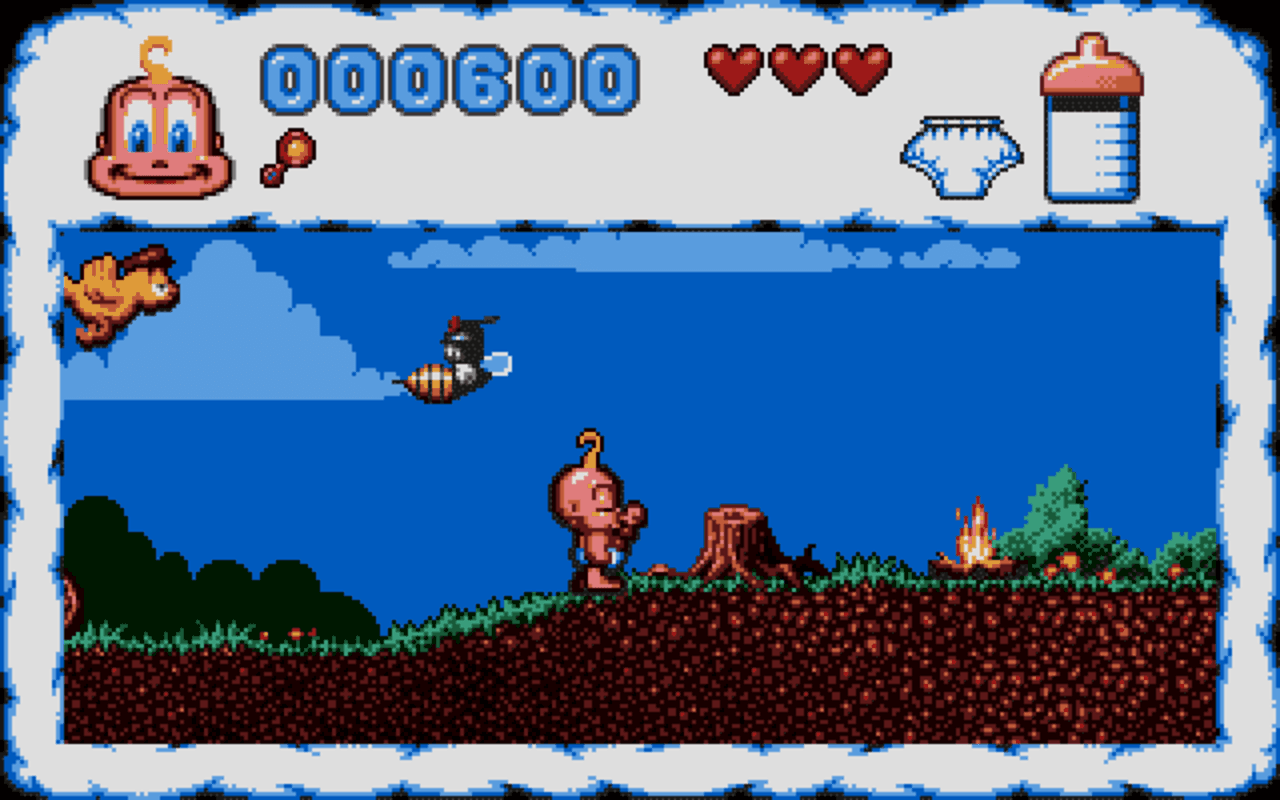
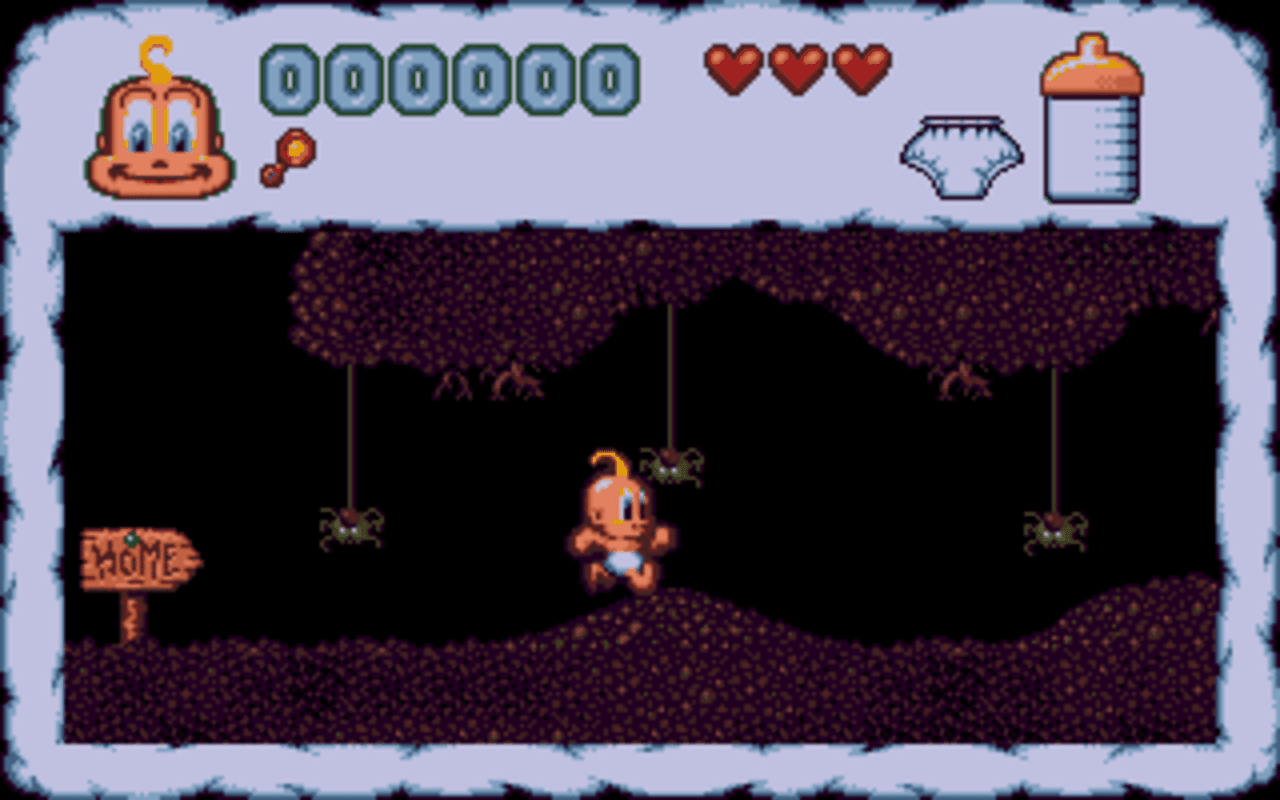
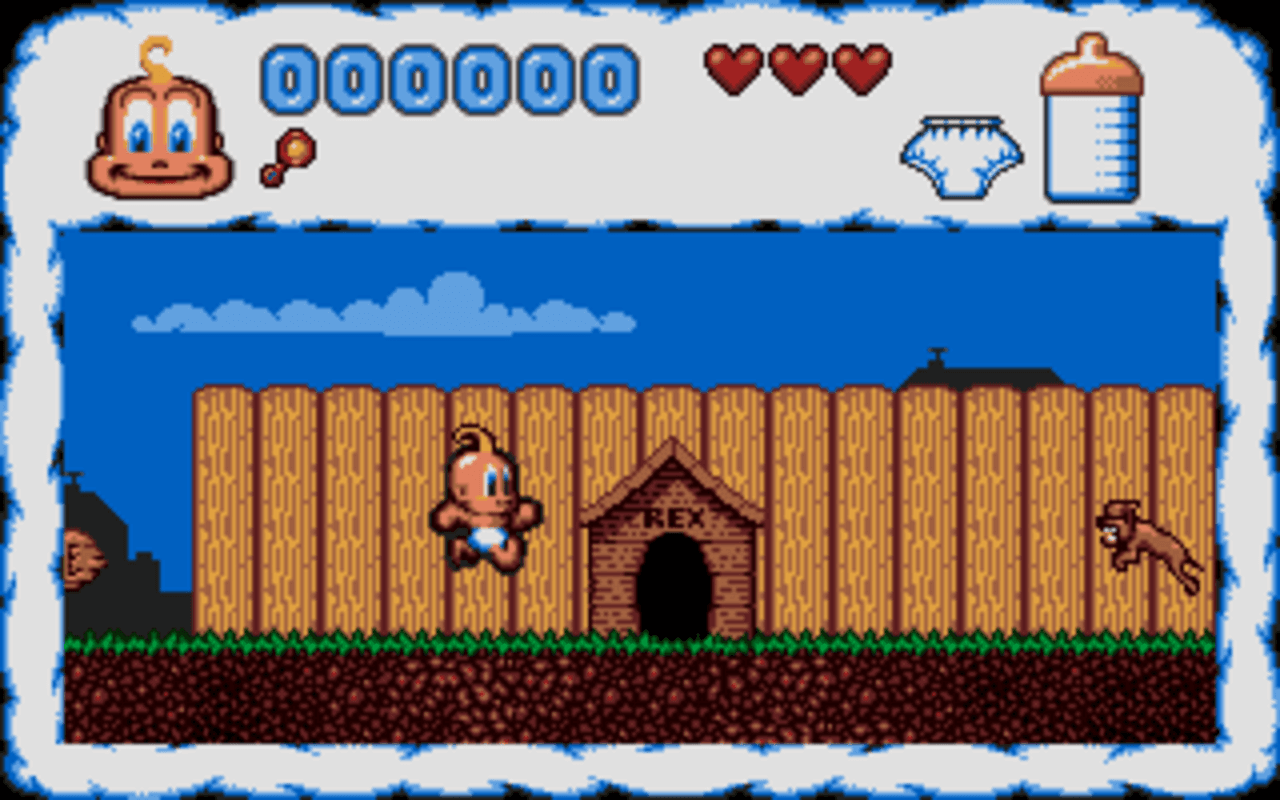
Baby Jo in: Going Home, published by Loriciel, comes from a time when DOS games often had to communicate big personality with small technical footprints. The result is a bright, cartoon-spirited platformer that leans into clear silhouettes, readable hazards, and a playful premise: you’re not a super-soldier or a space ace, you’re a baby trying to make it back home. That simple hook gives the game a distinctive flavor right away. Instead of brooding sci-fi corridors or medieval dungeons, you get a world that feels like a mischievous storybook that has spilled into side-scrolling action.
What makes the setup work is how quickly the game sells its identity. Baby Jo is small on screen, but the levels are packed with movement, surprises, and the kind of slapstick threats that are funny until they’re suddenly dangerous. The game’s tone stays light, yet it never drifts into being mindless. It expects you to pay attention, learn patterns, and move with purpose. In other words, it’s cute, but it’s not careless.
Rattles, Bottles, and the Comedic Pressure of Survival
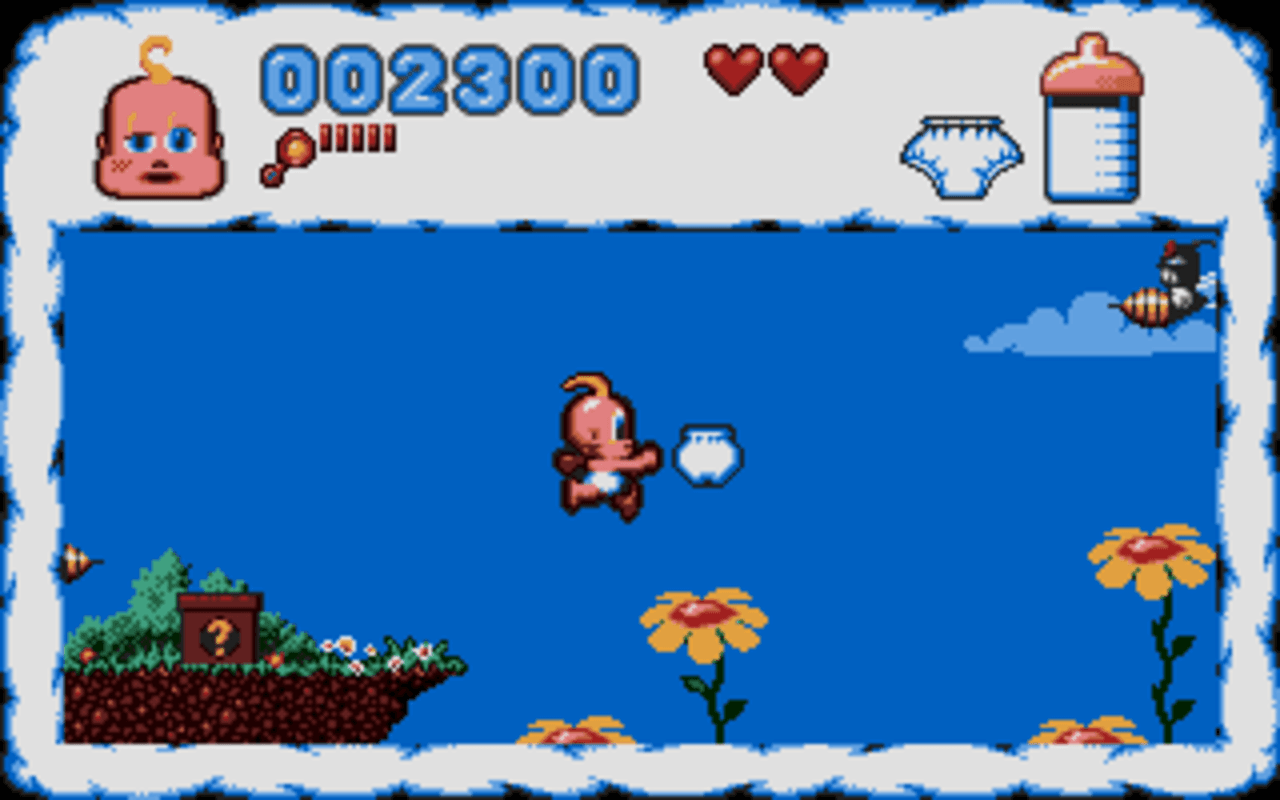
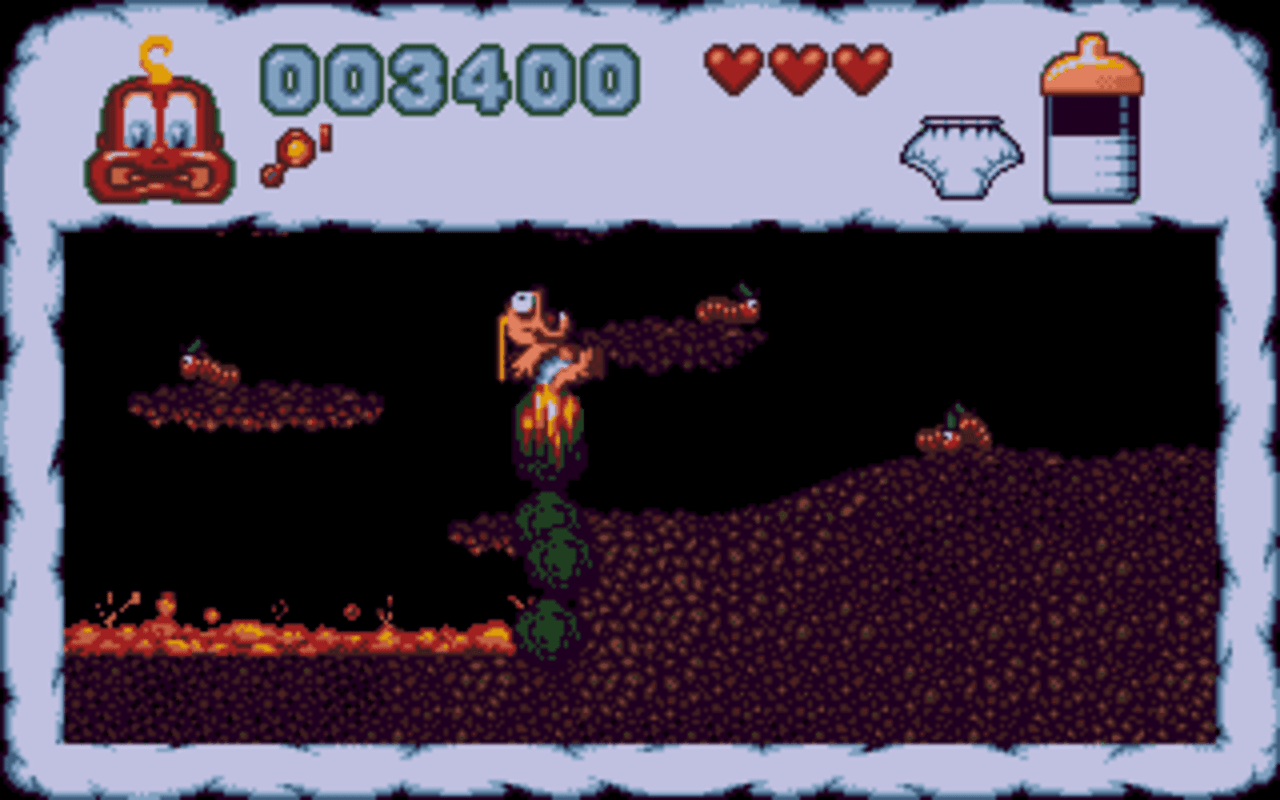
At its heart, Baby Jo in: Going Home is about momentum: step forward, react fast, and keep your run alive. Jo can deal with trouble using a wonderfully on-theme tool—rattles. They’re simple, readable projectiles that let you swat away pests and nuisances without turning the game into a heavy shooter. This keeps the focus where it belongs: jumping arcs, timing, spacing, and that constant calculation of whether you should press onward or slow down for safety.
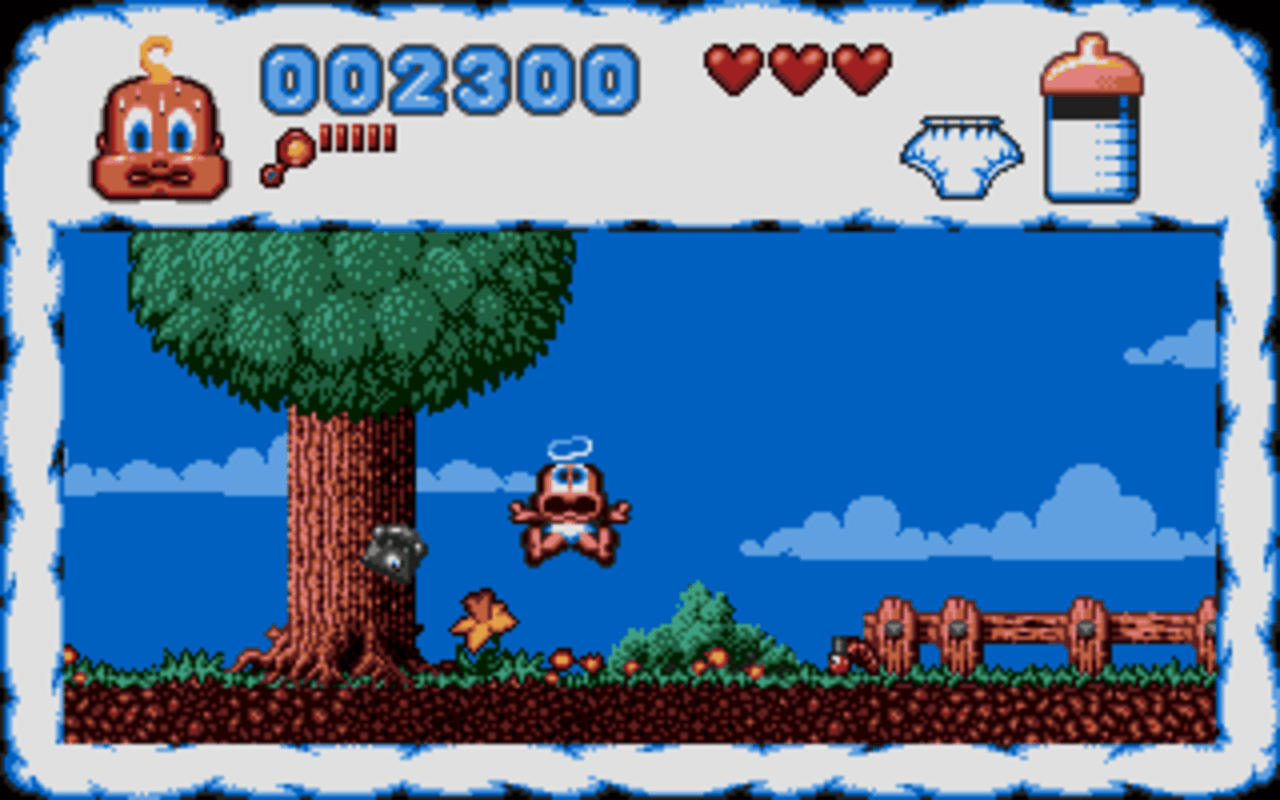
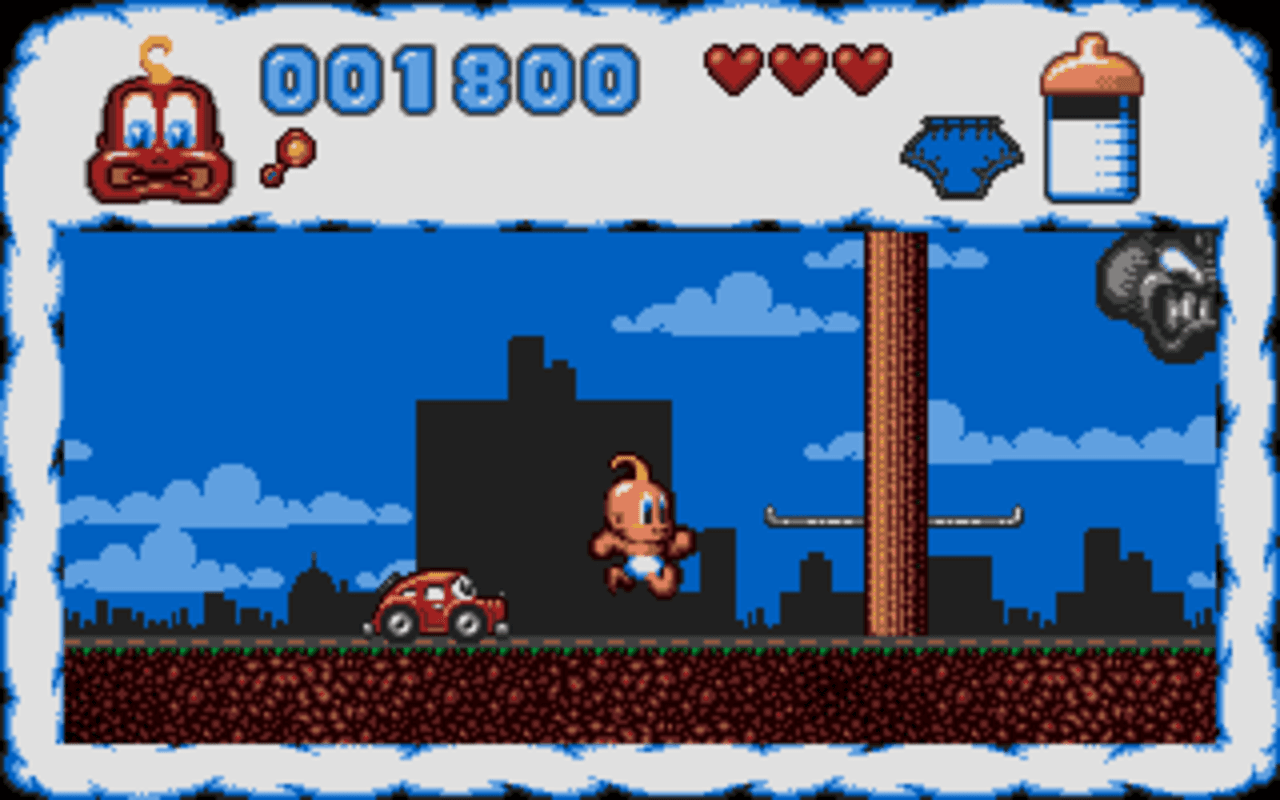
The clever twist is that the game layers in needs that feel “baby-ish” without becoming an exhausting simulation. Your status isn’t just a generic health bar; the presentation emphasizes Baby Jo’s mood and well-being, which adds personality to the usual platforming feedback. On top of that, essentials like bottles and diapers matter, creating a gentle kind of pressure that shapes how you explore. It’s not simply about reaching the exit; it’s about staying in good shape while you do it.
Because of these systems, the levels gain a subtle strategic edge. Detours can be worthwhile if they stock you up, but wandering too long can create problems of its own. That push-pull rhythm gives the game a memorable identity: you’re always platforming, but you’re also managing time and resources in a way that feels thematically consistent, not bolted on.
Baby Jo in: Going Home and the Joy of Hazard-Filled Levels
The stage design is where the game’s charm really settles in. Baby Jo in: Going Home likes to mix friendly visuals with unfriendly outcomes—bright scenes, cute enemies, and obstacles that don’t look terrifying until you realize they’re placed to catch impatient players. You’ll meet classic platform-game troublemakers and environmental dangers that encourage you to watch the ground, the air, and the timing of moving threats.
The best moments come when the game strings several small challenges together: a hop that would be easy on its own becomes tricky because a hazard is positioned to punish late jumps, or because an enemy’s movement nudges you off your preferred line. The pacing is usually snappy, with enough variety to keep you curious about what the next stretch will ask of you. When it’s at its strongest, the game feels like a playful obstacle course designed by someone who enjoys making you grin right before you yelp.
Difficulty lands in a satisfying middle zone. New players can grasp the basics quickly, yet the game still finds ways to tighten the screws. Mistakes don’t always feel unfair; more often, they feel like you got baited into rushing. That’s a classic platformer lesson, and Baby Jo teaches it with a wink.
Play Baby Jo in: Going Home online
Part of the enduring appeal of this classic is how naturally it fits modern play habits. You can play it free in a browser, and it also runs on mobile devices without restrictions, which suits its quick levels and immediate controls. Baby Jo in: Going Home is the kind of game that’s easy to sample for a few minutes, then accidentally turn into a longer session because “one more try” keeps sounding reasonable.
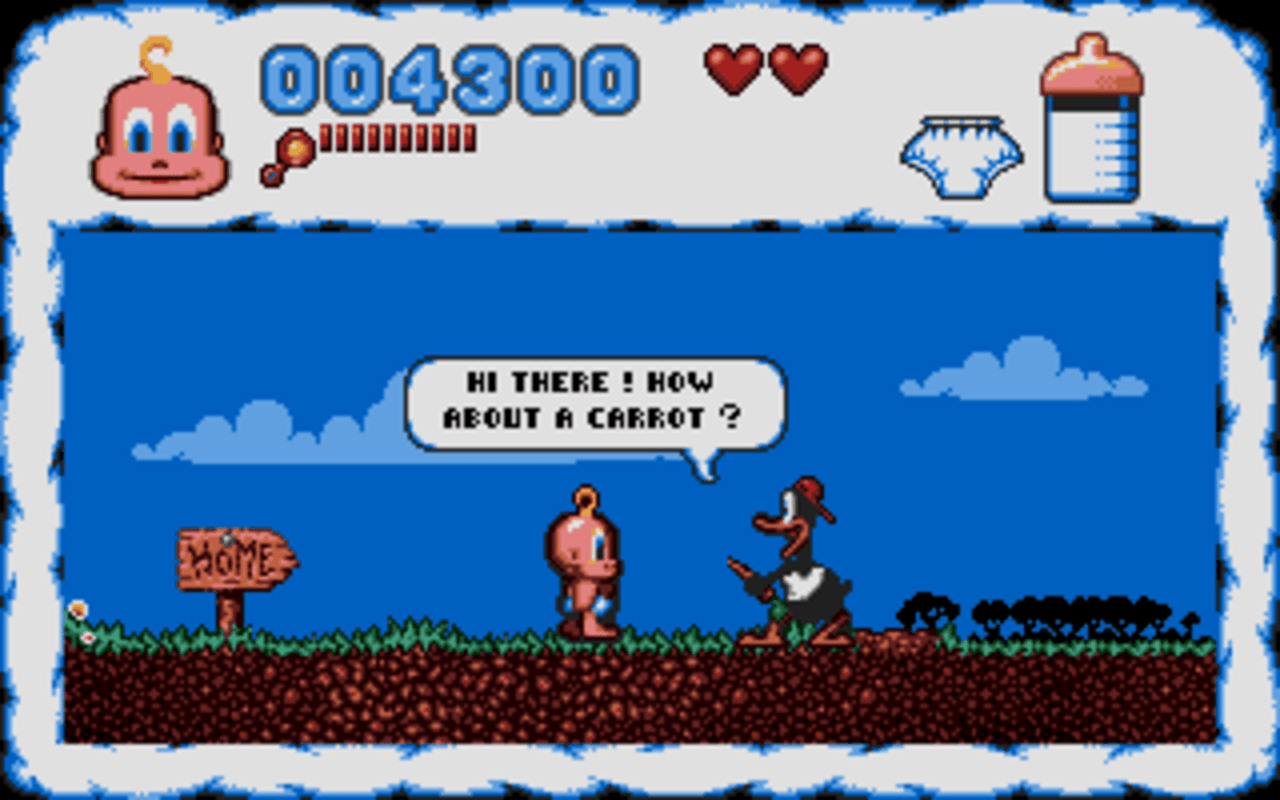
Playing online also highlights how clean the design remains. The visuals are readable at a glance, the objectives are intuitive, and the game’s personality comes through even if you’re encountering it for the first time. It doesn’t require a long tutorial or a deep backstory to get going; the comedy is in the situations, and the satisfaction is in threading jumps through lively chaos. If you like platform games that balance charm with real momentum, this is an experience that translates smoothly to quick pick-up sessions or longer completion runs.
Why This Classic Platform Game Still Feels Fresh
A lot of older platformers are remembered for their mascots or their music, but Baby Jo in: Going Home earns its place by committing to a cohesive theme. Everything—from the rattle “weapon” to the baby-care essentials—supports the central joke without undermining the platforming. It’s a rare kind of tonal consistency: playful, slightly stressful, and always moving.
It also avoids a common pitfall of cute games: becoming too soft. Baby Jo may look adorable, but the game is willing to challenge you. That contrast is a big part of why it stays memorable. The world doesn’t bend because you’re small; you have to learn it, outsmart it, and stay stocked up while you go. That’s a strong platform-game premise dressed in a delightfully unusual costume.
Baby Jo in: Going Home is a lively DOS-era platform game that mixes crisp side-scrolling action with a unique “baby survival” twist, delivering both charm and genuine challenge. Controls are straightforward: move with the directional keys, jump with a primary action key, and use your rattle throw when threats crowd your path, adjusting timing and spacing as levels become more demanding.
All used codes are publicly available, and the game belongs to its original authors.