Bram Stoker’s Dracula and the Gothic DOS Game Spirit
Bram Stoker’s Dracula arrived during a period when DOS game creators were experimenting with new ways to present action, atmosphere, and cinematic themes. The DOS release stood apart from other versions of the same license because it was designed as a first-person action game with puzzle elements rather than a side-scrolling adaptation. Published by Psygnosis and developed by TAG, it transformed the familiar Dracula story into a dark interactive hunt filled with narrow passages, lurking monsters, and a constant sense of unease. That distinctive design helps the game keep its identity even among many horror titles from the same era.
What makes this game memorable is not just its connection to a famous literary and film legacy, but the way it embraces Gothic dread through its presentation. The player steps into a world of cryptic corridors, hostile creatures, and ritual-like objectives that feel more ominous than heroic. Instead of chasing pure speed, Bram Stoker’s Dracula builds tension through mood, limited visibility, and the feeling that each room may conceal another threat. That approach gives the game a personality that still feels distinctive when people return to play classic horror adventures online.
A First-Person Horror Game with Strange, Memorable Design
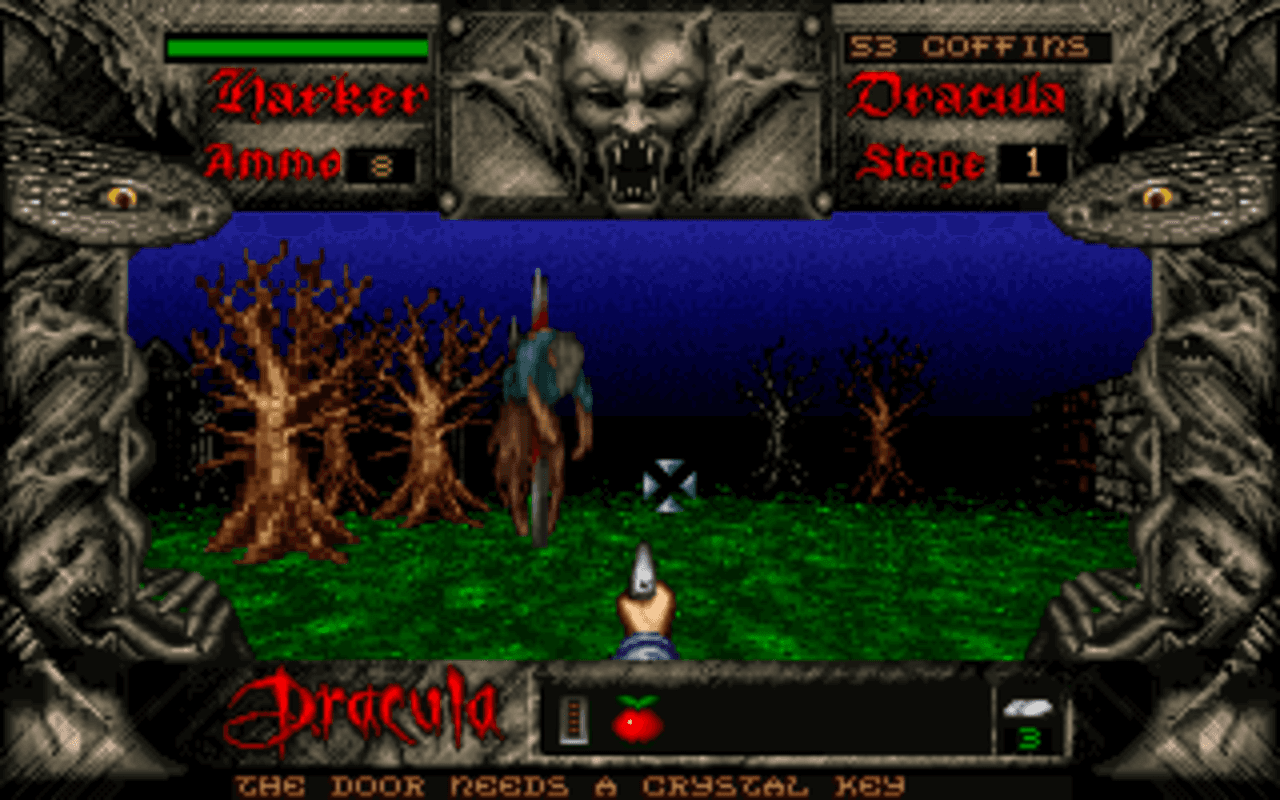
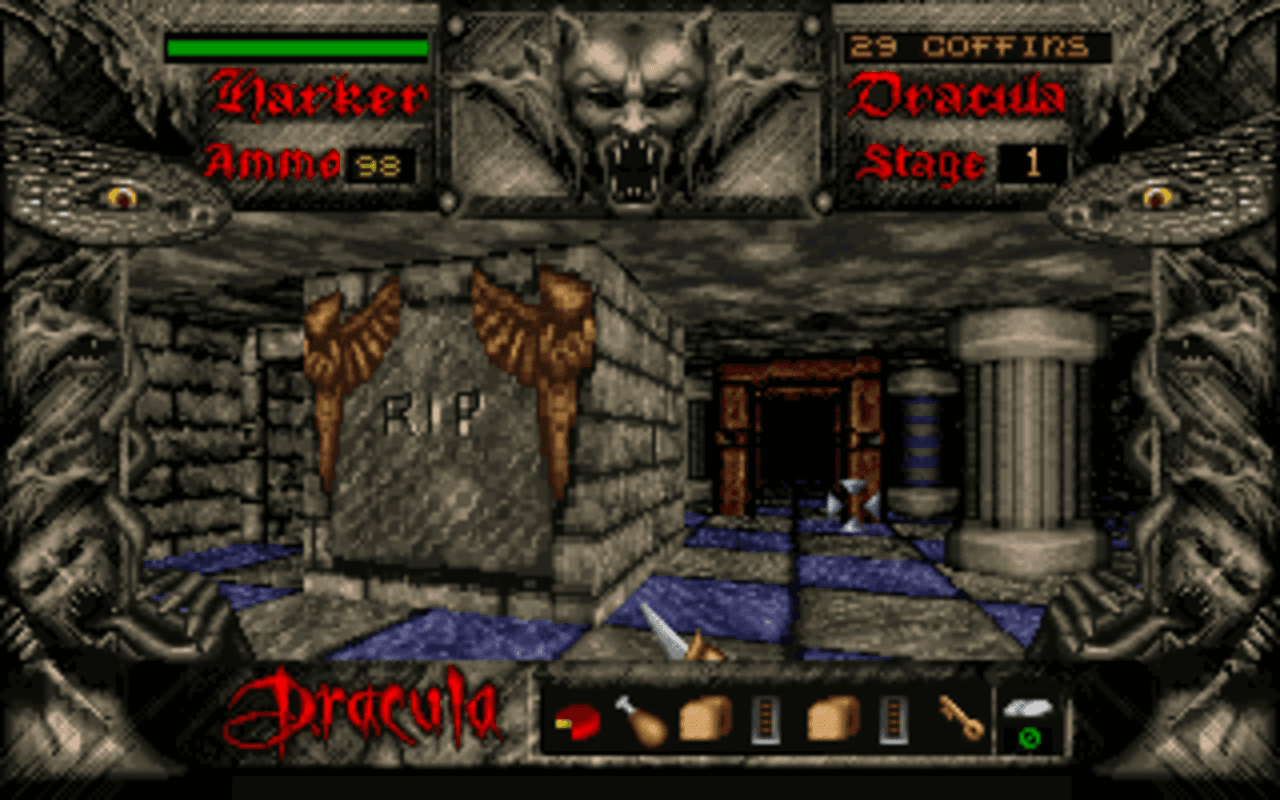
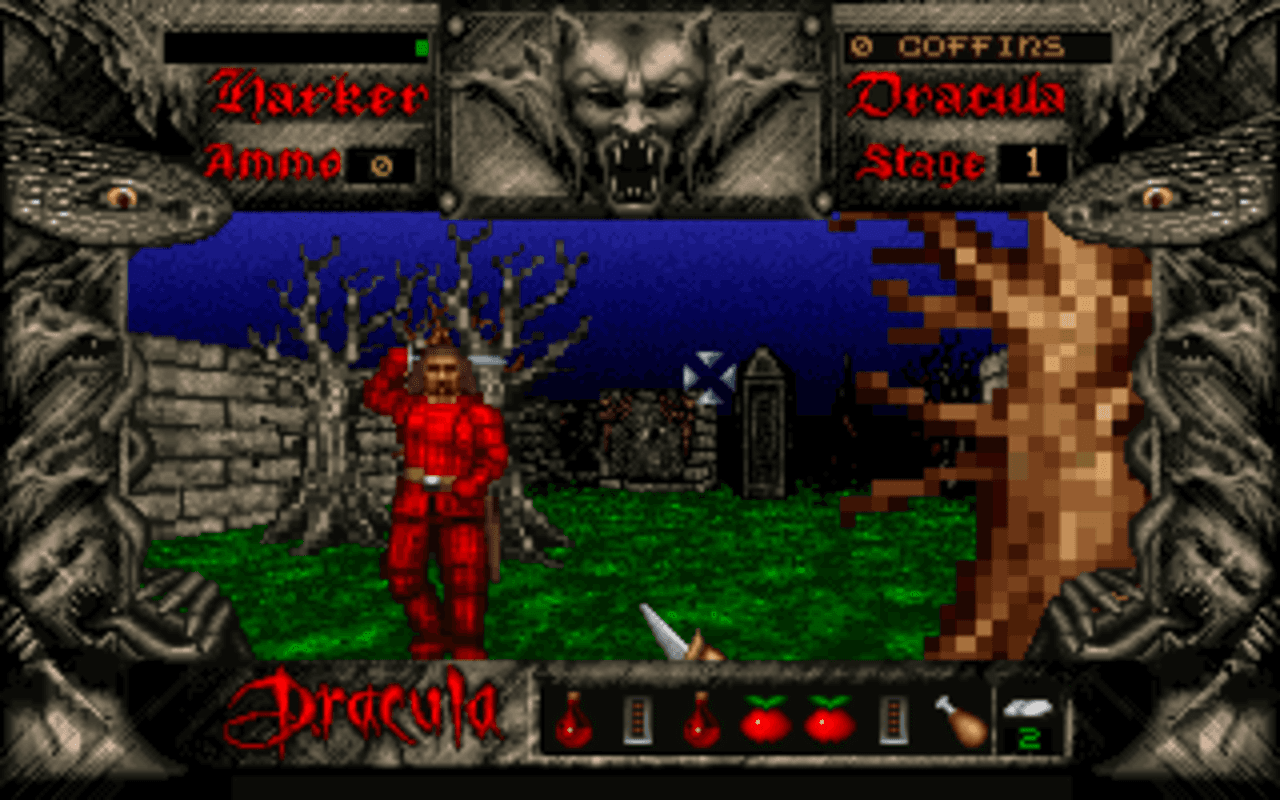
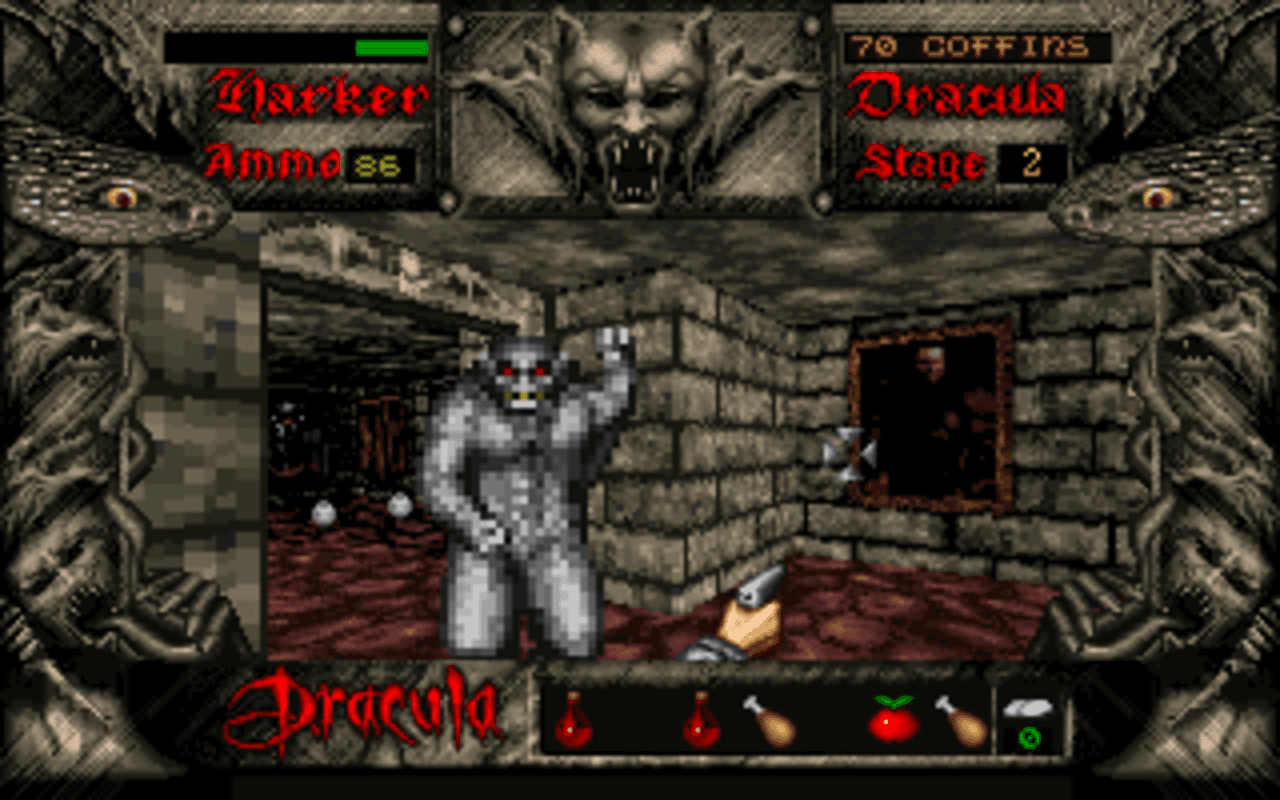
Unlike many action titles that focus only on rapid movement and constant combat, Bram Stoker’s Dracula blends shooting with exploration and a more methodical rhythm. The DOS version places the player in a first-person perspective and asks them to move through haunted environments while confronting monsters and working through objectives tied to Dracula’s dark influence. That mixture of direct action and puzzle-oriented progression gives the game an offbeat structure that separates it from straightforward shooters.
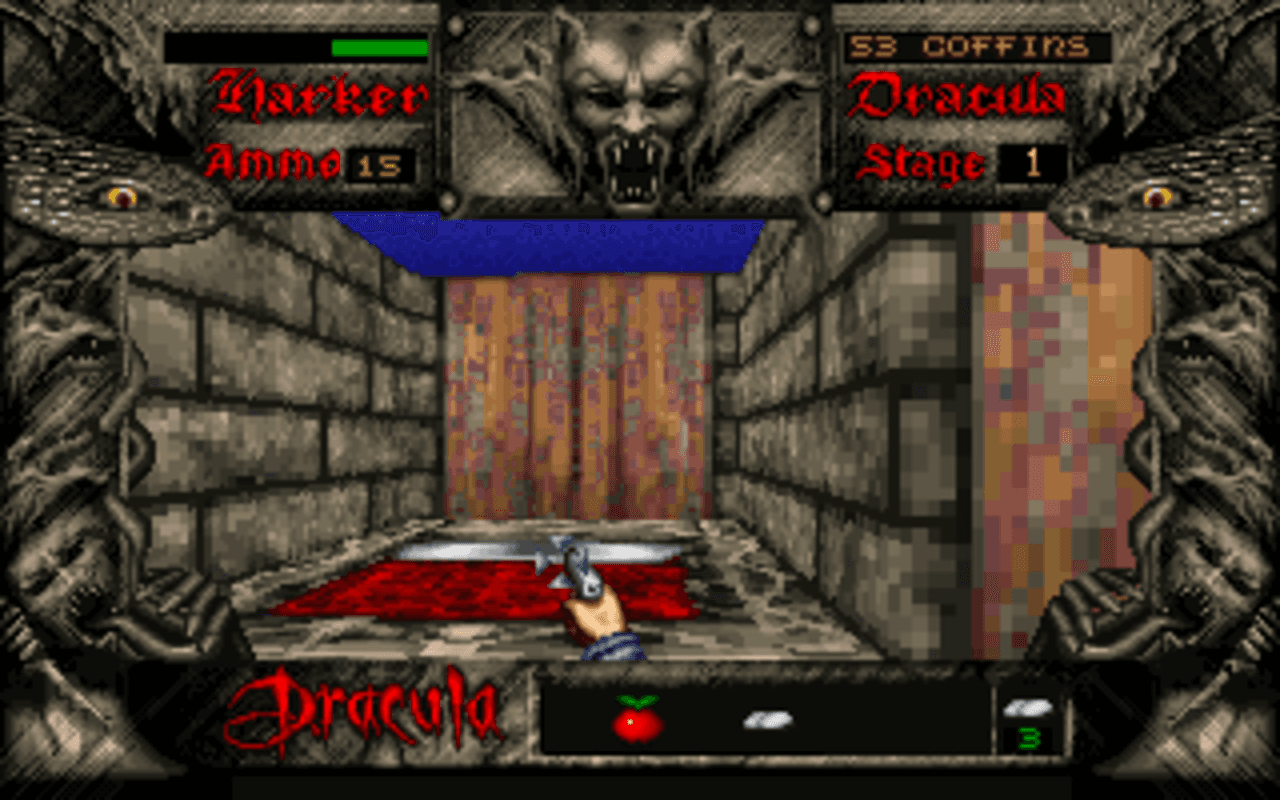
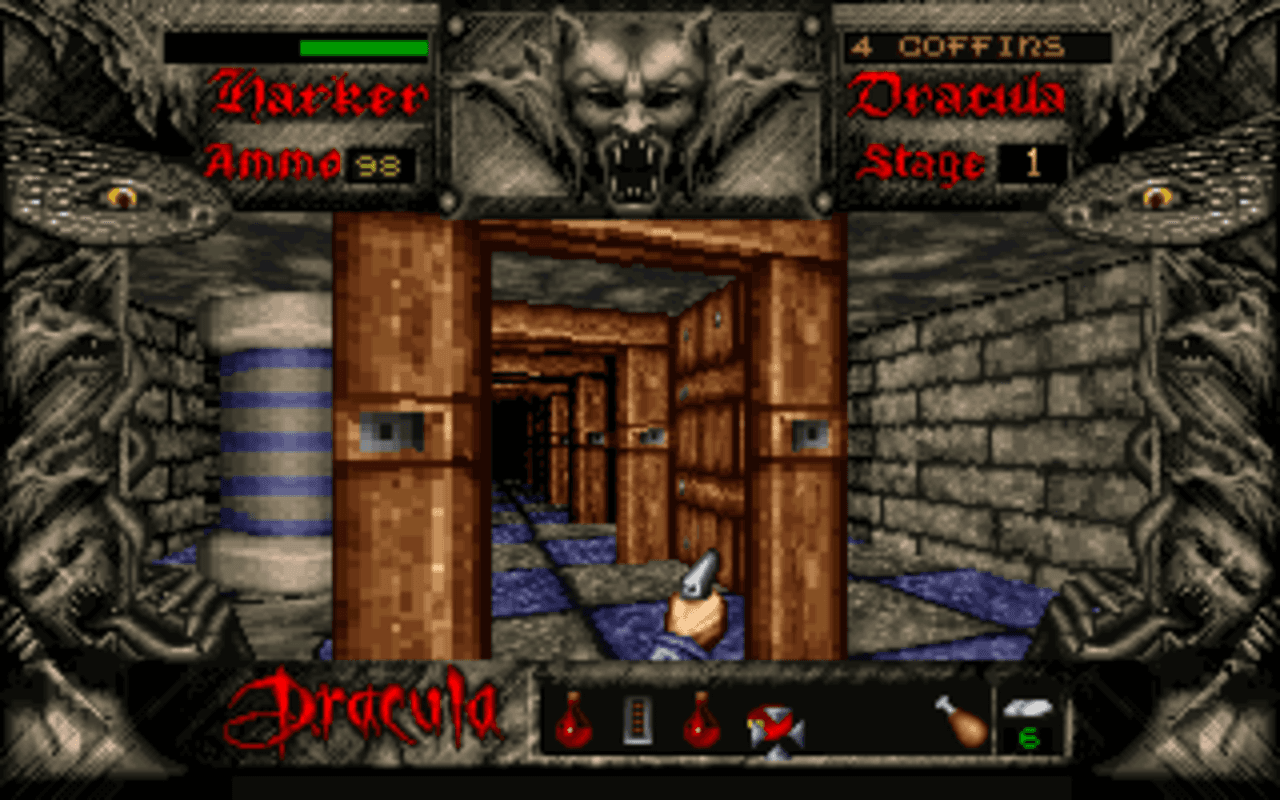
Its strongest quality is atmosphere. The visual style aims for a brooding, haunted mood rather than arcade brightness, and that choice supports the source material well. Castles, chambers, and cursed interiors feel oppressive, which helps even simple enemy encounters carry extra weight. The game often feels like a journey through fear itself, with every space arranged to remind the player that Dracula’s world is old, hostile, and steeped in menace. For players who appreciate retro horror game design, that tonal consistency is one of the main reasons to keep playing.
There is also a certain raw charm to its mechanics. The game belongs to a time when licensed titles often tried bold ideas, even when those ideas were imperfect. Bram Stoker’s Dracula does not feel polished in the modern sense, yet that roughness has become part of its appeal. It is a game with a strong theme, an unusual structure, and enough eerie energy to remain interesting long after more conventional releases have blurred together. Its combination of first-person movement, monster encounters, and Gothic presentation makes it feel like a curious crossroads between action game tradition and horror storytelling.
Play Bram Stoker’s Dracula online
Play Bram Stoker’s Dracula online and the game reveals why its mood continues to attract retro horror fans. The experience suits quick sessions as well as longer play because the design relies on suspense, exploration, and gradual progress through threatening spaces. Its first-person view makes the world feel immediate, and that perspective helps the Gothic setting retain its impact when played in a browser.
This classic game can be played free, in a browser, and on mobile devices without restrictions, which makes its eerie journey easy to revisit in a simple and direct way. That accessibility fits the game well, because Bram Stoker’s Dracula is built around immediate atmosphere. You do not need modern upgrades to appreciate its dark halls, monster-filled rooms, and sense of old-fashioned danger. To play it online is to step straight into a piece of horror game history that still carries a strange charm.
For many players, the appeal also lies in contrast. Where some retro action games are remembered only for speed, Bram Stoker’s Dracula is remembered for mood. Where some licensed games fade into obscurity, this one stays interesting because it takes risks with perspective and structure. Playing it online highlights those qualities, letting the horror, tension, and cinematic influence stand on their own.
Why Bram Stoker’s Dracula Still Rewards Retro Horror Fans
A lasting part of the game’s appeal is the way it captures a haunted mood without needing elaborate narrative interruptions. The story background is well known: Jonathan Harker becomes entangled in Dracula’s evil world and must survive its horrors. The DOS version turns that premise into direct interaction, placing the player in danger rather than merely showing it from afar. That design choice gives the game a closeness that suits vampire fiction especially well.
The game also rewards players who enjoy unusual classics rather than only universally celebrated blockbusters. It may not offer the relentless momentum of Doom or the clean immediacy of Wolfenstein 3D, but it trades some of that speed for atmosphere and identity. That exchange is precisely why many retro enthusiasts continue to discuss it. Bram Stoker’s Dracula is not just another horror game; it is a specific kind of gloomy, experimental DOS adventure that tries to merge film license, vampire myth, and first-person action into one memorable package.
Its value today lies in that individuality. When players return to older games, they often look for titles that feel different from modern formulas. Bram Stoker’s Dracula delivers that difference through mood, theme, and structure. It is eerie, slightly strange, and unmistakably tied to a period when DOS developers were willing to try unusual forms for familiar stories. That makes it worth revisiting not only as a licensed game, but as a distinctive horror artifact in its own right.
Bram Stoker’s Dracula Review Summary for Online Play
Bram Stoker’s Dracula remains an intriguing classic because it combines first-person action, horror atmosphere, and a Gothic setting in a way that still feels uncommon. Published by Psygnosis for DOS, it stands apart from other versions of the same property through its perspective and gameplay style. Its strengths come from mood, identity, and the pleasure of wandering through a vampire-haunted world that feels oppressive and memorable.
As a game to play online, it offers a strong sense of retro horror with enough action to stay engaging and enough atmosphere to remain vivid. Movement and combat are simple to understand, making control straightforward: the player guides the viewpoint through dangerous areas, attacks threats, and explores carefully to survive the journey. For anyone interested in classic vampire games, unusual DOS action, or eerie adventures with a recognizable literary shadow, Bram Stoker’s Dracula still earns attention.
All used codes are publicly available, and Bram Stoker’s Dracula belongs to its original authors.