Celtic Tales: Balor of the Evil Eye and the pull of mythic strategy
Celtic Tales: Balor of the Evil Eye arrived from Koei, a publisher long associated with thoughtful strategy design, and it stands apart from many fantasy-themed releases by grounding its action in a stylized interpretation of Celtic legend rather than in conventional medieval formulas. Released for DOS in 1995, the game combined strategic planning, role-playing flavor, and tactical conflict in a way that gave it a broad scope without losing its personality. Instead of treating myth as mere decoration, it folds folklore directly into the atmosphere, making every campaign feel as though politics, kinship, and destiny are tied together.
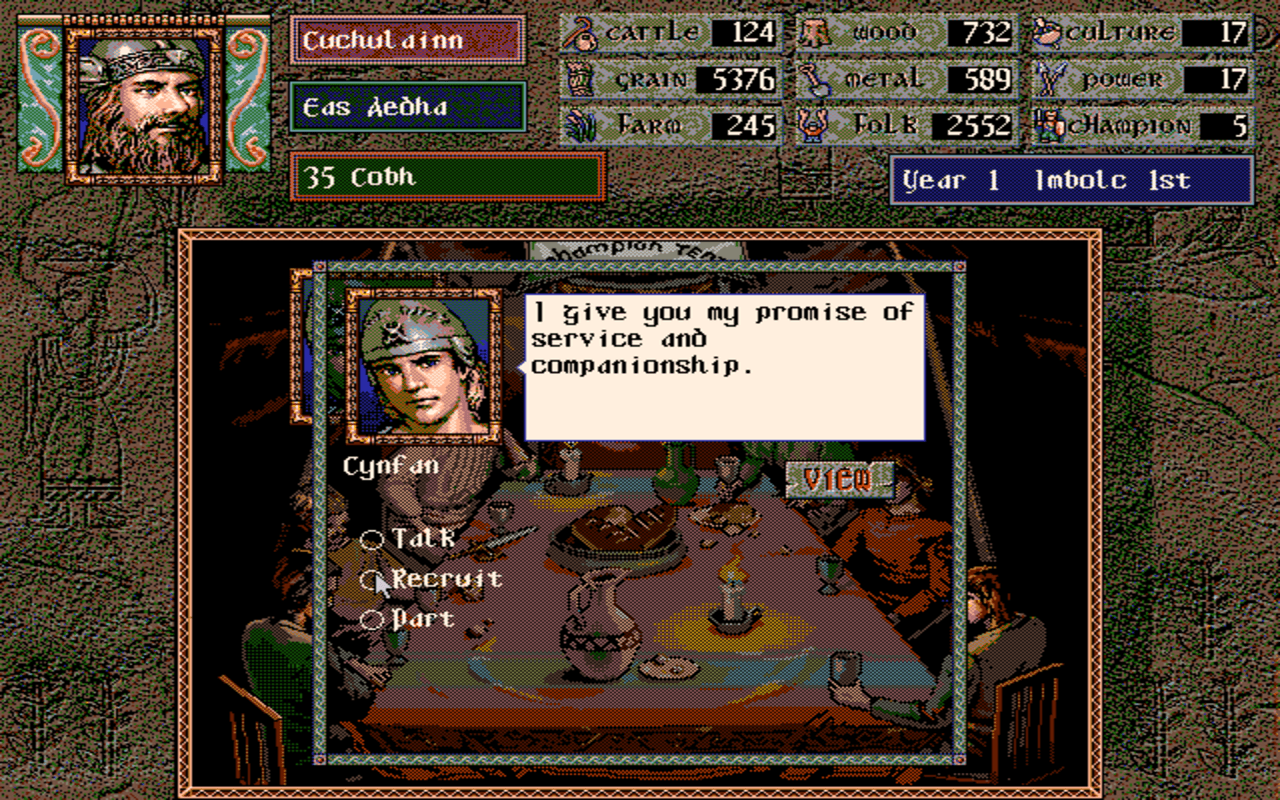
What makes this game especially interesting is its tone. Celtic Tales does not rush the player into spectacle for its own sake. It builds tension through territory, leadership, and the constant need to balance ambition with survival. You step into the role of a Celtic chieftain, and that perspective shapes the entire experience. Power is never abstract. It depends on people, land, and timing, which gives the game a textured rhythm that rewards patience and foresight.
Why Celtic Tales: Balor of the Evil Eye feels different from other DOS strategy games
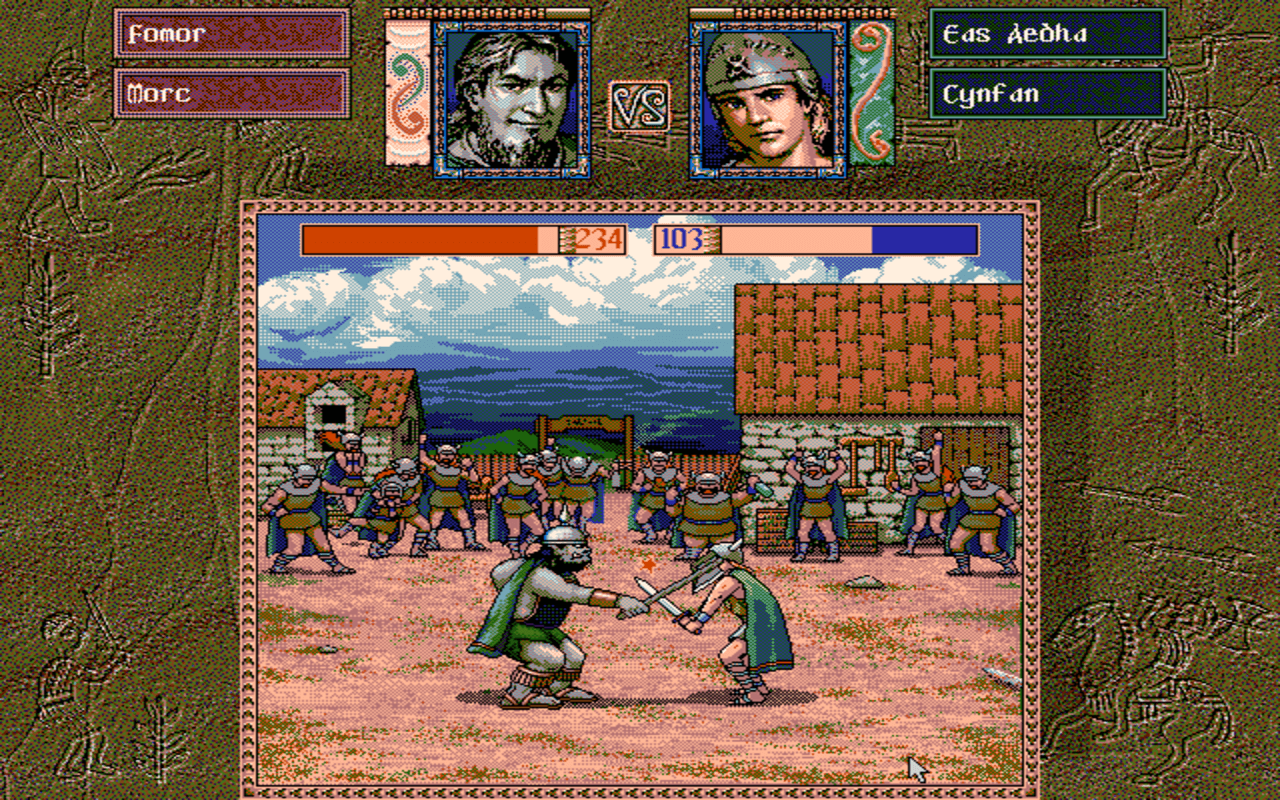
Many strategy titles focus entirely on conquest, but Celtic Tales: Balor of the Evil Eye adds a stronger sense of identity and setting. The campaign does not feel like a set of dry calculations. It feels like a struggle for stature in a land charged with memory and danger. That is where the game finds its voice. Battles matter, of course, yet the larger appeal comes from the way military action fits into a living framework of clan rivalry and legendary mood.
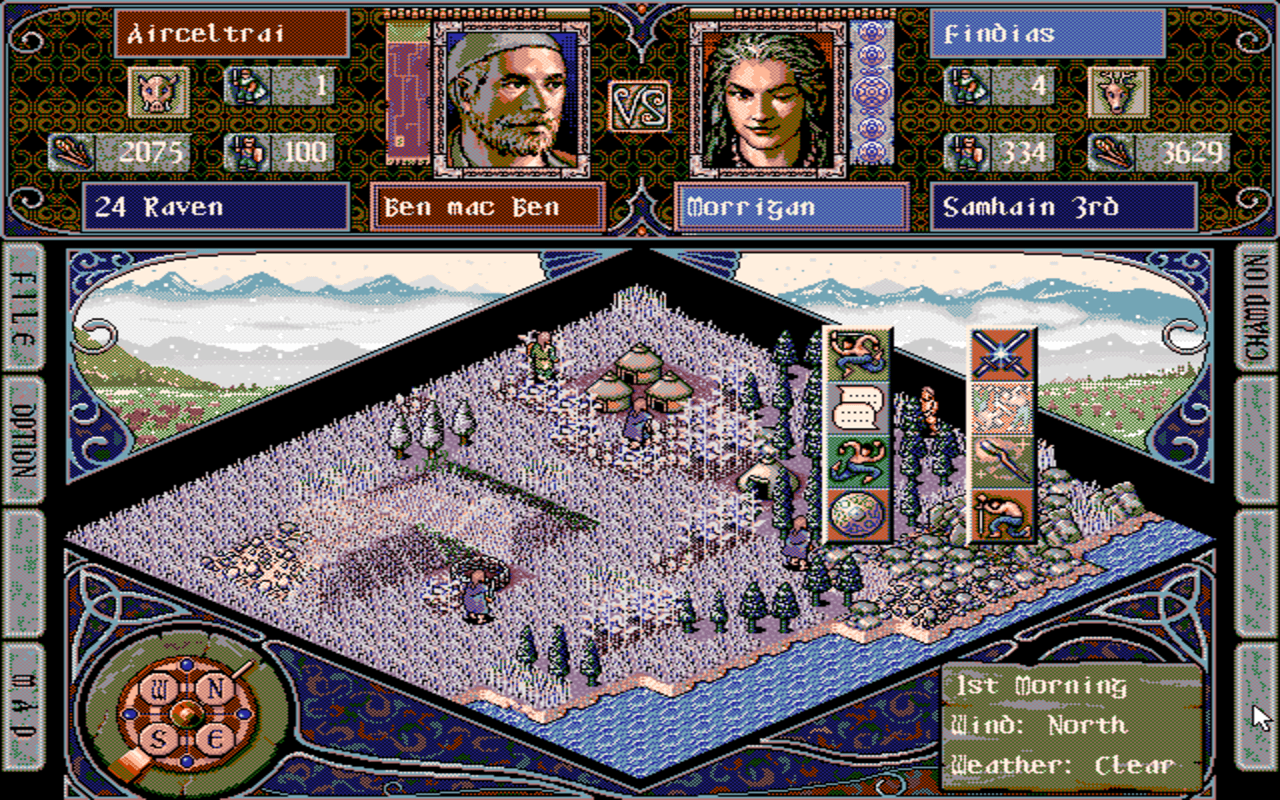
The visual presentation supports that feeling. Even within the limitations of its era, the game creates a world that feels earthy, dramatic, and rooted in oral tradition. Rather than chasing sheer scale, it works through mood, giving the player the impression of participating in a saga. That choice still helps the game endure. Players who enjoy online strategy experiences often look for something more than mechanics alone, and Celtic Tales answers that desire with atmosphere as well as systems.
There is also a satisfying tension between accessibility and depth. At first glance, it seems inviting, almost storybook-like, but beneath that surface lies a demanding strategic structure. Resources, positioning, and judgment all matter. Success comes from reading situations carefully, not from relying on a single dominant tactic. That balance is a large part of the game’s lasting appeal, because it allows both discovery and mastery to coexist.
Play Celtic Tales: Balor of the Evil Eye online
Play Celtic Tales: Balor of the Evil Eye online and its qualities become easy to appreciate in a modern context. The game’s measured pace, readable interface, and thoughtful structure suit browser play remarkably well. It can be enjoyed free, in a browser, and on mobile devices without restrictions, which makes its strategic campaign feel newly approachable while preserving the depth that defined it in the first place.
That timeless design is one reason the game still attracts attention. A strong strategy game does not depend on novelty alone. It depends on meaningful choices, a memorable setting, and the sense that each decision alters the larger story. Celtic Tales provides all three. Whether a player arrives out of curiosity about classic DOS history or simply wants to play an unusual online game with more substance than quick action titles usually offer, this adventure has the ability to hold attention through mood and consequence.
Its structure also encourages replay. Different priorities can lead to different outcomes, and that keeps the campaign from becoming routine. Some sessions feel driven by military necessity, while others are shaped by expansion, caution, or bold opportunism. Because the game invites strategic self-expression, it remains engaging beyond a single run.
Battle, leadership, and legend in Celtic Tales: Balor of the Evil Eye
The heart of Celtic Tales lies in the relationship between leadership and conflict. Warfare is important, but it is never isolated from the broader responsibilities of rule. Every decision carries weight because it affects not just the next clash, but the standing of your faction and the future of your campaign. That wider perspective gives battles meaning. They are not random encounters. They are extensions of political will and personal ambition.
This is where the game distinguishes itself from faster, more immediately explosive strategy releases. It wants the player to think like a leader, not merely like a tactician. That larger role creates a stronger emotional connection to the unfolding campaign. Victories feel earned because they emerge from preparation, and losses sting because they expose the fragility of power.
There is also an appealing narrative current beneath the mechanics. The title itself invokes Balor, a fearsome figure from myth, and the game uses legendary texture to deepen its identity. Even when the player is focused on practical matters, the surrounding tone suggests that every contest belongs to a larger heroic tradition. That blend of grounded strategy and mythic resonance is rare, and it gives Celtic Tales a voice that remains easy to remember.
Celtic Tales: Balor of the Evil Eye as a game worth revisiting
Revisiting Celtic Tales: Balor of the Evil Eye reveals how well-designed strategy can outlast technical trends. The game does not rely on visual excess or constant interruption. Instead, it trusts the player to engage with systems, absorb the setting, and enjoy the slow-building satisfaction of intelligent play. That makes it rewarding for those who value classic design principles.
It also occupies an interesting place within Koei’s catalog. The publisher was known for strategy experiences, and this title shows a willingness to experiment with theme and atmosphere while preserving the methodical backbone that strategy players expect. As a result, Celtic Tales feels both familiar and singular. It belongs to a recognizable tradition of tactical planning, yet its Celtic identity gives it a flavor not easily confused with anything else.
This is a rich game for players who enjoy thoughtful conquest, mythic surroundings, and the pleasure of shaping a campaign through judgment rather than speed. To control the game, players generally work through keyboard and mouse commands to navigate menus, manage clans, and direct military actions during the campaign.
All used codes are publicly available and the game belongs to its original authors.