Command H.Q. and the art of fast global strategy
Command H.Q. is one of those classic DOS strategy experiences that proves a world map can hold endless drama. Developed by Ozark Softscape and published by MicroProse Software, the game channels the tension of world conquest into a format that’s immediately playable and surprisingly deep. Instead of burying you under dense menus, it invites you to look at the globe, pick your priorities, and start shaping history with decisive moves. It is war as a readable board, but driven by real-time urgency.
The “story” is less a single scripted campaign and more a set of eras and what-if conflicts that frame your battles. You can step into different technological moments, where the tools of war evolve and the risks expand. Early scenarios feel grounded and direct, while later ones introduce modern complications and sharper consequences. That shifting backdrop gives Command H.Q. a narrative arc across matches: not a novel you read once, but a repeating set of world crises where your choices become the plot.
A world map that rewards timing, not twitch
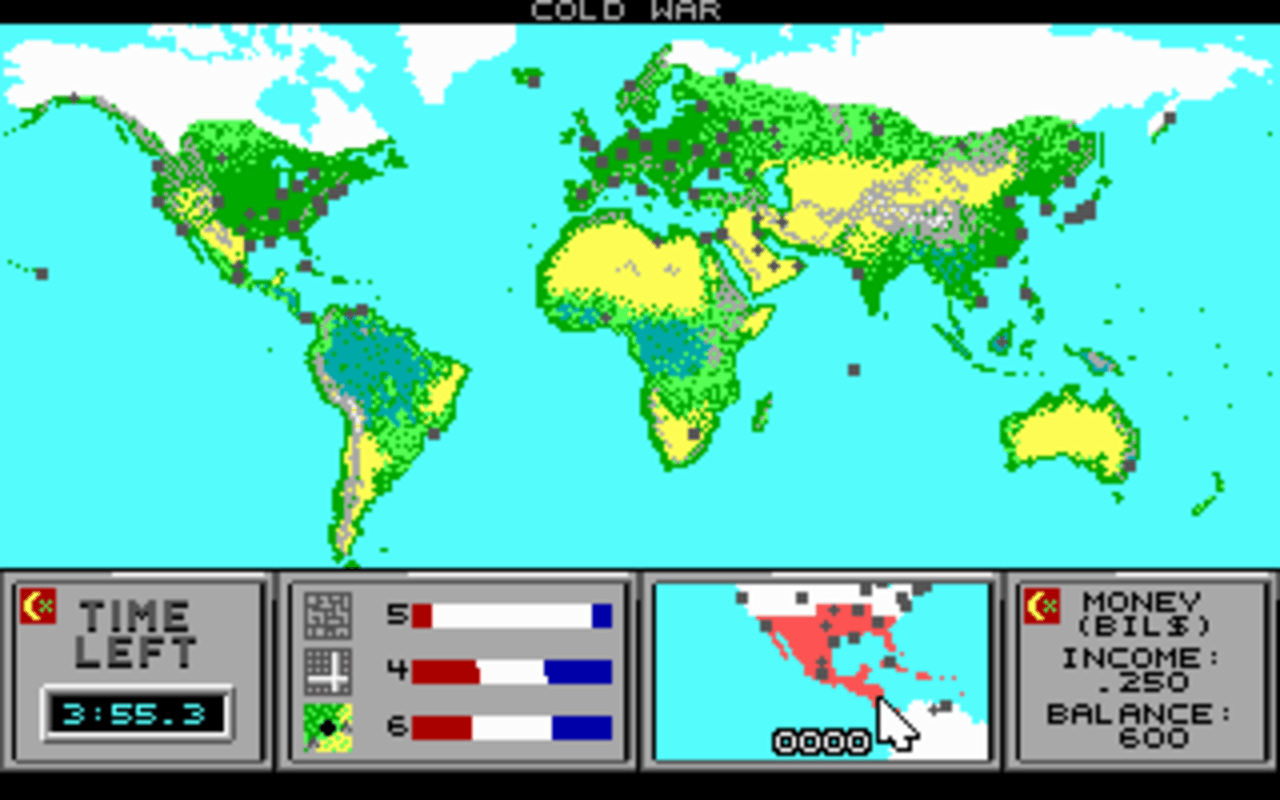
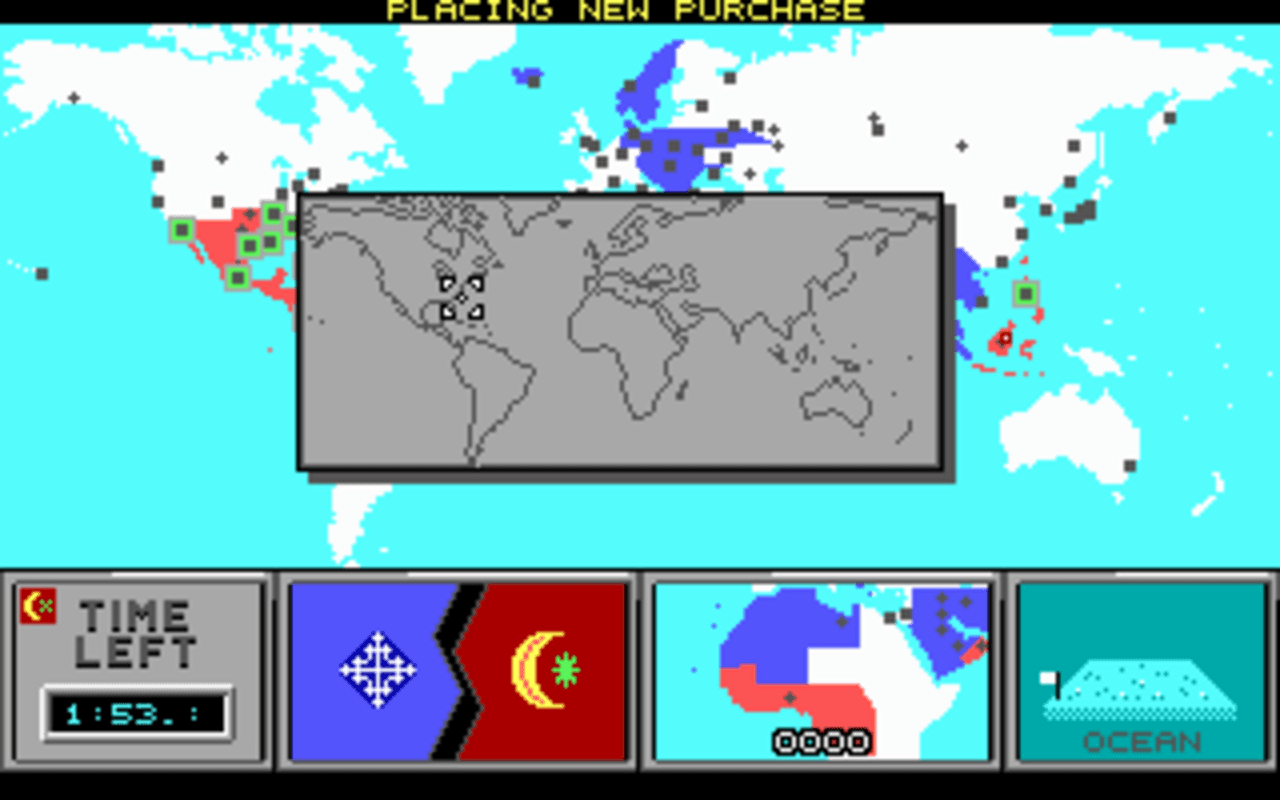
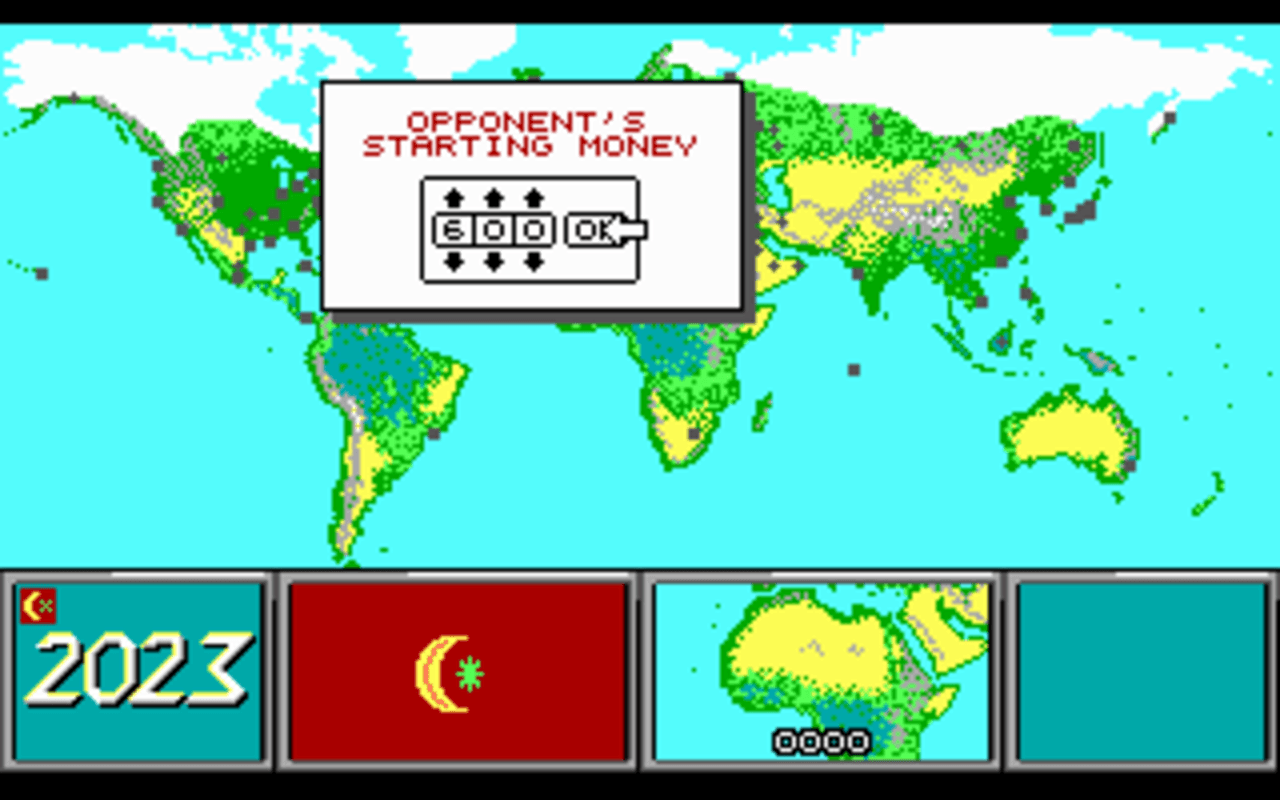
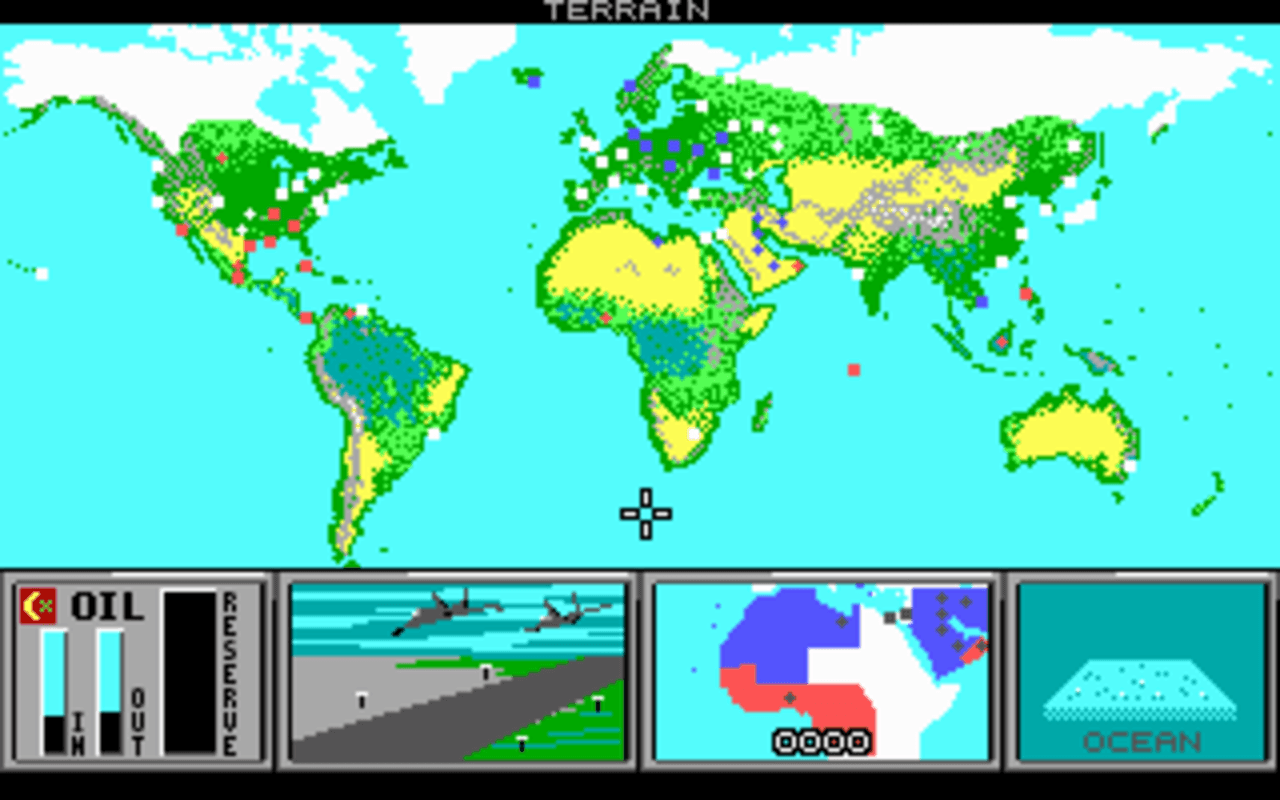
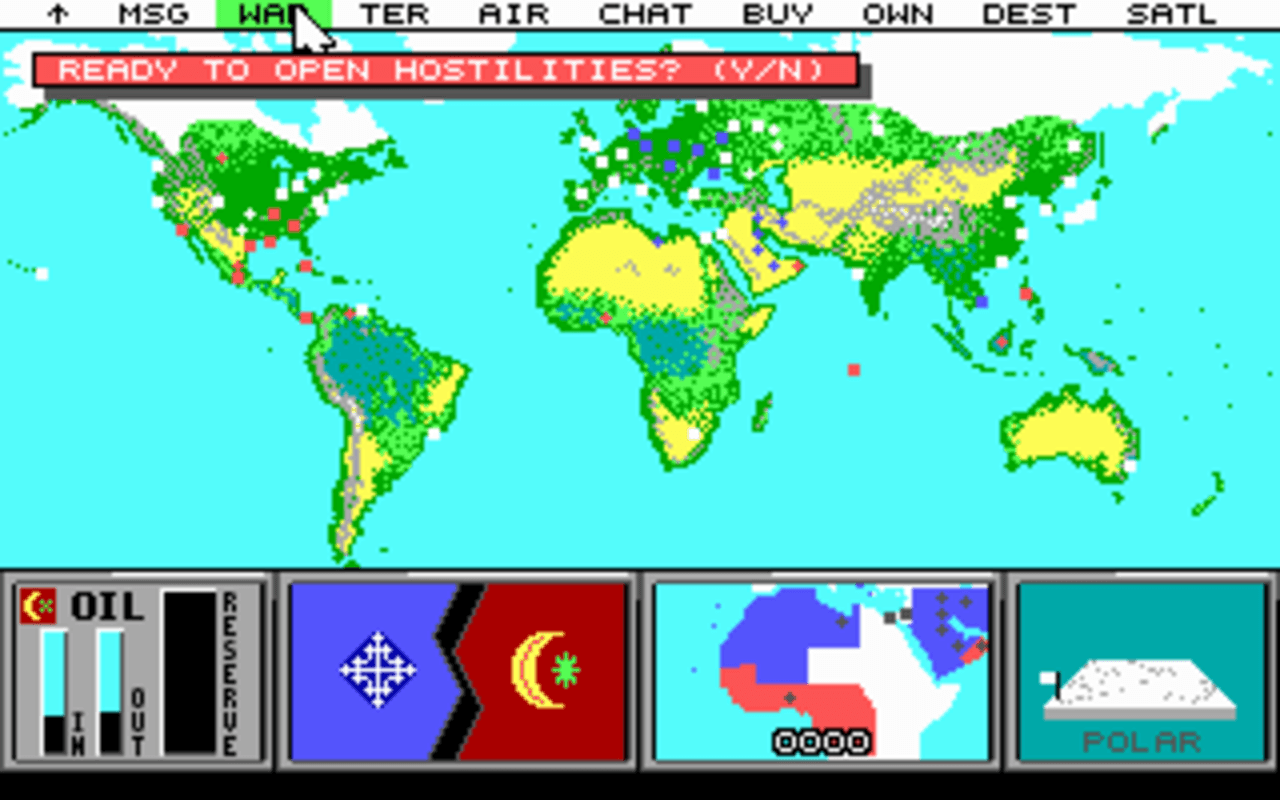
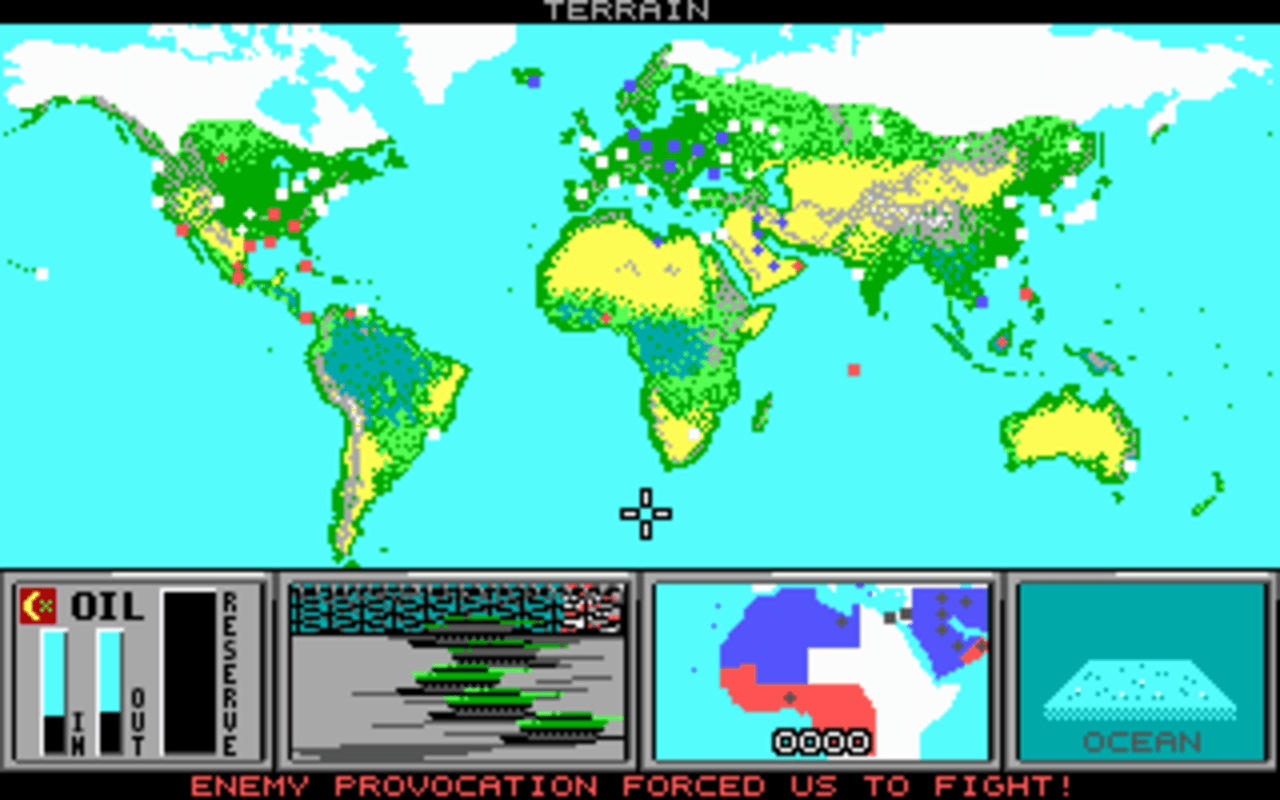
At first glance, Command H.Q. looks clean and minimal: cities, borders, unit icons, and movement lines. That simplicity is the trick. Because information is presented so clearly, you spend less time decoding the interface and more time making strategic decisions. Armies don’t exist for spectacle; they exist to create dilemmas. Do you reinforce an exposed route, rush a capital, or invest in new capability that pays off later?
The core rhythm is about momentum. Capturing key cities boosts your ability to produce and sustain forces, and losing them can make your position crumble faster than you expect. Combat resolves quickly enough that you can’t treat battles as distant background calculations, yet it’s not a click-fest either. The best play comes from setting up advantages: pressuring multiple fronts, forcing awkward responses, and using geography to create traps that the opponent must respect.
Different eras change the texture of conflict. As options expand, the map feels less like a flat board and more like a system you can manipulate. Sea lanes matter. Air reach alters what counts as “safe.” Intelligence and long-range threats introduce mind games, because sometimes the strongest move is the one that convinces the opponent you’re doing something else. The result is a strategy game that stays lively even when matches are short, because every minute can flip the balance.
Play Command H.Q. online and take command anywhere
Play Command H.Q. online! The game’s clean design and readable pacing make it a natural fit for modern play sessions where you want strategy without a long setup. You can play it free, directly in a browser, and it also works on mobile devices without restrictions, so a full match can fit into a spare moment without feeling watered down. That accessibility pairs well with the game’s real-time structure: you can jump in, make bold moves, and still experience a complete arc of planning, escalation, and resolution.
Playing online also highlights how well Command H.Q. communicates cause and effect. When you order units, you see the intent immediately on the map, which makes strategy feel tangible even on a small screen. The battlefield stays readable, the objectives stay clear, and the tension comes from decision-making rather than from wrestling the interface. Whether you prefer careful buildup or aggressive raids, the game supports both styles and encourages adaptation as the front shifts.
Escalation, economy, and the fun of calculated risk
What makes Command H.Q. memorable is how it turns “big” strategy ideas into bite-sized choices. Resource pressure exists, but it’s expressed in a way you can feel: control more, produce more, move with confidence. Lose key assets and suddenly everything slows down. That push-and-pull creates an elegant loop where expanding too fast can expose you, but expanding too slowly can leave you outpaced.
Later-era tools raise the stakes and sharpen the psychology. The game is good at creating moments where you pause, reconsider, and commit anyway, because the alternative is giving the opponent room to breathe. It’s also good at teaching restraint. A dramatic option might exist, but using it at the wrong time can be worse than not using it at all. That balance keeps the game from collapsing into a single dominant tactic and instead rewards players who read the map, predict reactions, and strike where the response will be slow.
The AI, depending on settings, can be a brisk sparring partner, but the real charm of Command H.Q. is how it frames head-to-head competition as a contest of nerve. You’re not only managing units; you’re managing attention. If you can make the opponent chase shadows, you can win real territory elsewhere. If you can pressure two regions at once, you can force the kind of mistake that decides the match.
By the end of a good game, you’ll usually recognize the turning point: a captured capital at the perfect moment, a supply line disrupted, an overconfident push punished by a counterattack. That clarity is part of why the experience remains timeless. It doesn’t rely on flashy presentation to be exciting; it relies on readable strategy and the thrill of watching plans collide.
To control the game, you typically use the mouse to select units and issue movement or attack orders directly on the map, with keyboard shortcuts available in many versions to speed up common actions. Once you’re comfortable plotting moves quickly, the pace becomes satisfying rather than stressful, and you can focus on outthinking the opponent instead of fighting the interface.
All used codes are publicly available and that the game belongs to its original authors.