Conan: The Cimmerian and the Spirit of Barbarian Adventure
Conan: The Cimmerian arrived from Synergistic Software and was published by Virgin Games as an action-adventure with role-playing elements for MS-DOS. That combination matters because the game does not confine itself to a single style. Instead, it moves between travel, exploration, conversation, and combat, giving players a version of Conan that feels broader than a simple sword-swinging hero. Rather than presenting a straightforward arcade challenge, it tries to capture the sweep of a harsh fantasy saga shaped by danger, revenge, and wandering through the Hyborian world.
What gives the game its lasting charm is the way it embraces the rough edge of Robert E. Howard’s barbarian mythos. Conan is not placed in a polished fairy-tale universe. He moves through hostile settlements, shadowy interiors, and perilous lands where dark priests and grim enemies feel ever-present. The atmosphere is severe and dramatic, and that tone helps the game stand apart from brighter fantasy adventures of its era. Even now, its world feels forceful because it is built around survival, muscle, suspicion, and determination rather than elegance.
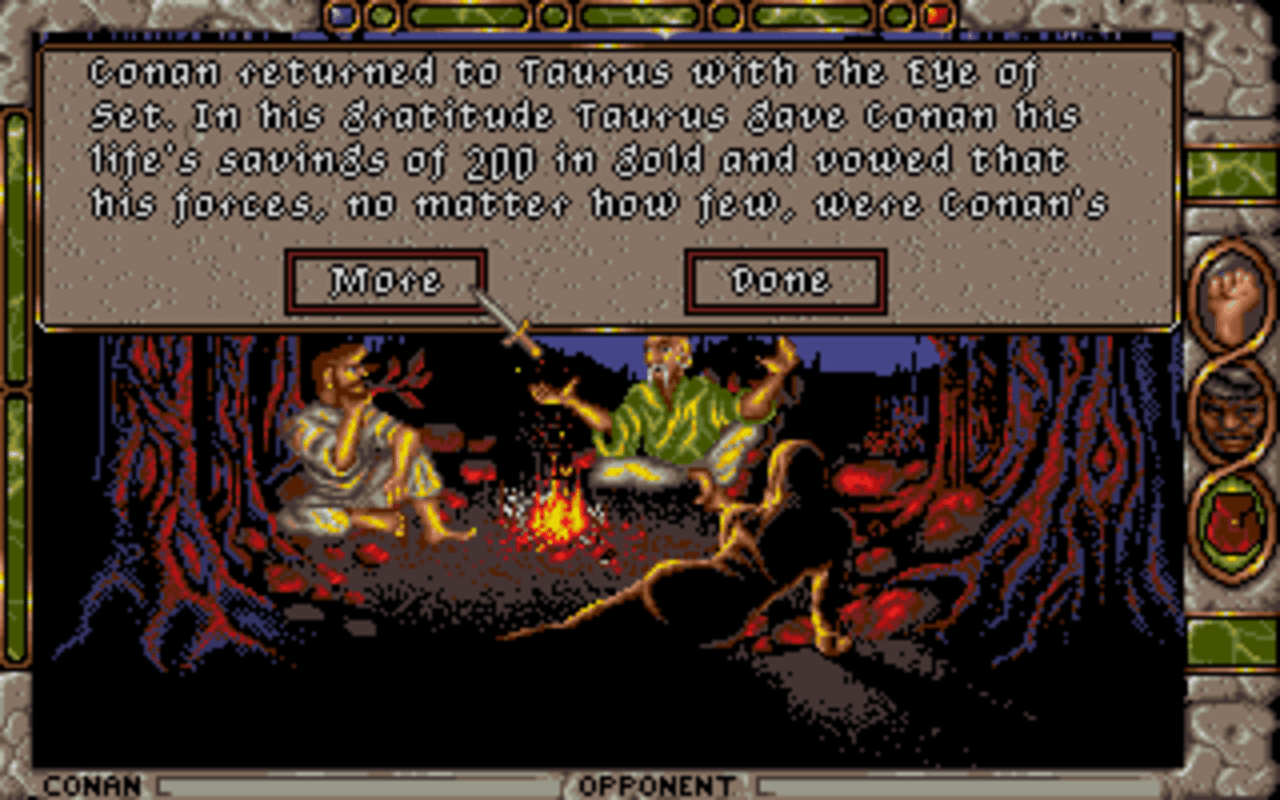
The story framework is equally fitting for the character. Conan begins with personal loss and is driven into a quest marked by wrath and pursuit. That gives the adventure a direct emotional center. The player is not merely collecting items or wandering for no reason; there is a primal sense of purpose beneath the movement from place to place. This focus helps the game maintain momentum, even when it shifts between its different gameplay views and systems.
A Dark Fantasy Game World Built on Travel, Combat, and Questing
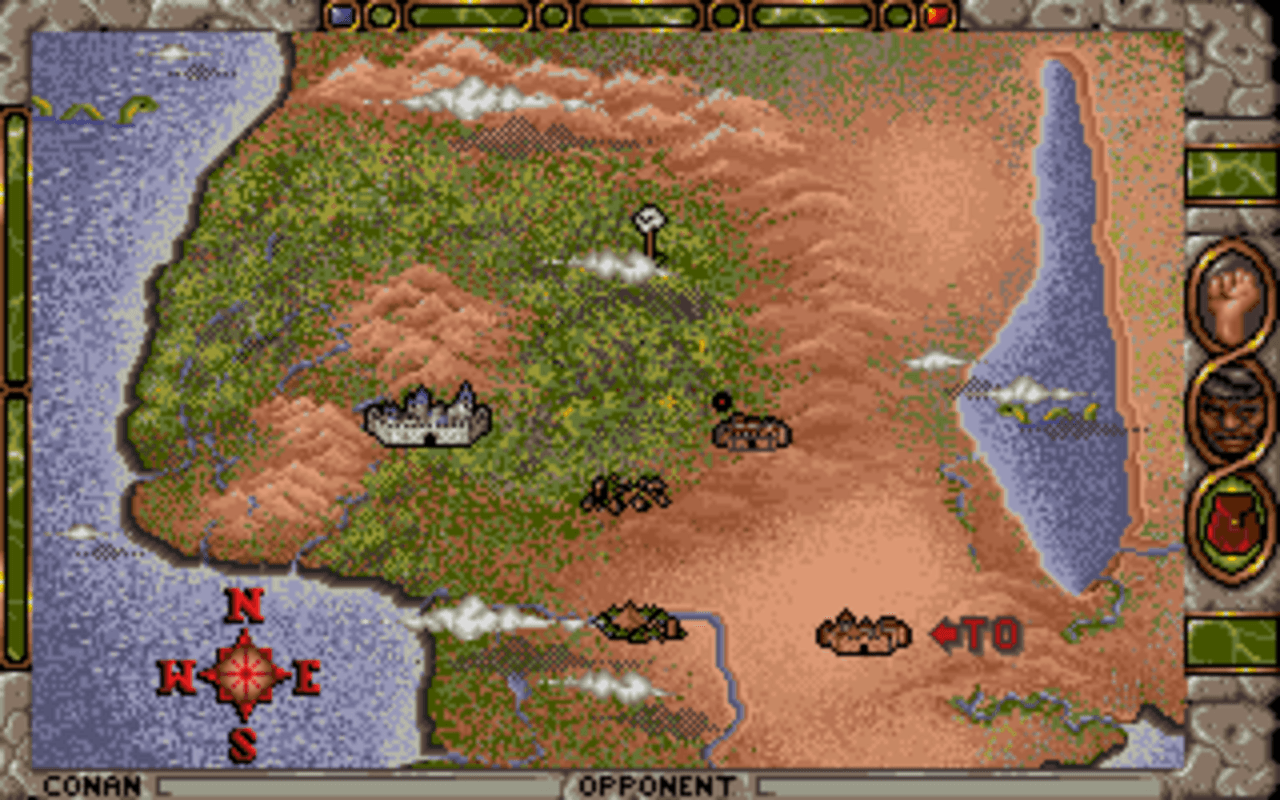
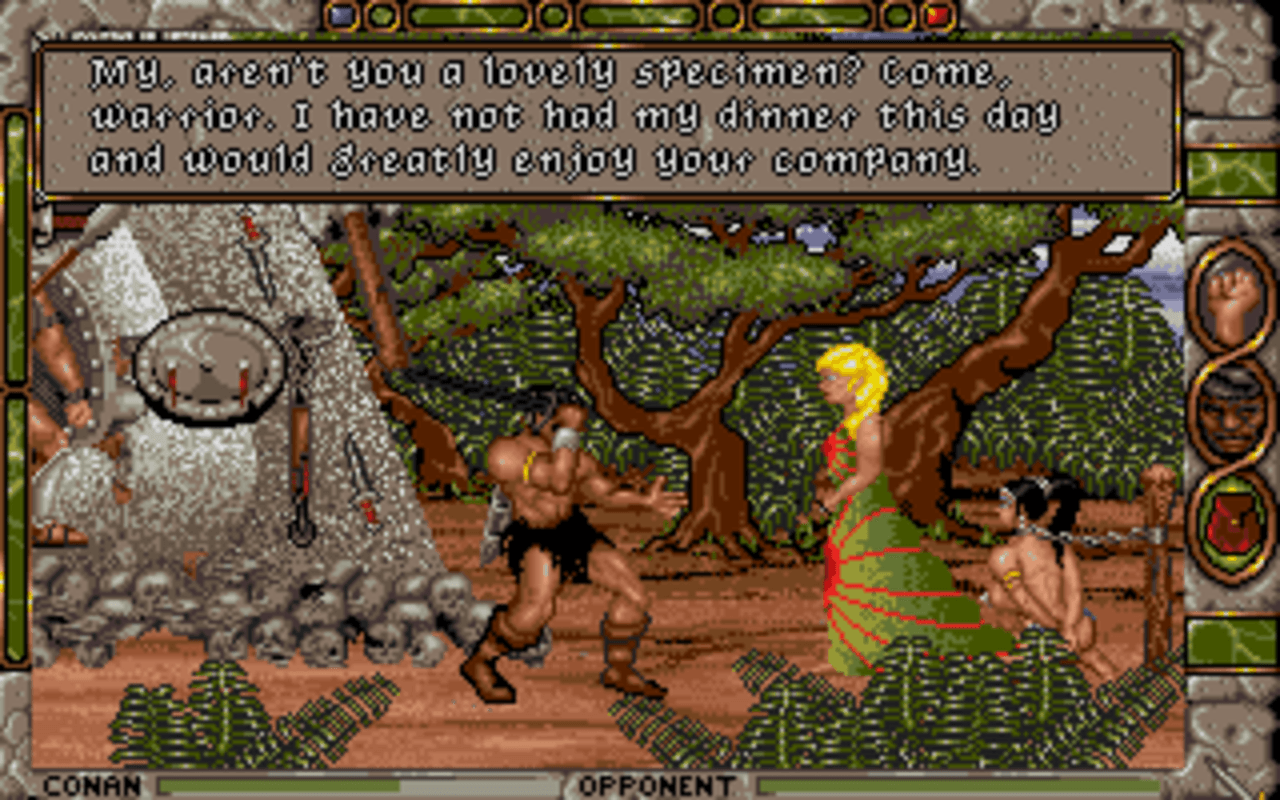
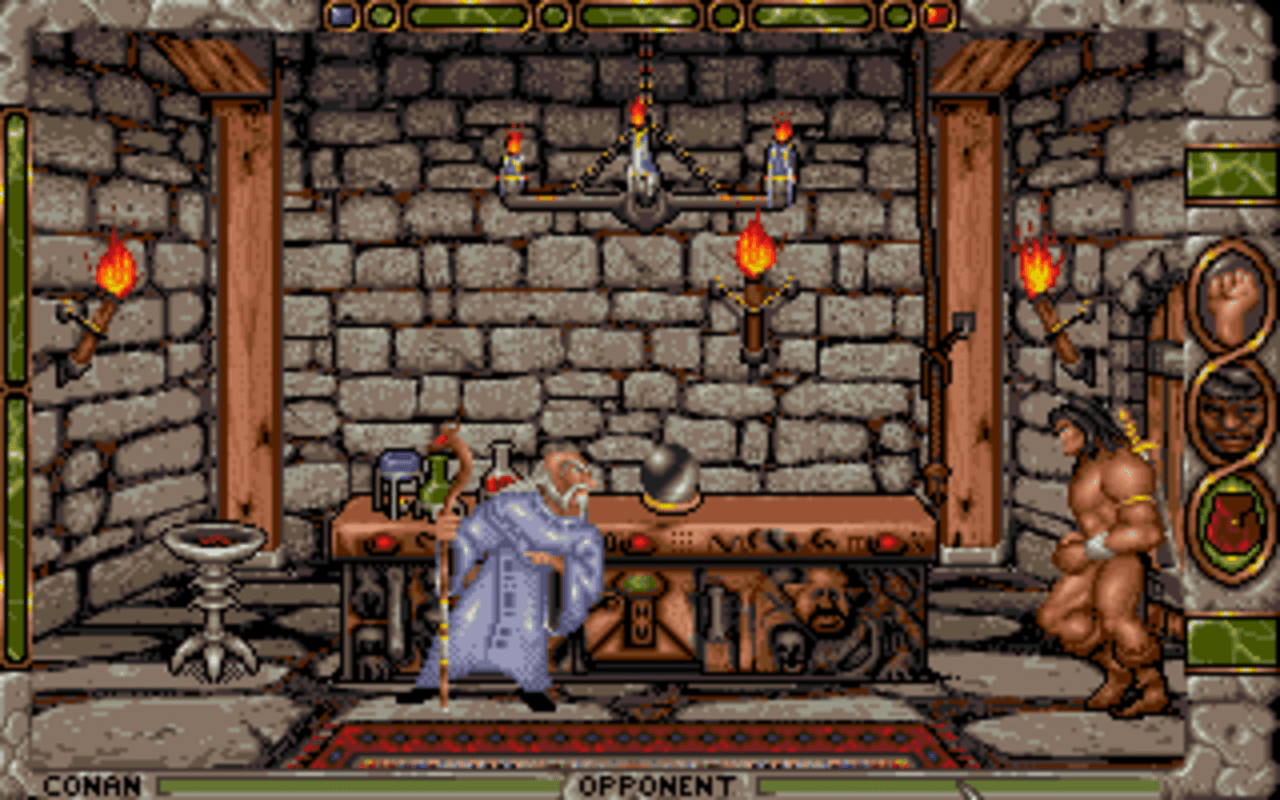
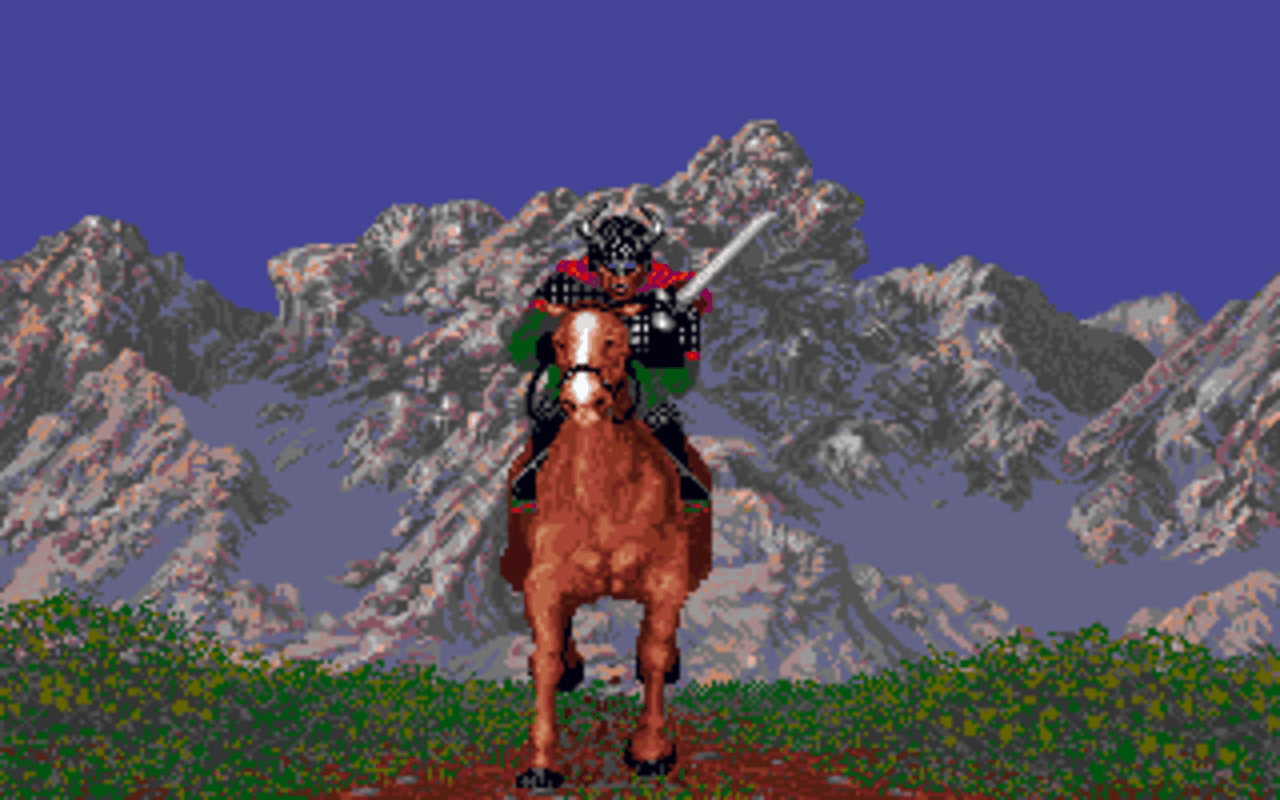
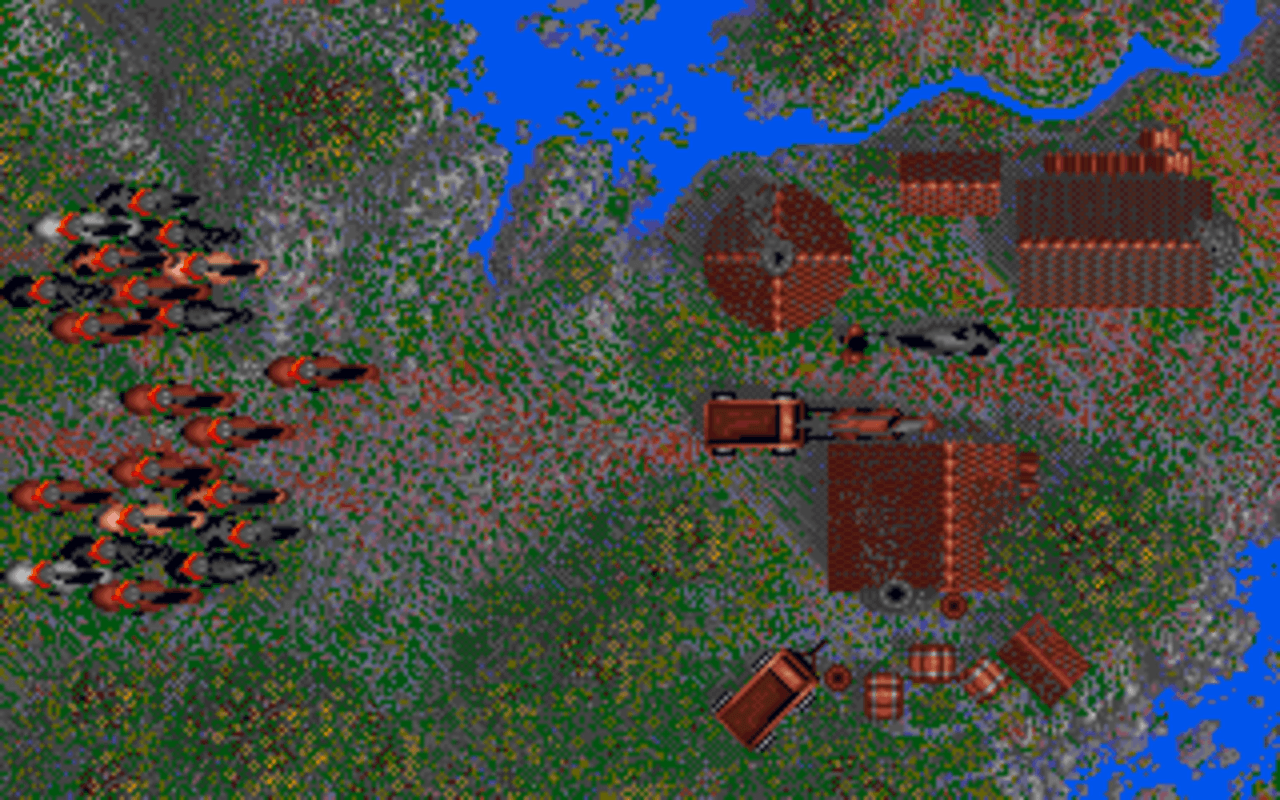
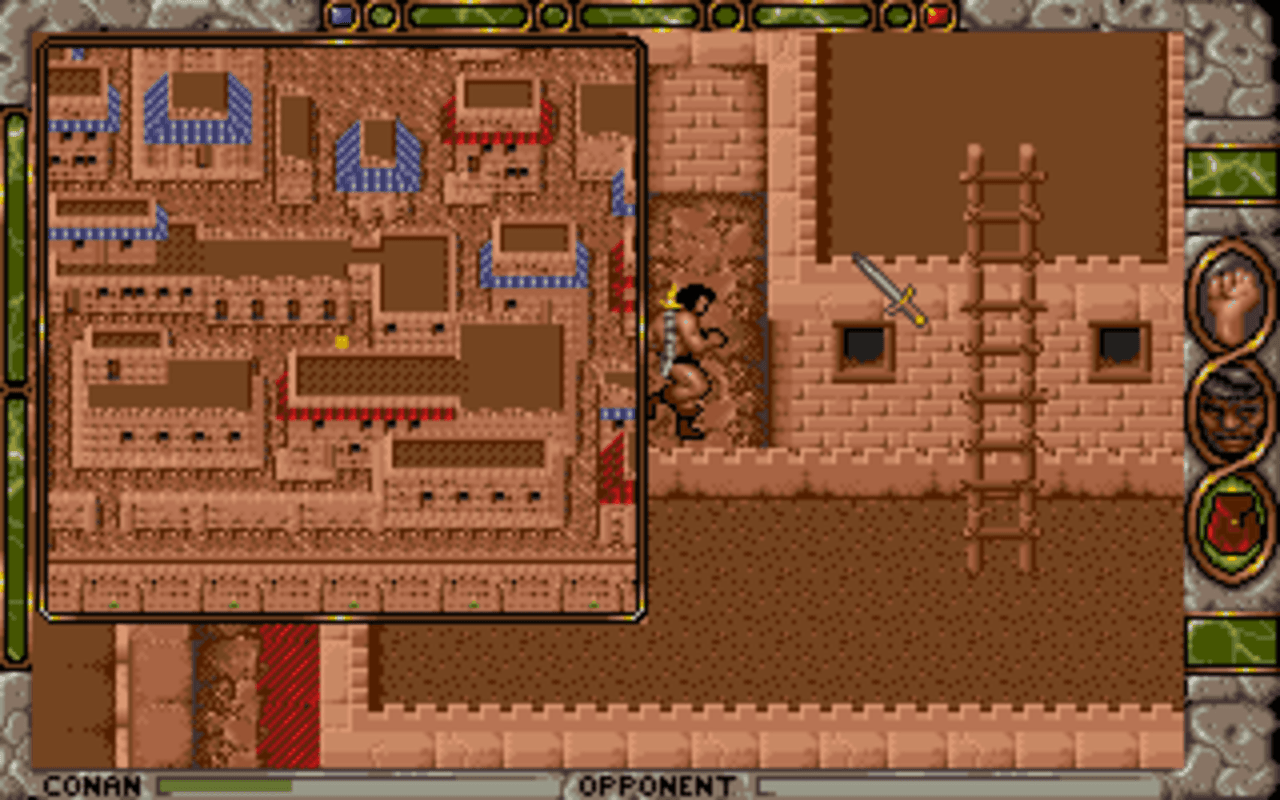
One of the most interesting features of Conan: The Cimmerian is its divided structure. Sources describing the game note that it uses multiple kinds of areas, including an overland travel map, city exploration scenes, and separate combat or interior perspectives. This layered design gives the adventure a wider scope than many action games of its generation. It creates the feeling that Conan is not trapped in a single corridor or repeated arena, but is instead moving through a larger, dangerous realm.
The overland sections give the game a sense of journey. Travel matters because distance matters. Moving across the map suggests risk, scale, and uncertainty, all of which suit a Conan tale. When the game shifts into towns and enclosed spaces, the mood changes from broad adventure to immediate tension. Streets invite exploration, buildings hint at secrets, and encounters can quickly become violent. This constant change in rhythm is part of the appeal. The game rarely feels static.
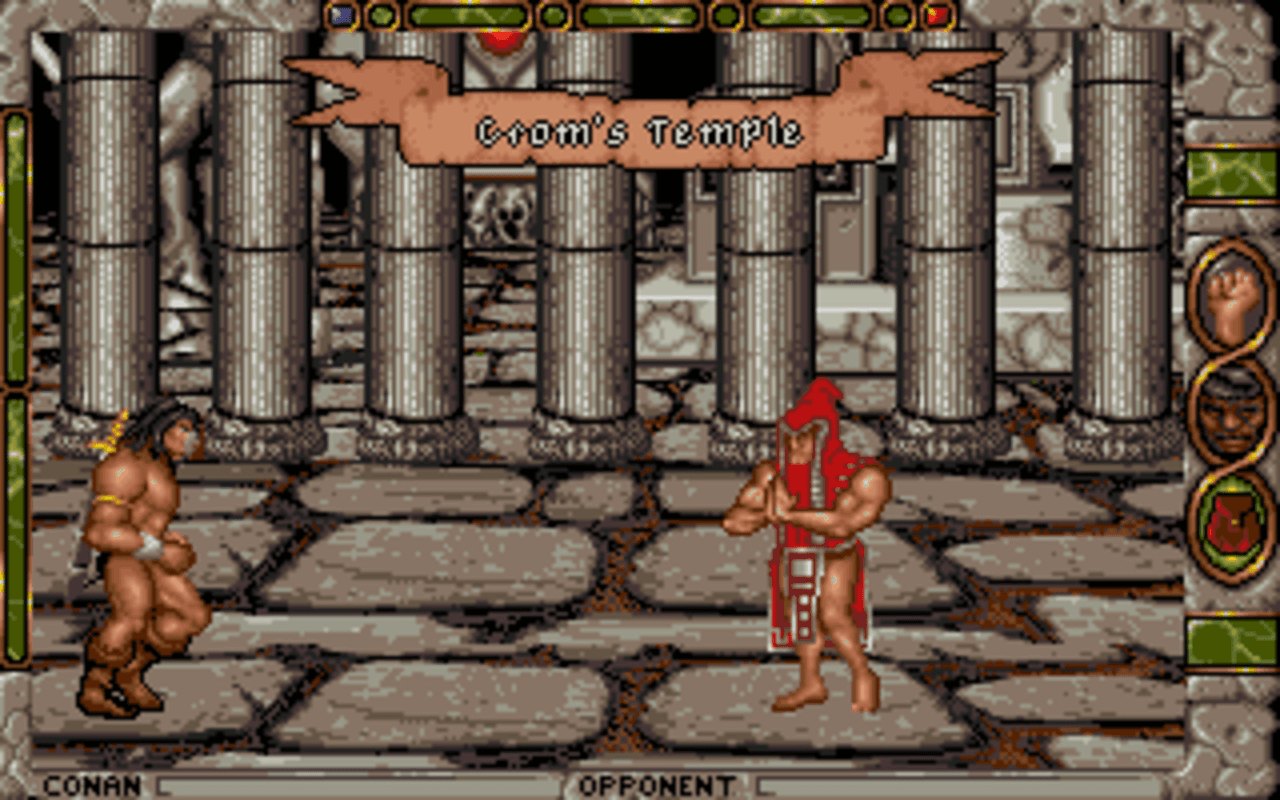
Combat, meanwhile, reinforces the barbarian identity at the center of the experience. Conan is meant to be physical, dangerous, and imposing, and the game understands that. Battles are not decorative interruptions; they are a core expression of character. The player must survive through timing, positioning, and persistence, which helps the action feel personal rather than automatic. The role-playing elements, including character status and inventory, add just enough depth to make the adventure feel more than purely reflex-based.
This mixture of systems means the game can appeal to more than one type of retro player. Someone drawn to action can enjoy the fights, while someone who prefers wandering through an old fantasy world can appreciate the exploratory side. The balance is not identical to a pure role-playing game or a pure platform action title, yet that is exactly why Conan: The Cimmerian has its own identity. It occupies an unusual middle ground, and that makes it memorable.
Play Conan: The Cimmerian online
Play Conan: The Cimmerian online and the game still communicates its brooding sword-and-sorcery energy with surprising ease. Because the adventure relies on atmosphere, travel, combat, and a strong central quest, it adapts naturally to modern browser play. It can be played free, in a browser, and on mobile devices without restrictions, allowing new players to discover its savage fantasy mood in a direct and accessible way while longtime fans revisit a distinctive Conan game in a simple format.
Playing online also highlights how readable the design remains. The structure is clear: travel outward, investigate dangerous places, fight when necessary, and push deeper into Conan’s revenge-driven path. The game’s changing viewpoints help keep that process visually fresh, and its fantasy setting does the rest. Dark temples, hostile streets, and rugged landscapes create a world that still feels adventurous because the underlying fantasy is archetypal and strong.
Another reason it works well online is that the game never loses sight of its theme. Everything serves the image of Conan as a wandering warrior facing sorcery, treachery, and brute violence. Even when the mechanics show their age, the concept remains vivid. That makes it easy for players to settle into its rhythm. You are not just moving through levels; you are stepping into a stern barbarian saga where every location suggests another threat or another step toward retribution.
Why Conan: The Cimmerian Still Rewards Classic Action-Adventure Fans
Many vintage fantasy games are remembered for a single gimmick, but Conan: The Cimmerian is easier to revisit because it offers mood, variety, and recognizable character identity all at once. The Conan license is not used as decoration. The game genuinely tries to imagine what a Conan adventure should feel like: fierce, mournful, dangerous, and relentless. That seriousness gives it staying power.
It is also notable that the game does not flatten its hero into a faceless avatar. Contemporary commentary on the game observed that it attempted to make Conan feel more like a character of flesh and blood than a generic action figure, and that quality still comes through in the structure of the journey. The quest begins from trauma, grows through confrontation, and unfolds across a world that never feels tame. That dramatic arc helps the adventure resonate beyond its immediate mechanics.
For retro players, the appeal lies in the combination of ambition and atmosphere. This is not the smoothest or simplest fantasy game ever made, but it is full of personality. Its roughness is part of its identity. The changing viewpoints, the stern setting, and the relentless tone all contribute to a game that feels handcrafted around a specific heroic fantasy mood rather than assembled from generic genre parts.
Conan: The Cimmerian remains worth playing because it offers something sturdy and distinctive: a dark fantasy game shaped by travel, battle, and vengeance. The controls are straightforward in spirit, centered on movement, combat actions, and interacting with the world as Conan advances through hostile territory. As a classic DOS adventure, it still stands as an intriguing blend of action and role-playing flavor, and its barbarian atmosphere remains its greatest weapon.
All used codes are publicly available and the game belongs to its original authors.