Deathbringer and the rise of dark fantasy action
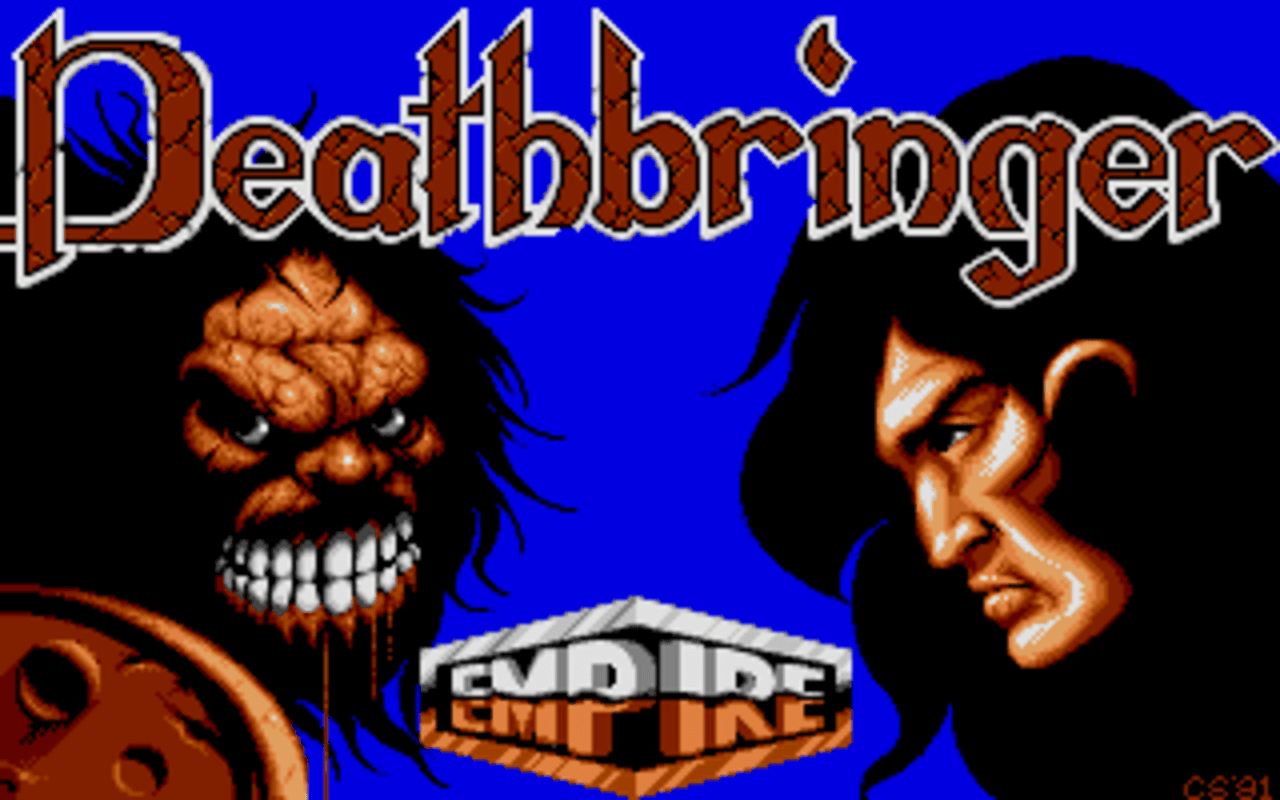
Deathbringer emerged during the early era of fantasy action games, when developers were experimenting with mood, spectacle, and punishing arcade-style combat on home computers. Published by Empire Software for DOS and other systems, the game casts the player as Karn, a barbarian fighter caught in a vicious struggle against evil wizards and the demonic force trapped within his own sword. That premise alone gives Deathbringer an identity that is easy to remember. Rather than presenting a simple heroic weapon, the game turns the blade into a living burden. It wants souls, and it constantly reminds the player that power always comes with a price.
What makes the setup effective is its immediate clarity. The world is hostile, the enemies are grotesque, and the hero is not merely fighting through danger but managing a curse. The result is a game with a darker pulse than many fantasy action titles of its period. Deathbringer does not rely only on scenery or backstory to create atmosphere. Its mood comes from mechanical tension. Every clash matters because survival is tied directly to aggression. That design gives the adventure an urgent tempo that still feels fresh when people play the game today.
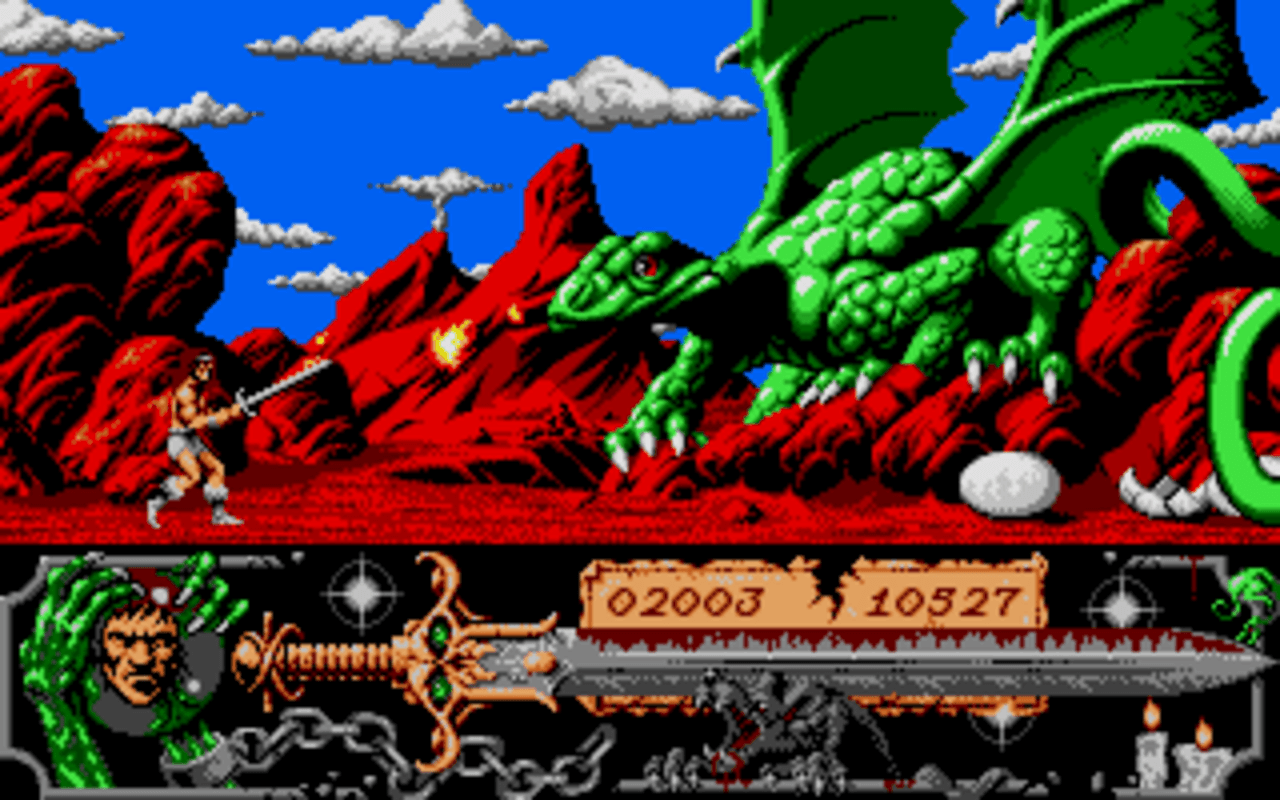
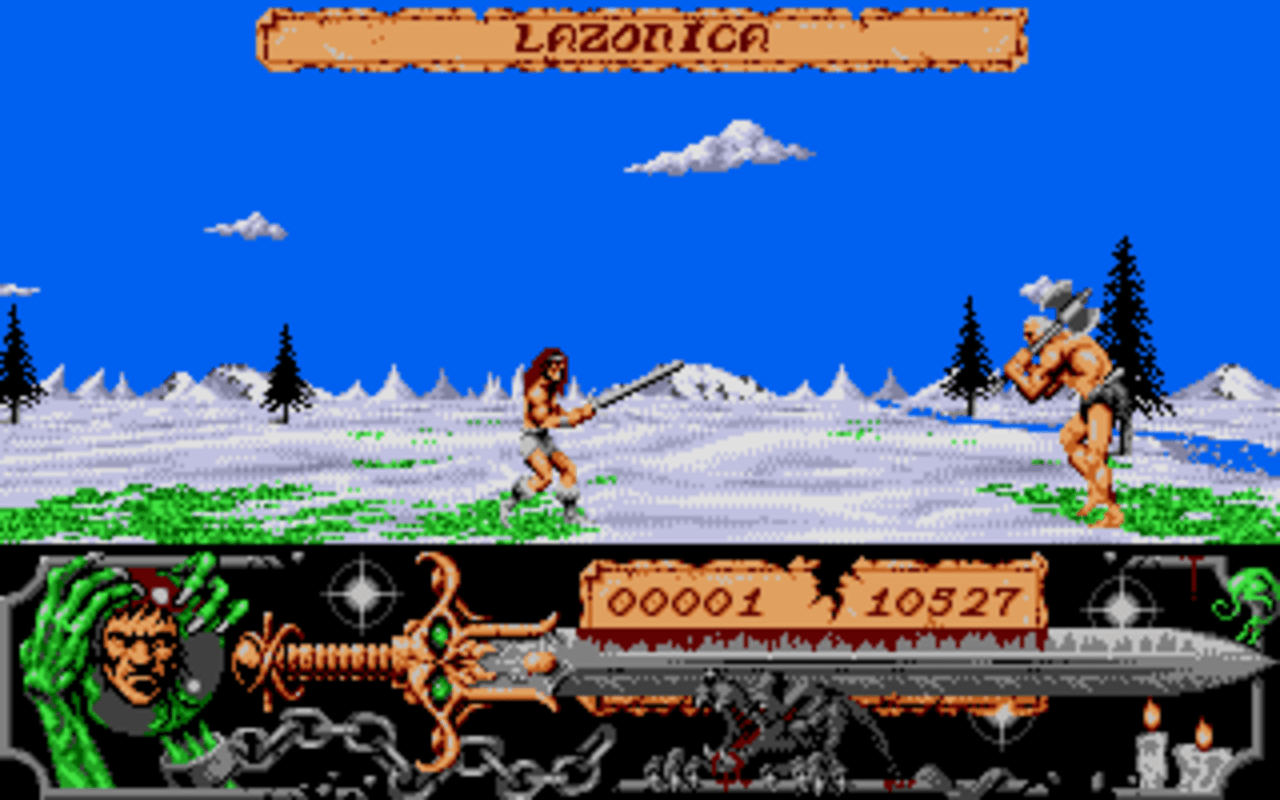
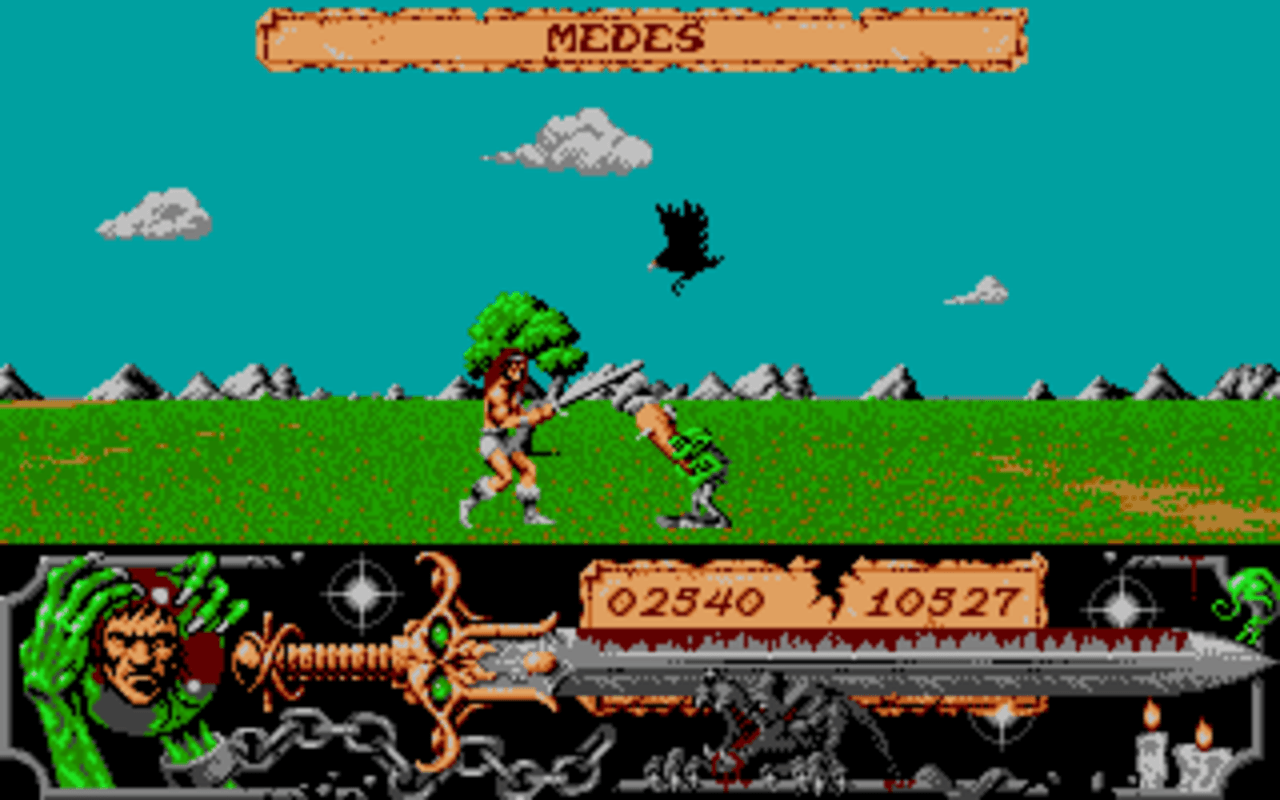
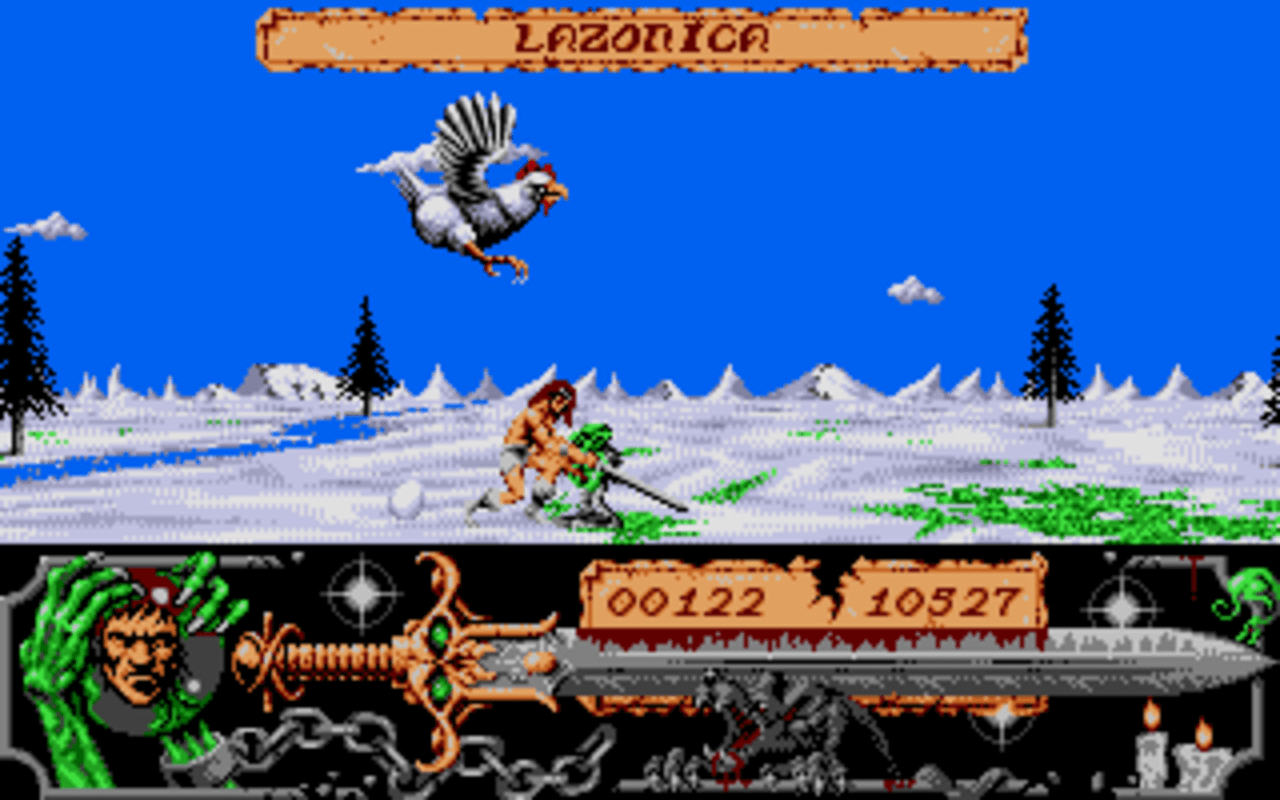
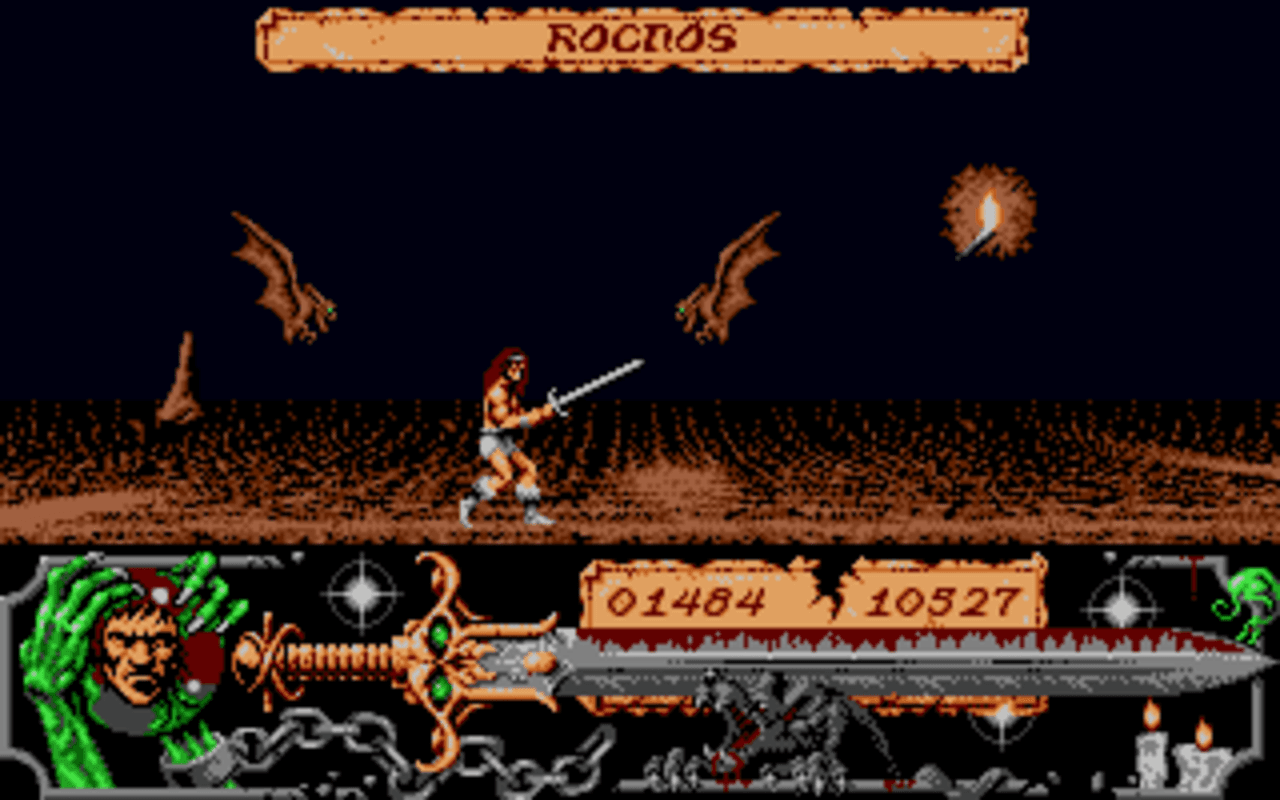
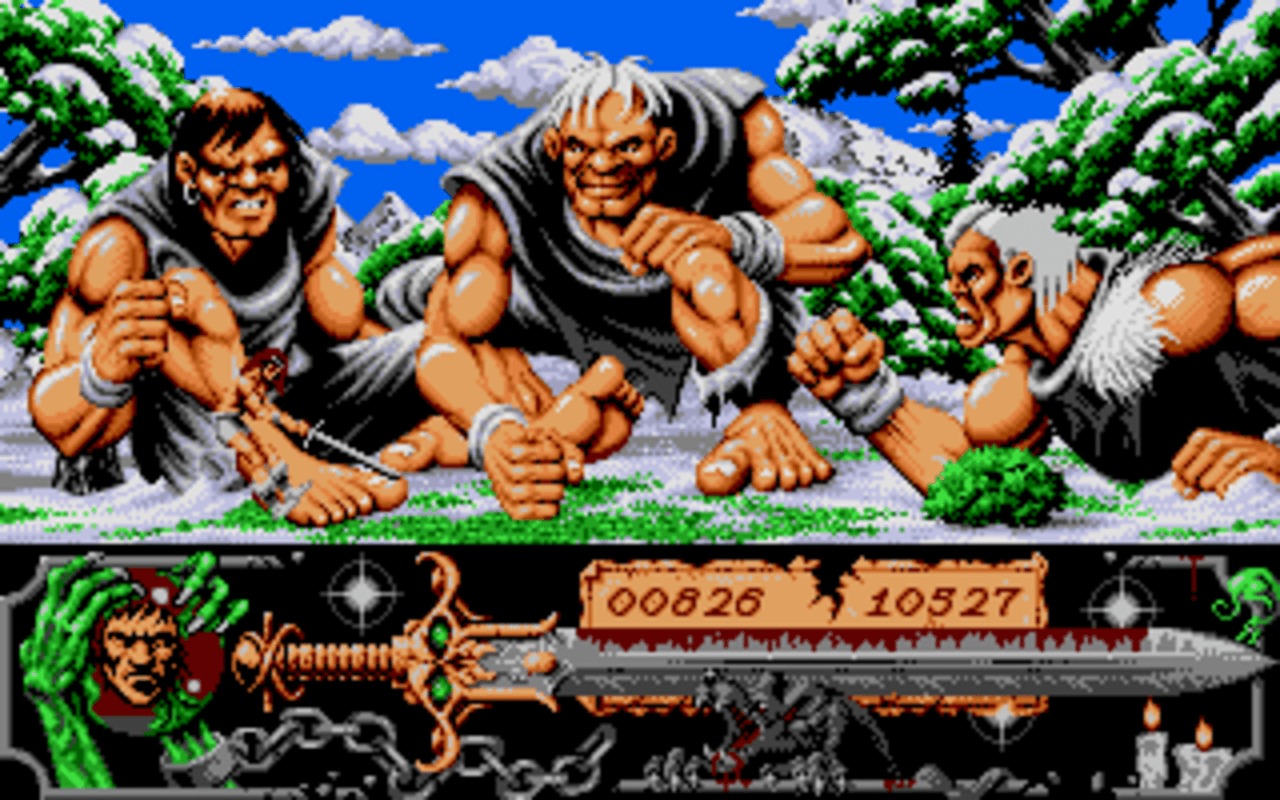
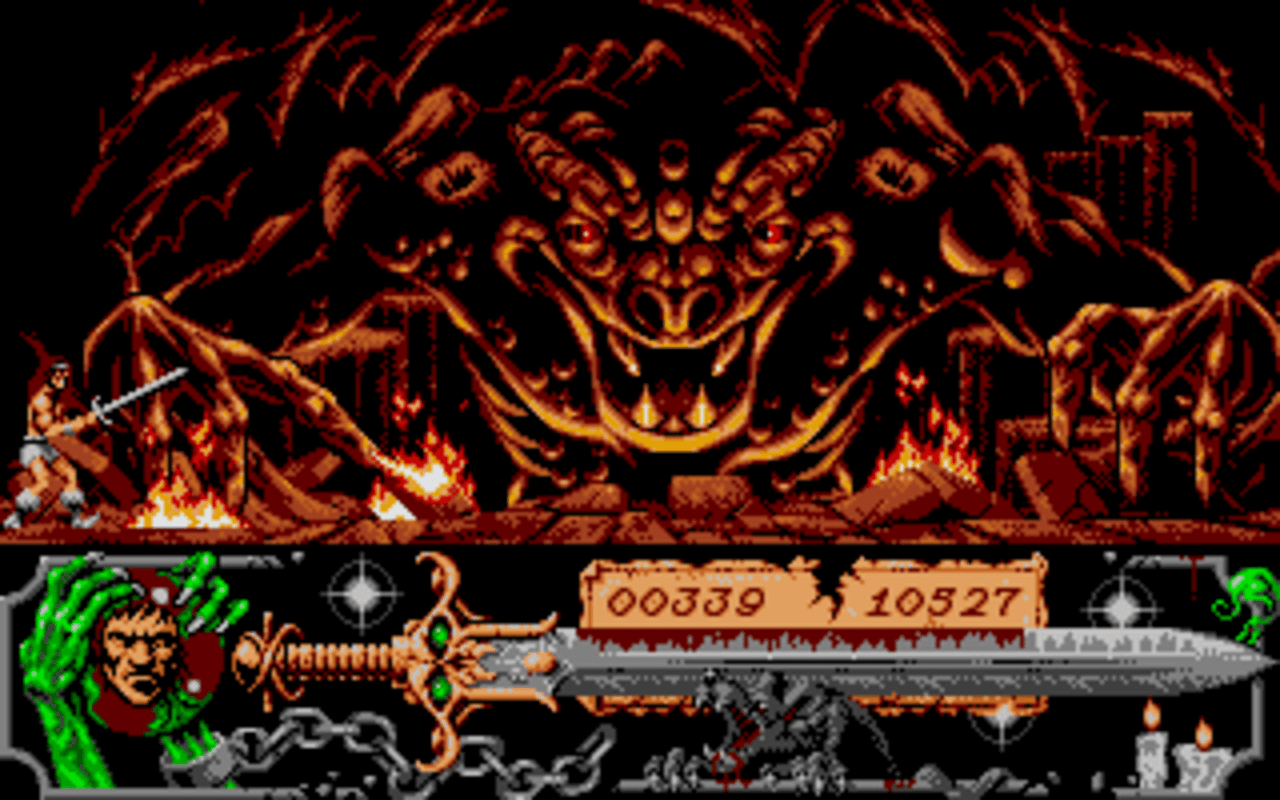
The visual style also deserves attention. Contemporary coverage and database records note its dramatic side view, fantasy setting, and technically impressive scrolling effects, all of which helped it stand out in a crowded field of action releases. The art leans into ruined landscapes, monstrous opposition, and a brooding sense of decay. Even when the action becomes repetitive, the presentation keeps the experience lively because the world looks dangerous and unstable, as though it might swallow Karn at any moment.
The cursed sword mechanic makes Deathbringer different
At first glance, Deathbringer may seem like a straightforward barbarian action game, but its central idea changes the entire rhythm of play. Karn carries the sword called Deathbringer, and the weapon is more than a tool. It feeds on souls collected from defeated enemies. If that energy runs low, the sword begins to drain the hero’s life, turning every battle into a race against time. This is the mechanic that gives the game its own voice. Instead of encouraging cautious progress, it pushes the player forward into danger.
That feature creates a satisfying kind of pressure. In many classic action games, enemies are obstacles to remove before moving on. Here, foes are also resources. They are threats, but they are also the fuel that keeps the hero alive. This single twist transforms the usual stop-and-start pattern of side-scrolling combat into something more feverish. The player is not just clearing a path. The player is feeding a hungry artifact while trying to stay in control of the battlefield.
The structure of the adventure adds to that restless mood. Sources describe a journey across 30 levels, with boss encounters gating progress and level routes that let the player move left or right from the starting point. That arrangement gives the game a sense of motion and unpredictability. Even when the action is direct, the map flow feels less rigid than a simple march from one end of a stage to the other. For a classic DOS action game, this adds welcome texture.
There is also something memorable about the tone of the combat itself. Deathbringer is not elegant fantasy. It is rough, forceful, and slightly oppressive by design. Karn does not float through elegant duels. He hacks through ugly resistance in a hostile world. That weight is part of the appeal. Players who enjoy polished acrobatics may prefer other action games, but those who want a harsher and more desperate atmosphere often find Deathbringer compelling precisely because it feels heavy.
Play Deathbringer online
Play Deathbringer online and the game still offers a distinctive fantasy action experience built around pressure, momentum, and raw atmosphere. It can be played free, in a browser, and on mobile devices without restrictions, which makes this dark barbarian adventure easy to revisit in a modern setting while preserving the spirit of the original release.
Playing Deathbringer online highlights how immediate its design really is. The premise needs almost no explanation beyond sword, monsters, and survival. Within moments, the player understands the danger and the goal. That instant readability is one reason classic action games continue to work so well in a browser format. There is no need for lengthy setup before the game reveals its personality. Deathbringer starts with tension and keeps building from there.
The online play appeal also comes from the game’s straightforward structure. Because the action is direct and the objectives are always tied to movement, combat, and endurance, each session feels focused. A player can jump in for a quick attempt or settle in for a longer run through the fantasy nightmare. That flexibility is one of the strengths of classic DOS design. The experience is concentrated, mechanical, and satisfying without depending on trends or temporary features.
On mobile devices, the game’s simple directional movement and attack-driven rhythm translate naturally to touch-friendly play concepts. The pacing remains intense because the core challenge is based on timing, positioning, and keeping the sword fed. Deathbringer online therefore feels less like a relic and more like a concentrated arcade fantasy game that still understands how to challenge a player in short, dramatic bursts.
Why Deathbringer still rewards classic action fans
Deathbringer remains interesting because it commits fully to its concept. Many older action games are remembered for visuals alone or for difficulty alone. This one combines atmosphere with a meaningful gameplay hook. The cursed sword is not decorative lore. It shapes decision-making at every stage. That is why the game continues to attract curiosity from players who enjoy rediscovering older DOS releases.
It also occupies an appealing space between pure hack-and-slash simplicity and more strategic action design. You are always fighting, but you are also thinking about pace, enemy presence, and survival pressure. That balance helps Deathbringer avoid feeling anonymous. Even players who notice its rough edges often remember the game because it dared to build its entire identity around a weapon that is as dangerous to its owner as it is to his enemies.
There is also value in the game’s tone. Deathbringer embraces a brooding fantasy world without softening it with humor or bright adventure motifs. The experience is grim, direct, and unapologetically dramatic. For players who love classic game history, that tone makes it a fascinating artifact of an era when developers pursued bold atmosphere with limited resources and sharp imagination.
Deathbringer is worth attention not because it is flawless, but because it is memorable. Empire Software published a fantasy action game that understood the power of a strong central mechanic and wrapped it in a harsh, sinister world. Karn’s journey through monsters and sorcery remains easy to revisit, easy to understand, and hard to forget. Control is centered on moving, jumping, and attacking with careful timing, so success comes from learning enemy patterns, keeping up momentum, and never allowing the sword’s hunger to turn against you.
All used codes are publicly available, and the game belongs to its original authors.