Livingstone I Presume? and the Pulp-Adventure Spark
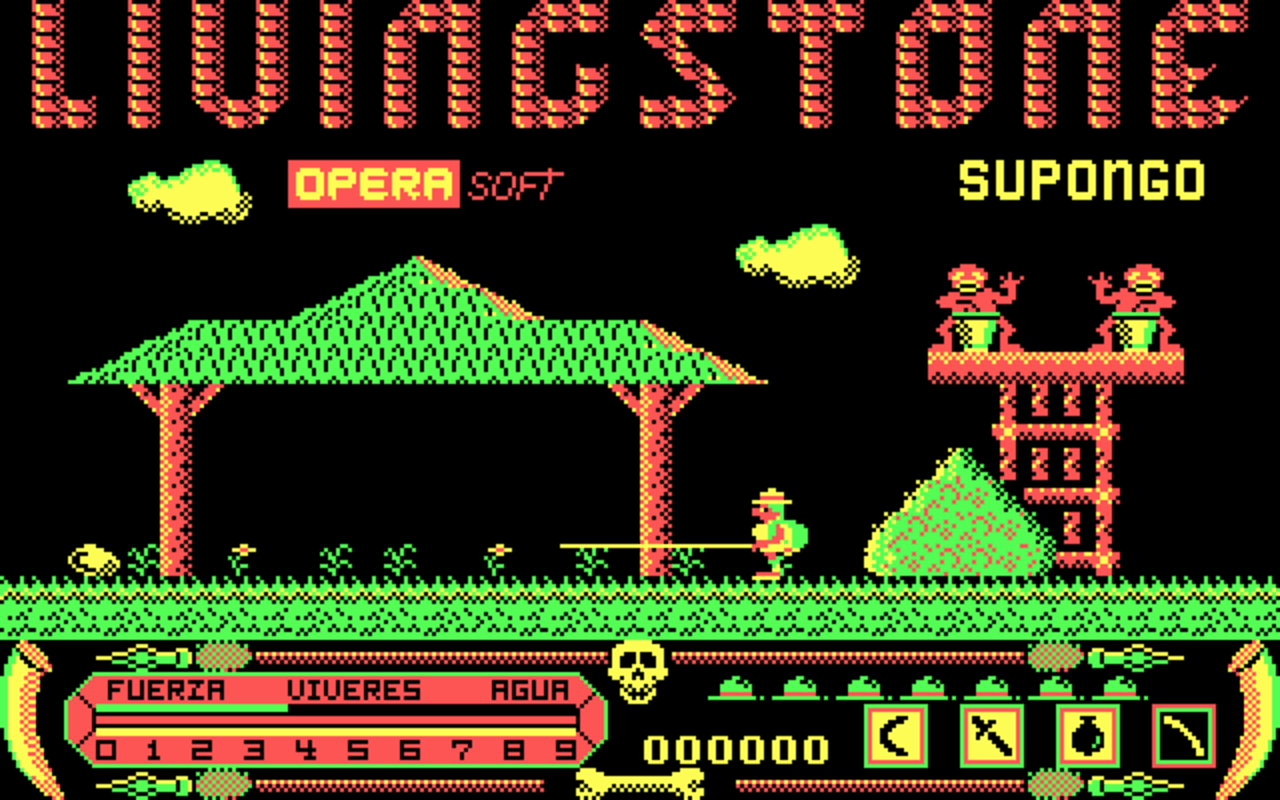
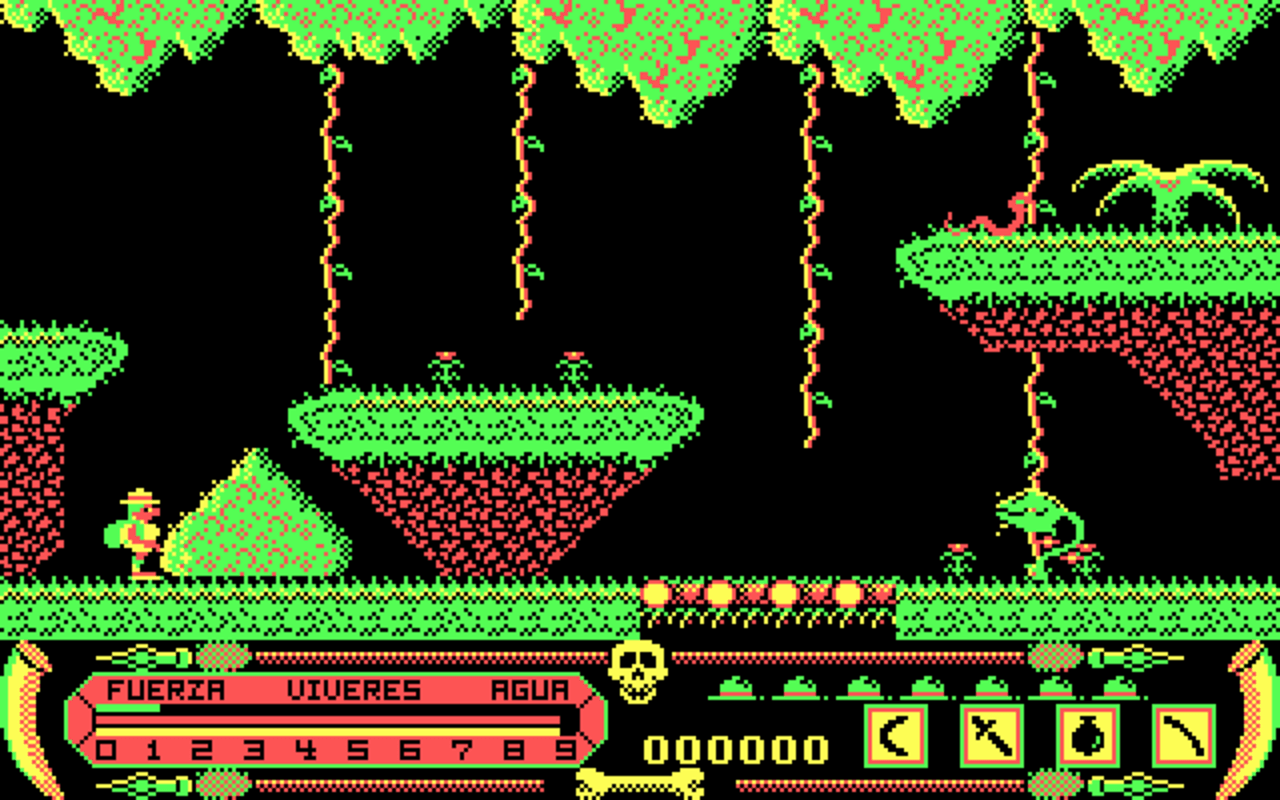
Opera Soft S.A. crafted Livingstone I Presume? as a tightly paced expedition that borrows a famous historical setup, then gleefully turns it into arcade-style danger and discovery. You play as Henry Morton Stanley, pushing through a stylized Africa of jungle trails and ancient temples to find Dr. Livingstone, with the story acting as a springboard for daring escapes, hidden routes, and sudden traps. It’s the kind of game that feels instantly readable, yet keeps surprising you once you realize how interconnected the world can be.
The first thing you notice is how quickly it demands attention. A screen that looks safe may hide a pressure trap, an enemy that punishes impatience, or a gap that can only be crossed with confident timing. Instead of flooding you with text, the game teaches through consequences, and that creates a strong “learn the jungle” rhythm that stays satisfying no matter when you discover it.
Jungle Platform Gameplay Built Around Tools and Timing
Livingstone I Presume? uses a fixed, flip-screen perspective, which changes how you think about movement. You’re not simply sprinting forward; you’re building a mental map, remembering which exit leads back to supplies, which ledge is a dead end, and where a switch might open a safer path. That structure gives the adventure a puzzle-like backbone, because knowledge becomes as valuable as reflexes.
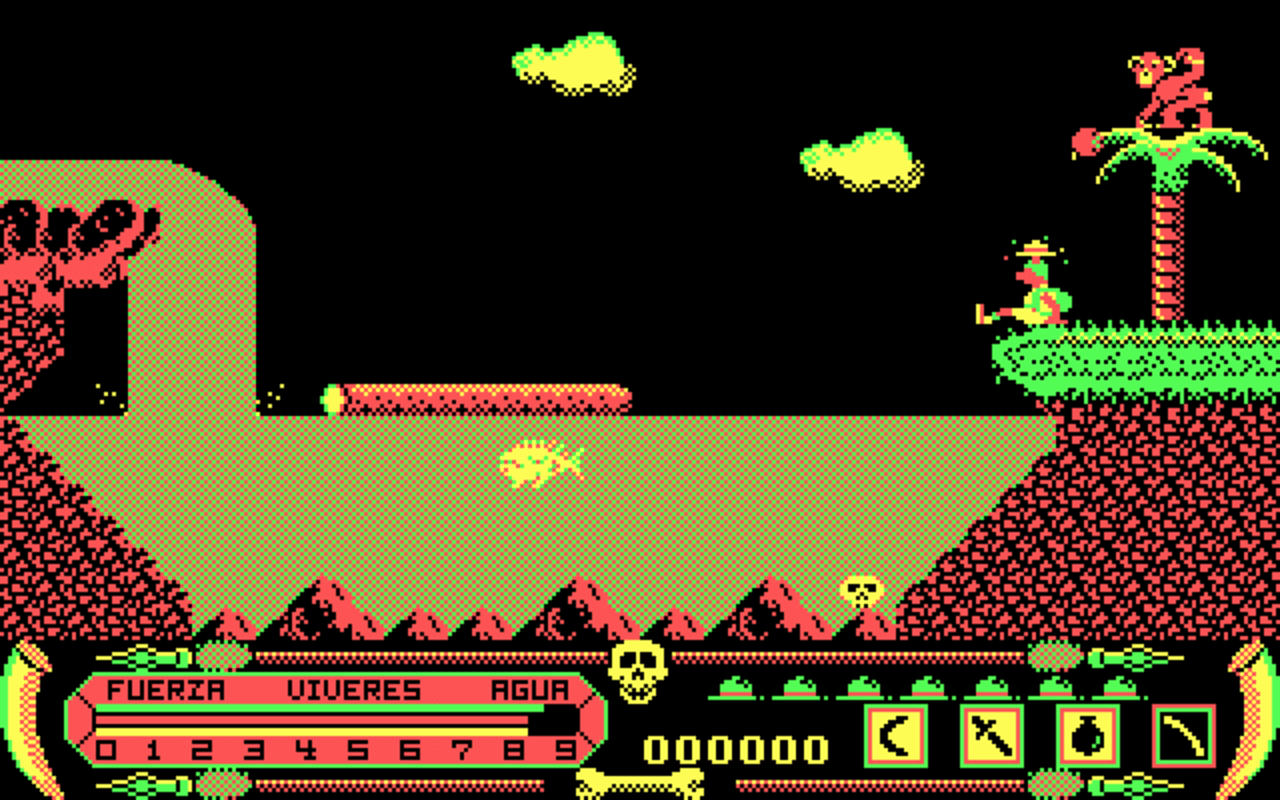
Stanley isn’t limited to jumping and hoping, either. The game’s signature feel comes from juggling movement with a small kit of practical tools. Depending on the situation, you’ll rely on different options for close danger, distant targets, or clearing space when standing still is risky. A vaulting pole adds a distinctive flourish: it’s not just a “bigger jump,” it’s a commitment that rewards courage and punishes sloppy spacing. When the game is at its best, you’ll hit a hard-to-reach trigger from afar, vault a gap before a hazard cycles again, then land with just enough room to react.
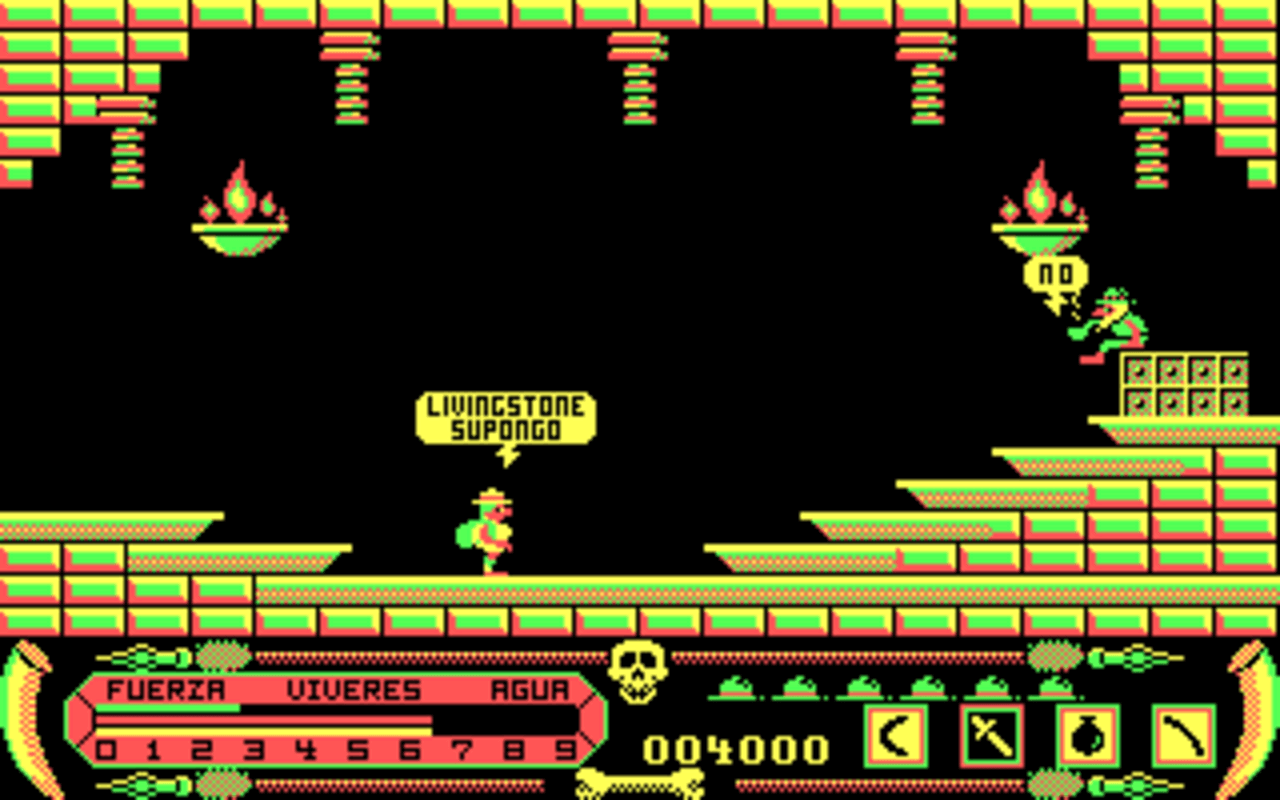
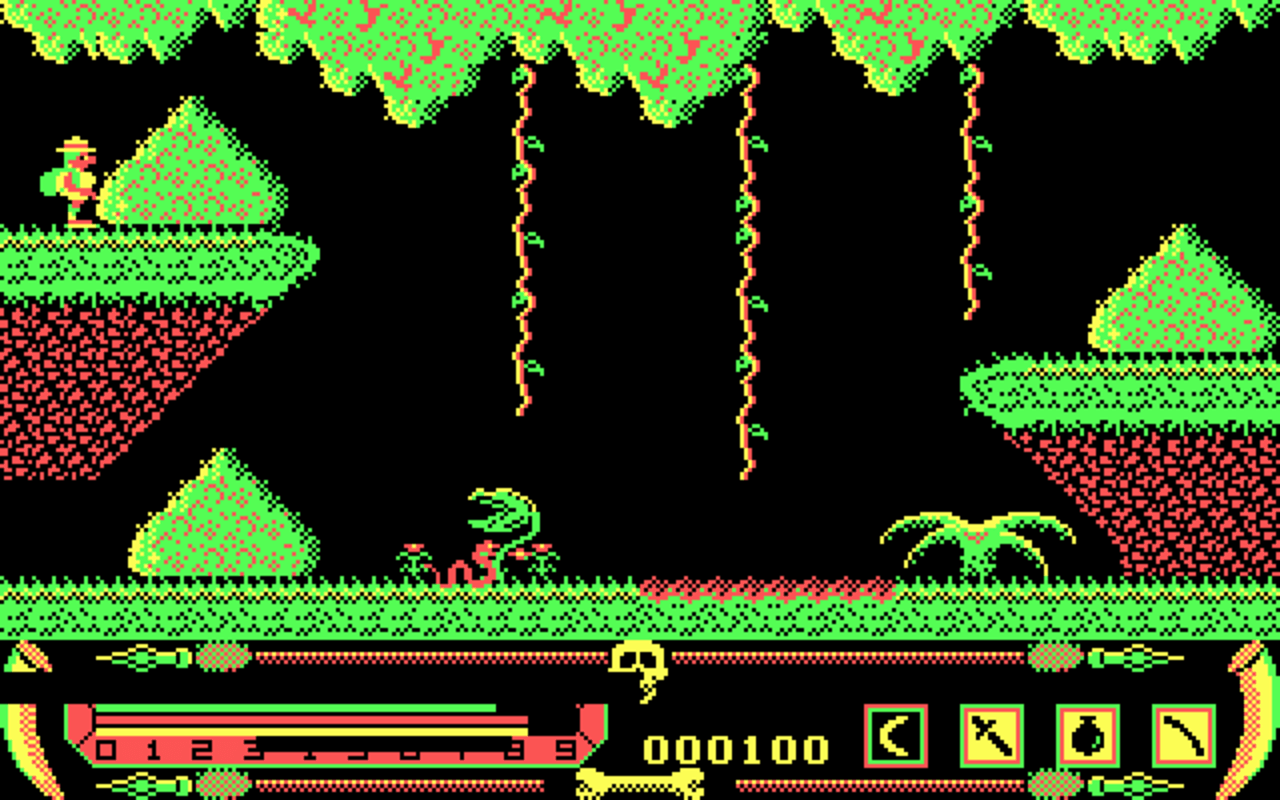
The jungle’s threats are staged like set pieces. Carnivorous plants guard predictable lanes, animals pressure you into mistakes, and booby traps punish autopilot play. The difficulty can be sharp, but it tends to feel fair because each hazard has a logic you can learn. Your improvement comes from reading patterns, choosing safer approaches, and getting cleaner with jumps rather than from hoping for better luck.
Exploration, Energy, and the Joy of Learning the Map
Under the action, there’s a subtle expedition mindset. Food and water matter, turning simple exploration into a chain of small decisions: do you detour for supplies, or push forward and risk running low when the temple screens get nastier? That tension fits the theme beautifully, because it makes you feel like an intruder surviving in hostile terrain, not a superhero mowing down endless rooms.
The game also rewards curiosity. Routes loop back, exits lead to surprises, and “unimportant” screens can become crucial once you understand how the map breathes. Even repeated failures feel productive because they teach you where danger is concentrated and where you can regain control. Over time, the world stops feeling like random punishment and starts feeling like a place you know—one where you can plan.
By the later stretch, the adventure leans harder into memory and composure. You’re not only dodging hazards; you’re managing momentum, staying calm when you’re a single mistake away from losing progress, and choosing when to play boldly versus when to play safe. The result is a classic game loop that stays compelling: observe, attempt, adapt, and push one screen deeper.
Play Livingstone I Presume? online
To play Livingstone I Presume? online is to experience a classic game free, in a browser, and on mobile devices without restrictions, while keeping its quick, room-by-room intensity intact. The flip-screen design is perfect for this style of play because every screen is a self-contained challenge: you can jump in, tackle a sequence of rooms, and still come away feeling like you learned something important about timing, routing, or tool choice.
Playing online also highlights how clean the game’s communication is. Hazards are readable, the rules are consistent, and the challenge is built around deliberate commitment—especially when you vault a gap or approach a trap that demands precision. On mobile, you’ll naturally lean into thoughtful pacing, taking an extra breath before risky jumps and choosing safer lines through enemy-heavy rooms. Whether you play with keys, a controller, or touch controls, the core remains the same: careful observation followed by decisive action.
Why Livingstone I Presume? Still Earns Another Try
Livingstone I Presume? endures because it balances three pleasures at once: the snap of platform action, the satisfaction of exploration, and the charm of a pulpy adventure fantasy. It doesn’t need long cutscenes or endless systems to feel engaging; the excitement comes from mastering a dangerous landscape that keeps asking you to think.
It also has a strong sense of place. Temples feel distinct from open jungle screens, and the hazards feel like they belong to their environments rather than being dumped in at random. That cohesion is what turns repetition into learning: when you fail, you’re not just restarting—you’re refining a plan and building confidence in a world that finally makes sense.
Livingstone I Presume? is a brisk, memorable expedition that fuses platform challenge with map-based discovery, making it ideal for anyone who loves a game that rewards both nerves and knowledge. For controls, move with the directional keys (“Q”, “O”, “P”) (or joystick), use a jump/action input for leaps, and switch or use your current tool as needed (numerical keys); steady timing and smart tool changes are the fastest route to consistent runs.
All used codes are publicly available, and the game belongs to its original authors.