Panza Kick Boxing and the Taste of Authentic Combat
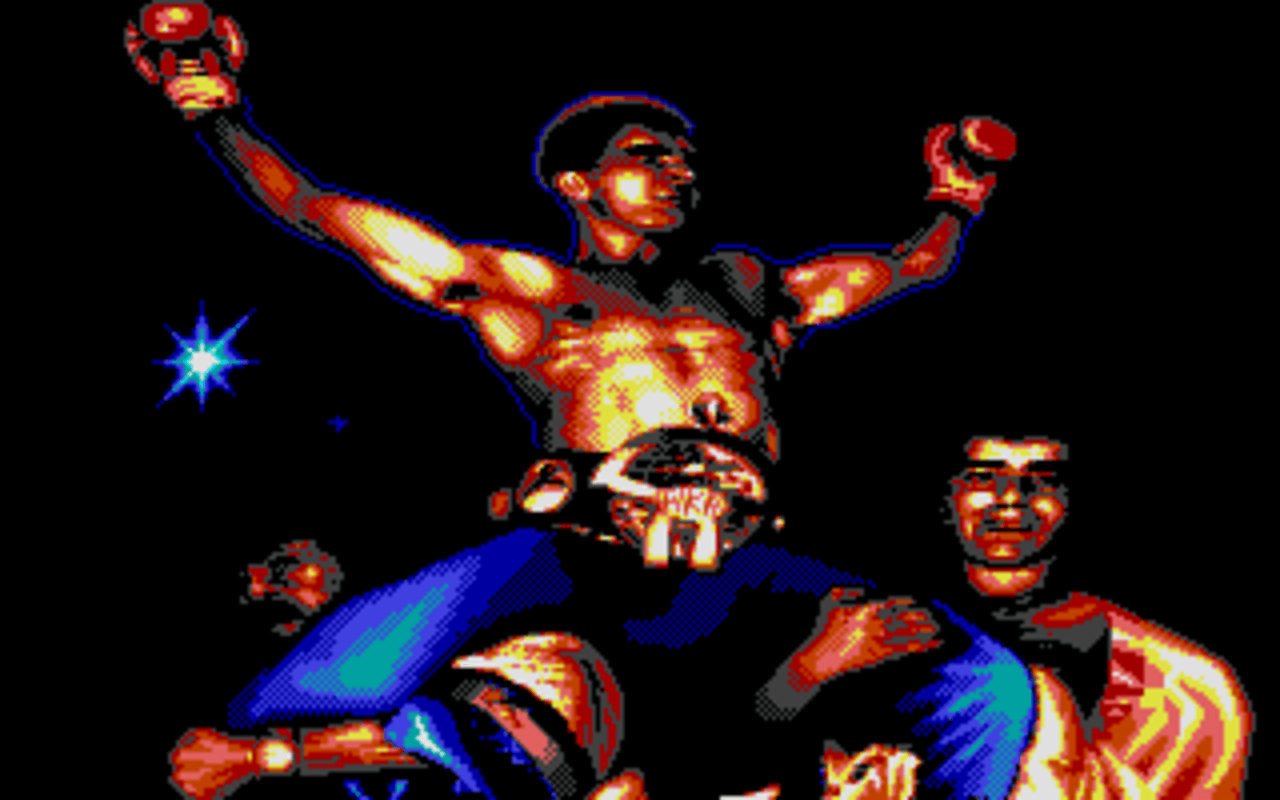
Panza Kick Boxing arrived during a period when DOS sports and fighting games were eager to look and move like real athletes instead of abstract sprites. Published by the French label Loriciels and developed by Futura, it set out to capture kickboxing as a measured contest of rhythm, reach, and reaction rather than a cartoon brawl. The game’s endorsement ties it to the aura of professional striking, and even without needing a deep storyline, it frames your climb as a serious pursuit: you are not simply “winning matches,” you are building credibility, sharpening form, and chasing the top of the ladder.
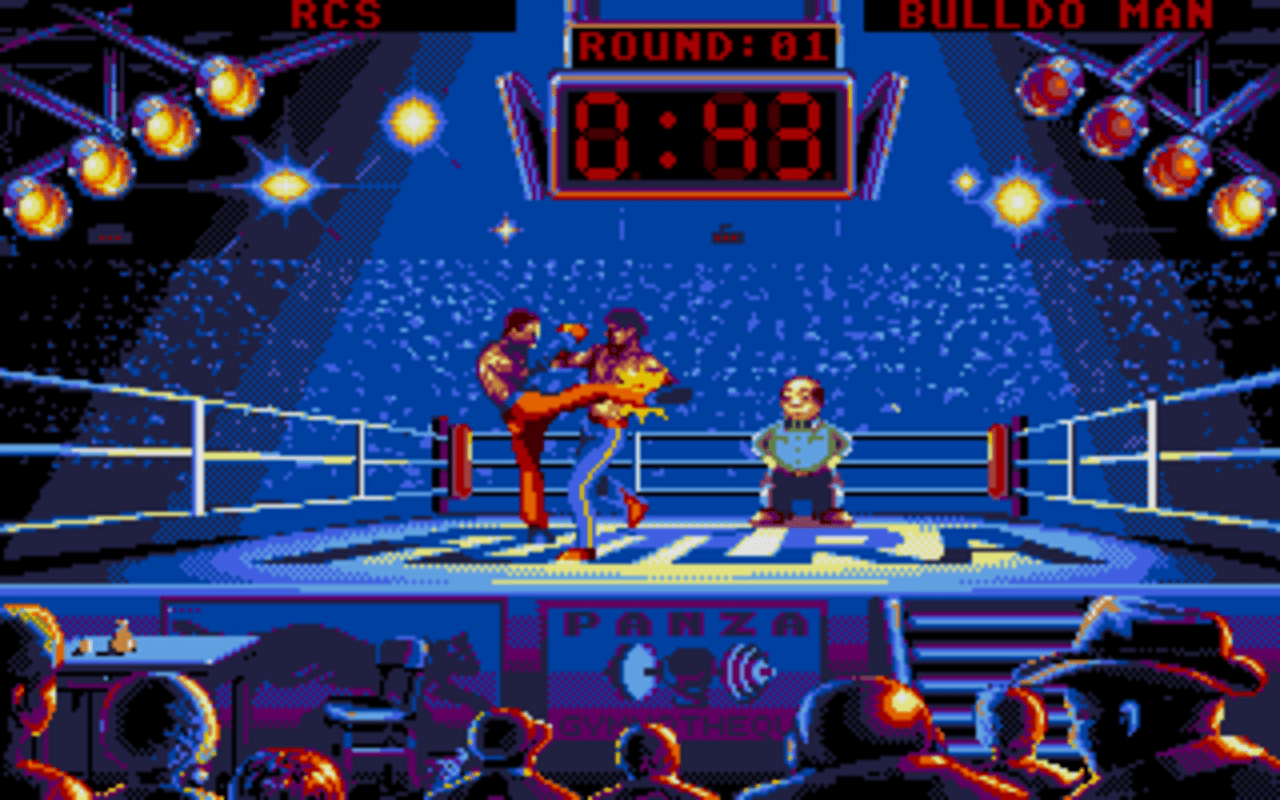
What stands out immediately is the commitment to readable body language. Every feint, step, and kick carries weight, which makes each exchange feel earned. This is not the kind of fighting game where random flailing accidentally becomes a combo. Panza Kick Boxing asks you to observe your opponent, note how they react to pressure, and choose moments to commit. When you land a crisp strike at the perfect distance, the payoff is satisfying precisely because the game makes you work for it.
Training, Mind Games, and the Build-Your-Fighter Loop
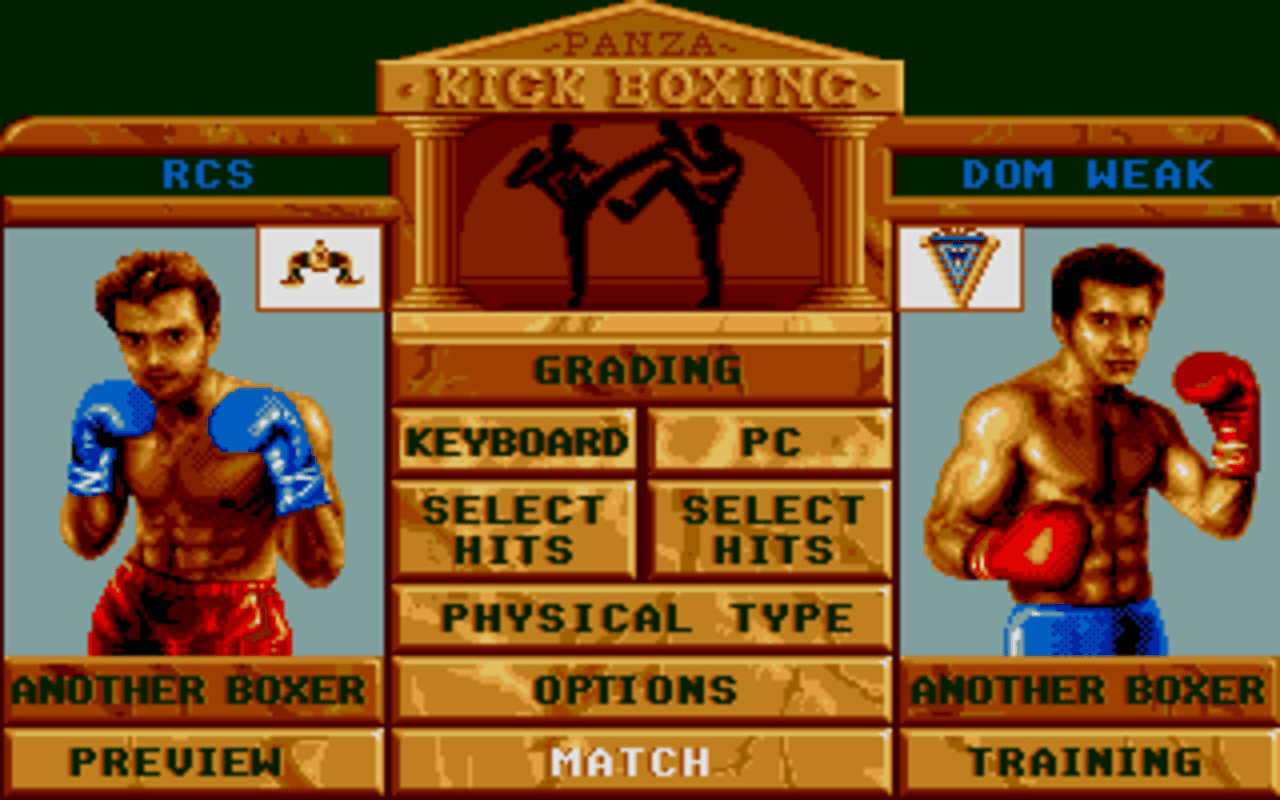
A big reason Panza Kick Boxing remains memorable is how it blends ring action with preparation. Between fights, you can train to improve key attributes, turning the campaign into more than a sequence of identical bouts. It’s an old-school approach that quietly changes how you play: if you invest in resilience, you can afford a riskier style; if you focus on reflexes, you can become a counter-fighter who wins by punishing mistakes.
The move system also reinforces identity. The game is known for offering a broad set of strikes and letting you assign selected techniques to directional inputs, which encourages experimentation and personal preference. Some players build a compact toolkit—safe jabs, quick low kicks, and a reliable finishing blow—while others load up on dramatic, high-impact attacks that demand perfect spacing. Either way, the act of choosing your tools makes every match feel like your responsibility, not the game’s randomness.
This design creates a satisfying mental layer: you are not only trying to out-hit an opponent, you are trying to out-think them. Do you press forward early to test their defense, or stay patient and gather information? Do you repeat the same entry until they panic, or vary tempo so they can’t time a counter? The best moments happen when you realize your rival has adapted—and you adapt again.
Rounds, Referees, and the Slow Burn of Momentum
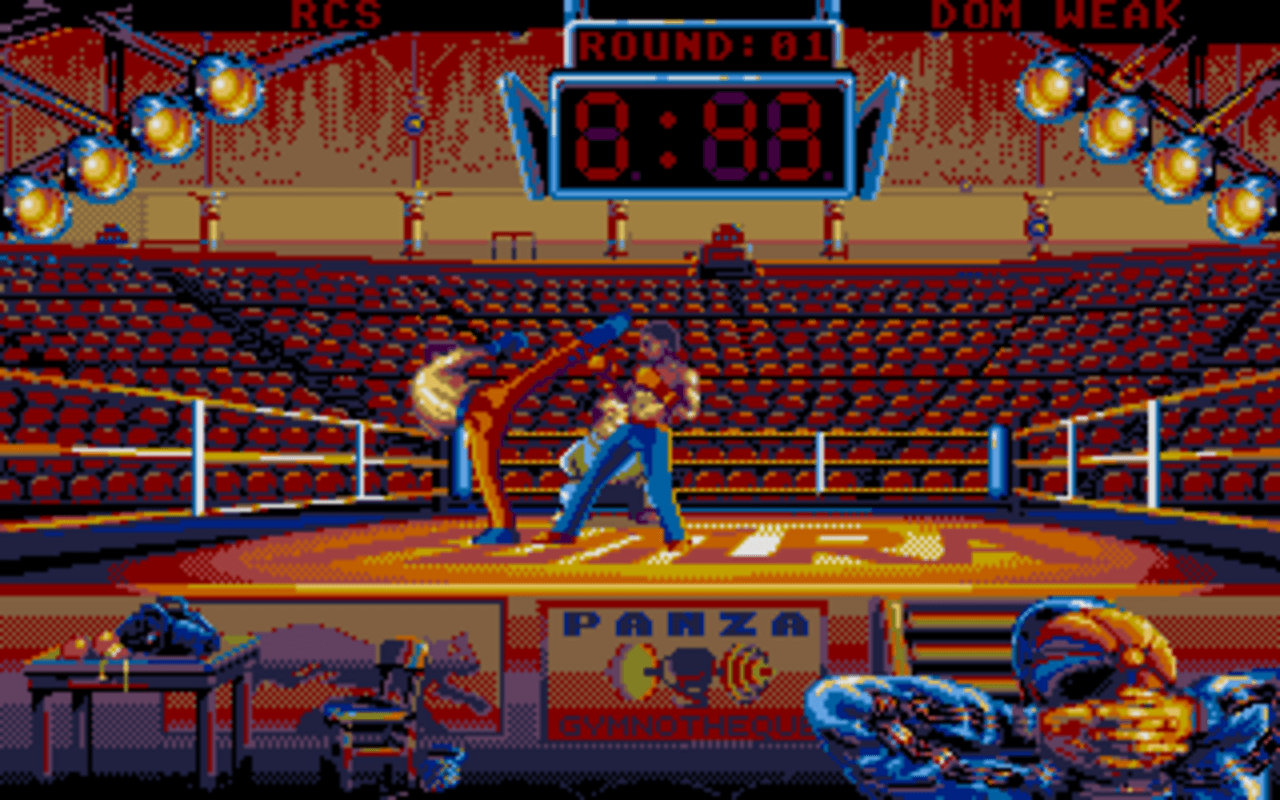
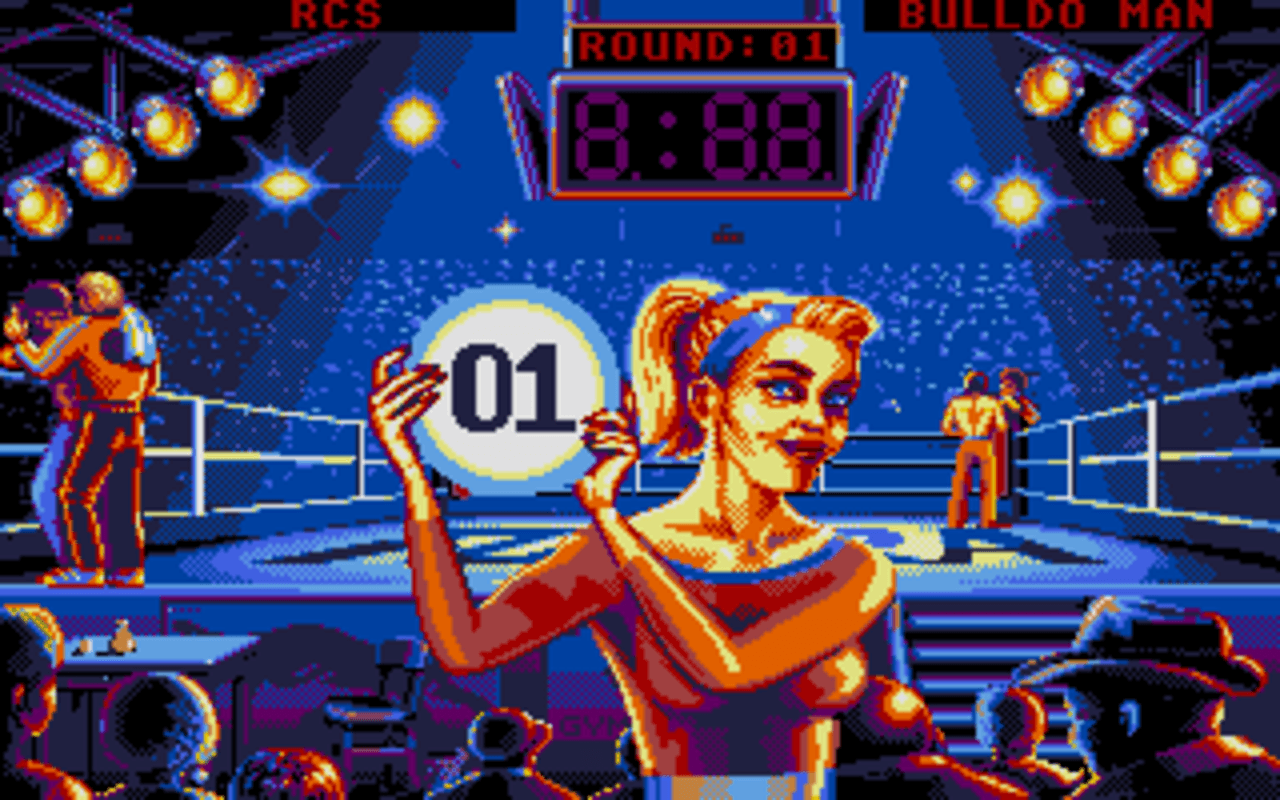
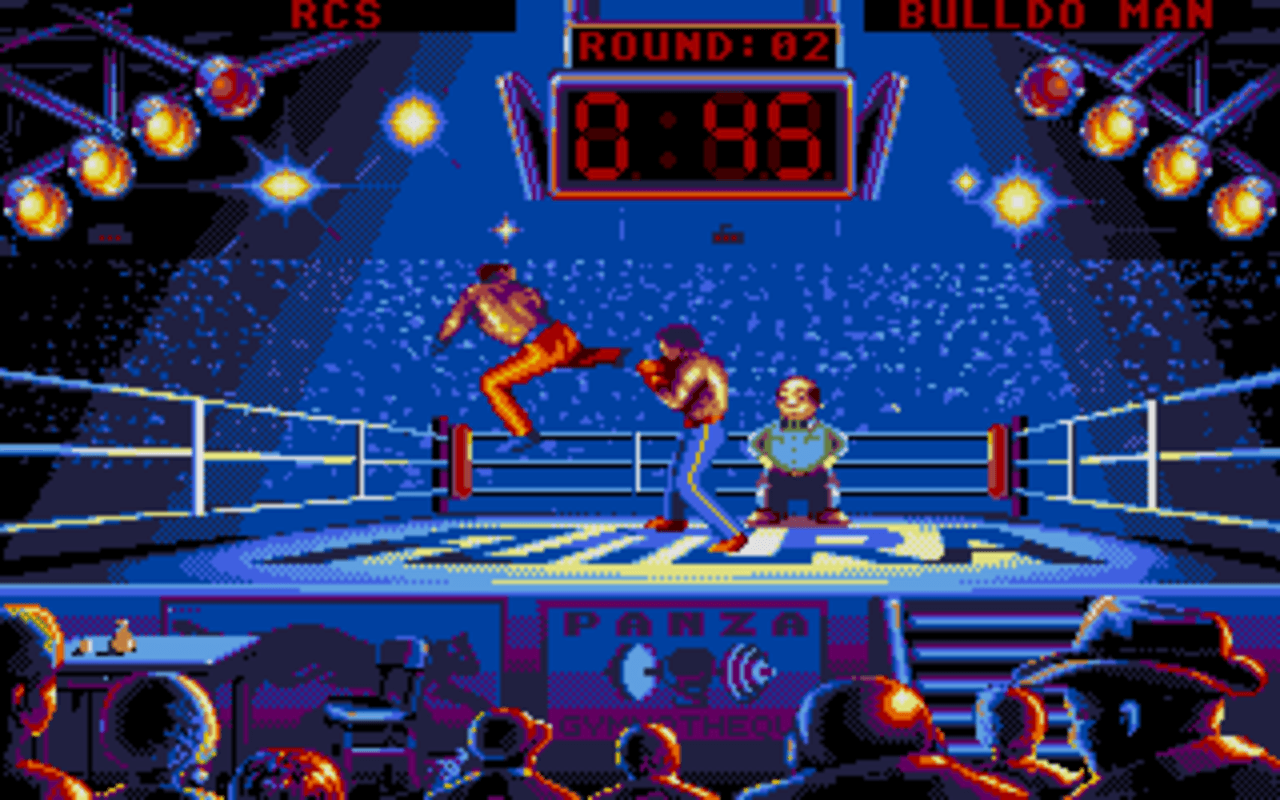
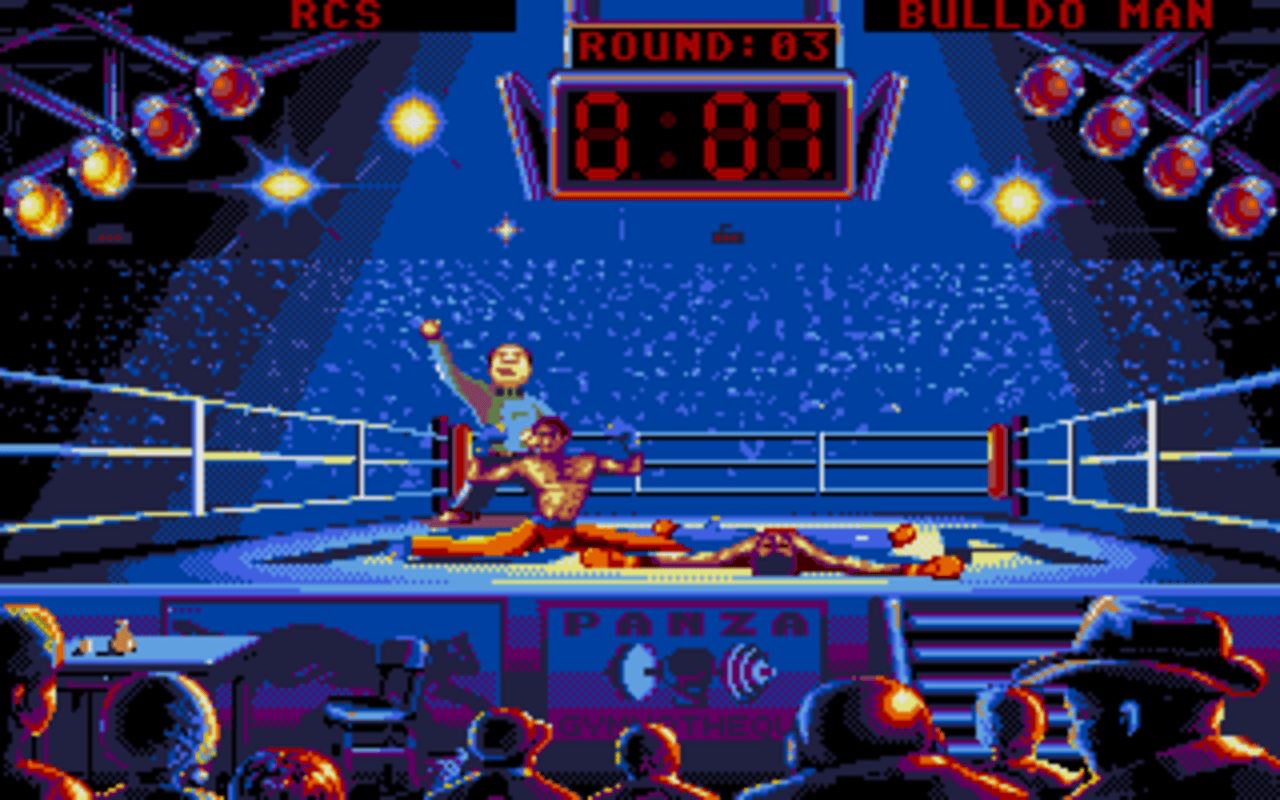
In the ring, Panza Kick Boxing prefers structure over spectacle. Bouts unfold in rounds, with a referee presence and a pace that rewards clean exchanges. Because stamina and damage management matter, you can’t treat every second like a final round scramble. If you chase a knockout too early, you may walk into a counter that swings the entire fight.
The most compelling tension comes from momentum. Early in a match, you might probe with safe techniques, testing whether your opponent flinches at low kicks or backs away from straight punches. As the minutes pass, patterns emerge. Some opponents crumble when pressured; others thrive when you overextend. The game’s grounded animation and ring-level viewpoint make spacing easy to read, so the contest becomes a practical lesson in distance: just a step too close and your kick jams; just a step too far and you whiff, inviting retaliation.
It’s also a game where defense is a real decision. Backing up buys time but surrenders initiative. Standing your ground can intimidate, yet it increases the cost of a mistake. This careful balance is why Panza Kick Boxing still feels good to play online: it’s built around deliberate choices that remain interesting even after you learn the basics.
Play Panza Kick Boxing online for free anywhere
To enjoy the game today, you can play Panza Kick Boxing online for free in a browser, and it also fits naturally on mobile devices without restrictions, making it easy to jump into a quick bout or a longer climb through the ranks. The experience translates well to short sessions because each match has a clear arc—feel out the opponent, adjust, and try to close the door before they do the same to you.
Playing online highlights what the designers got right: the fight logic is legible. You can study animations, identify openings, and improve from match to match. Whether you treat it as a nostalgia trip or as a pure skill challenge, the game rewards the same timeless habits—patience, pattern recognition, and calm execution under pressure.
Why Panza Kick Boxing Still Deserves a Round of Applause
What keeps Panza Kick Boxing alive in memory is its seriousness. It doesn’t chase flashy fantasy powers; it aims for the grit of sport, where victory comes from preparation and composure. The training layer gives you ownership, the move customization encourages style, and the fights themselves demand respect for distance and timing.
If you like fighting games that feel like contests rather than chaos, this DOS classic remains an easy recommendation. It’s approachable—two fighters, a ring, a goal—yet it has enough depth to make improvement feel meaningful. In the end, Panza Kick Boxing is at its best when you stop trying to “win fast” and start trying to “win smart,” one clean exchange at a time.
This is a technical kickboxing game with a career-like climb, training decisions, and ring action that favors disciplined play. For controls, movement is handled with directional inputs, while strikes and defenses are triggered through mapped attack directions and action buttons, encouraging you to learn spacing, block at the right moments, and counter with your chosen signature techniques.
All used codes are publicly available, and the game belongs to its original authors.