Super Solvers: Challenge of the Ancient Empires! review
The Learning Company built a reputation on educational software that didn’t feel like homework, and Super Solvers: Challenge of the Ancient Empires! is a strong example of that philosophy. Released for MS-DOS in 1990, it aims for that sweet spot where exploration is exciting, mistakes are instructive, and learning sneaks in through the side door of play.
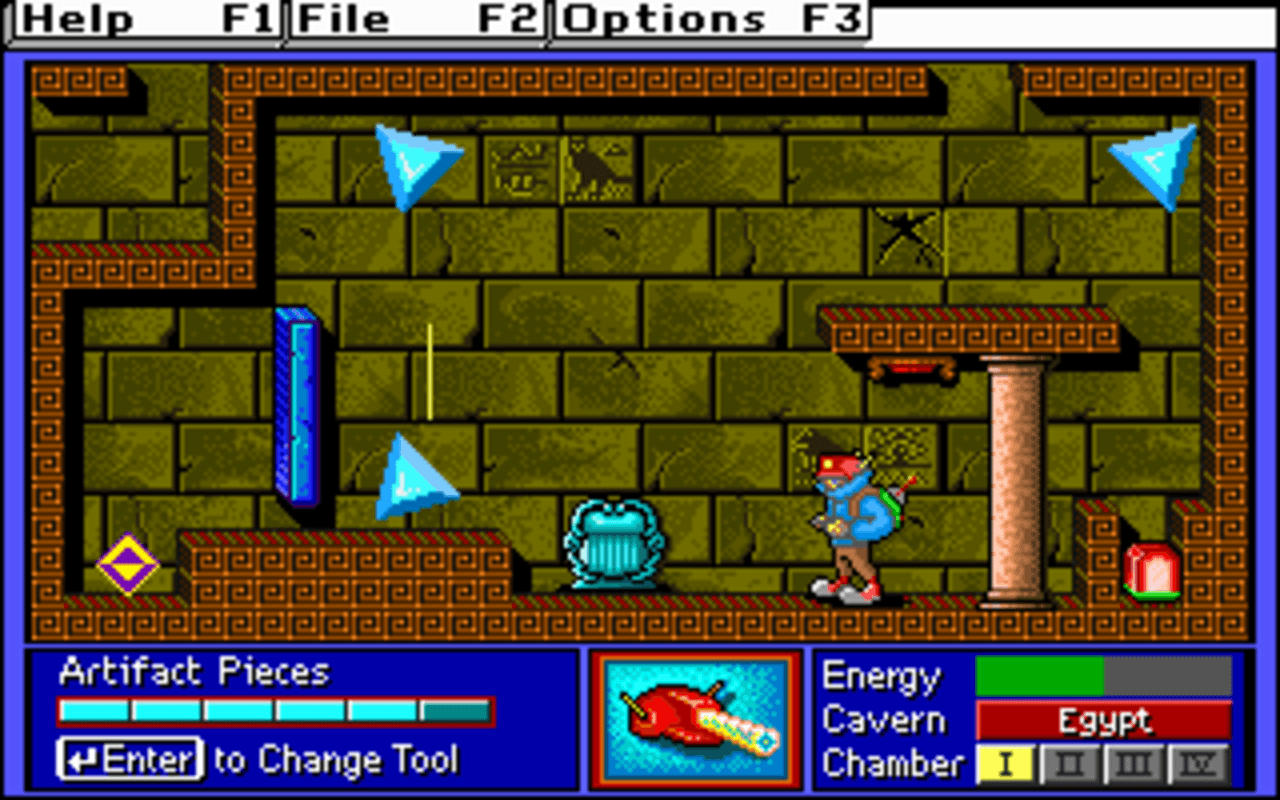
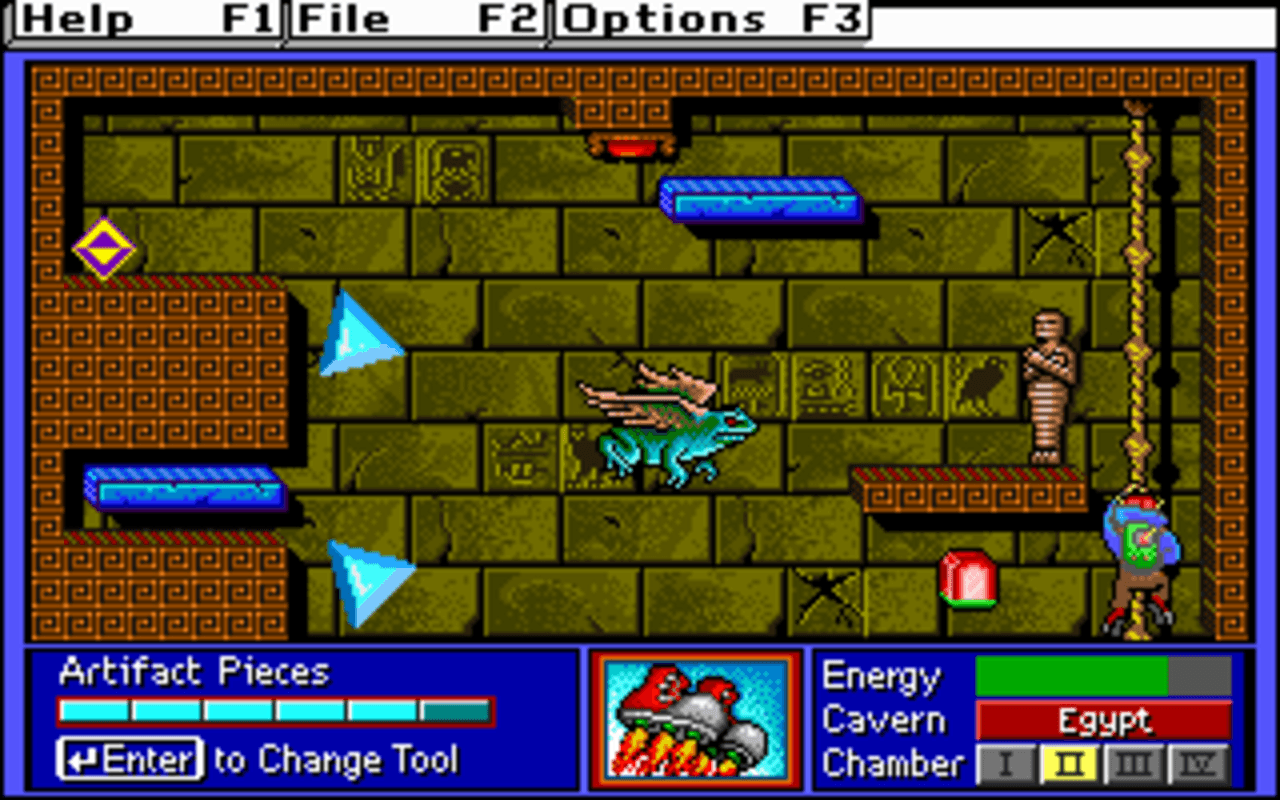
At its core, the game is a treasure hunt across ancient-themed regions, presented as a side-view cavern adventure. You’re not just reading facts or answering isolated questions; you’re moving through chambers, reacting to threats, and earning each step forward by thinking clearly under pressure.
Super Solvers: Challenge of the Ancient Empires! and the thrill of discovery
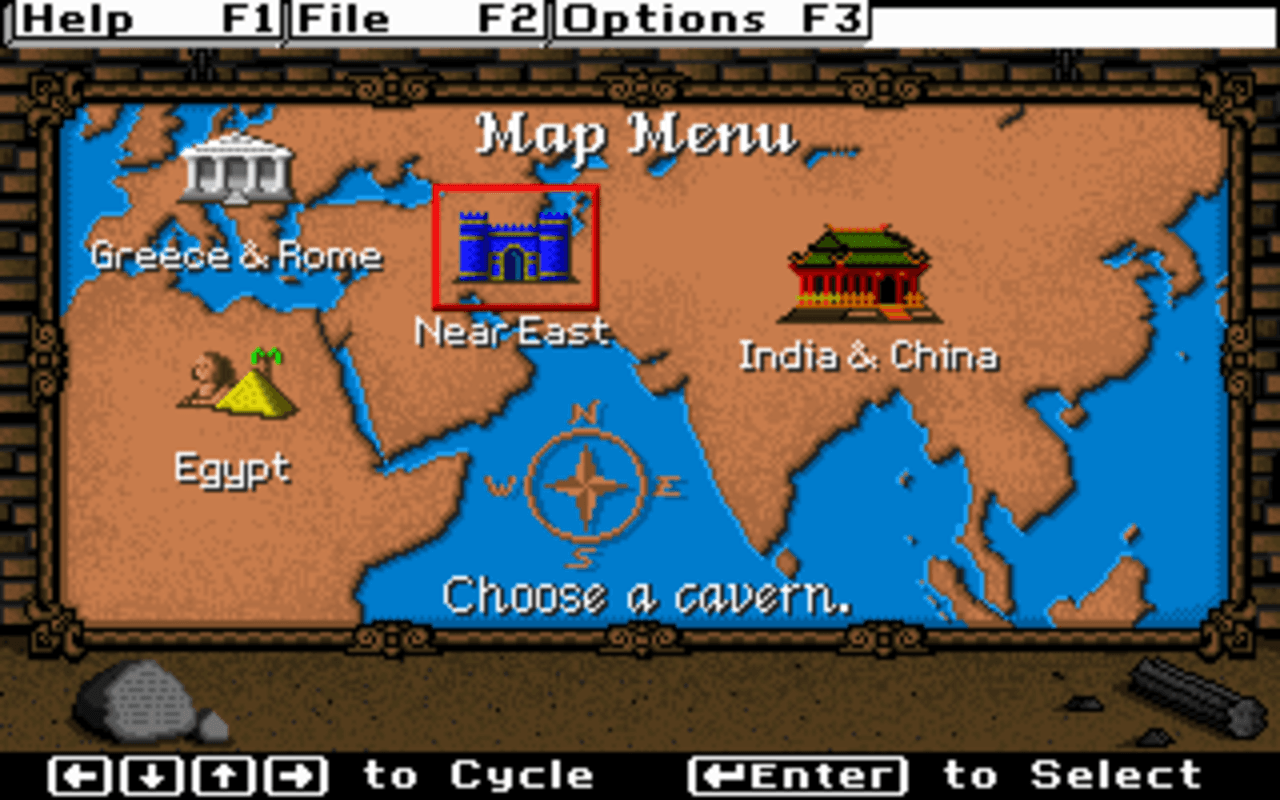
What makes this game immediately appealing is how it frames learning as a reward loop rather than a requirement. You enter caverns tied to famous civilizations and spend your time searching for hidden artifact fragments, tools, and safe routes. The visuals lean into readable shapes and strong symbols, so you can scan a room quickly and decide what matters. It’s not about twitch reflexes alone; it’s about choosing when to push forward, when to back off, and when to stop and solve what’s in front of you.
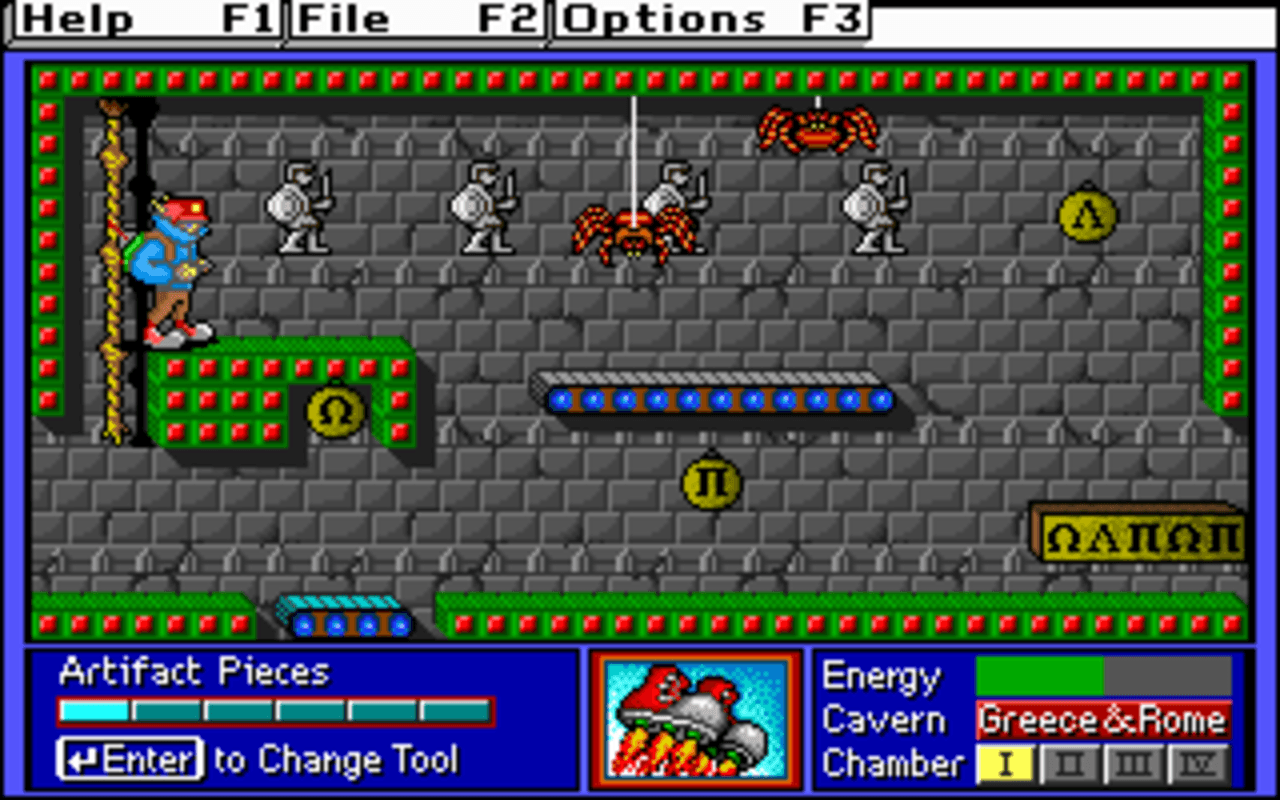
The adventure structure also gives the game a satisfying sense of place. Each region has its own personality—different decorations, different dangers, different treasures—and that change of scenery keeps the “one more chamber” momentum going. The educational angle lands best here: history becomes atmosphere, not a lecture, and the theme nudges you to notice details you might otherwise ignore.
Cavern timing, tools, and the ancient-artifact game loop
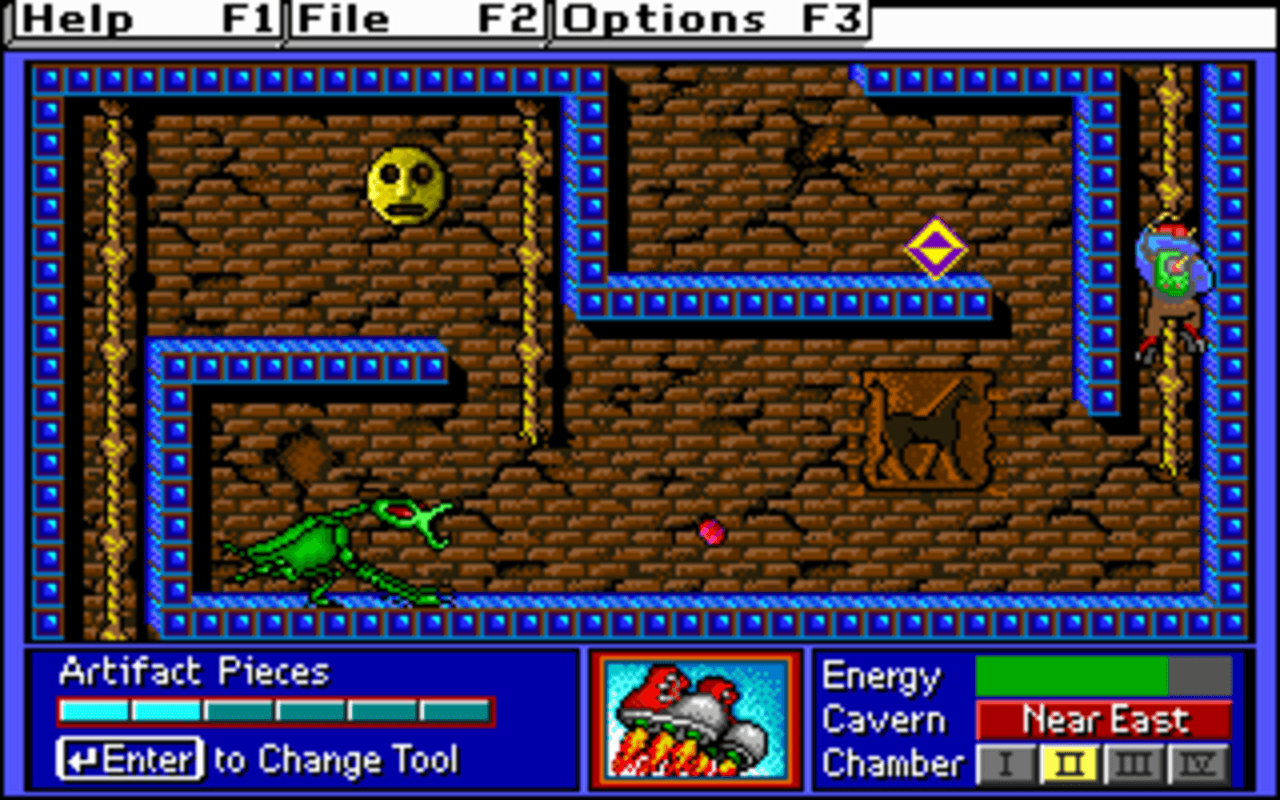
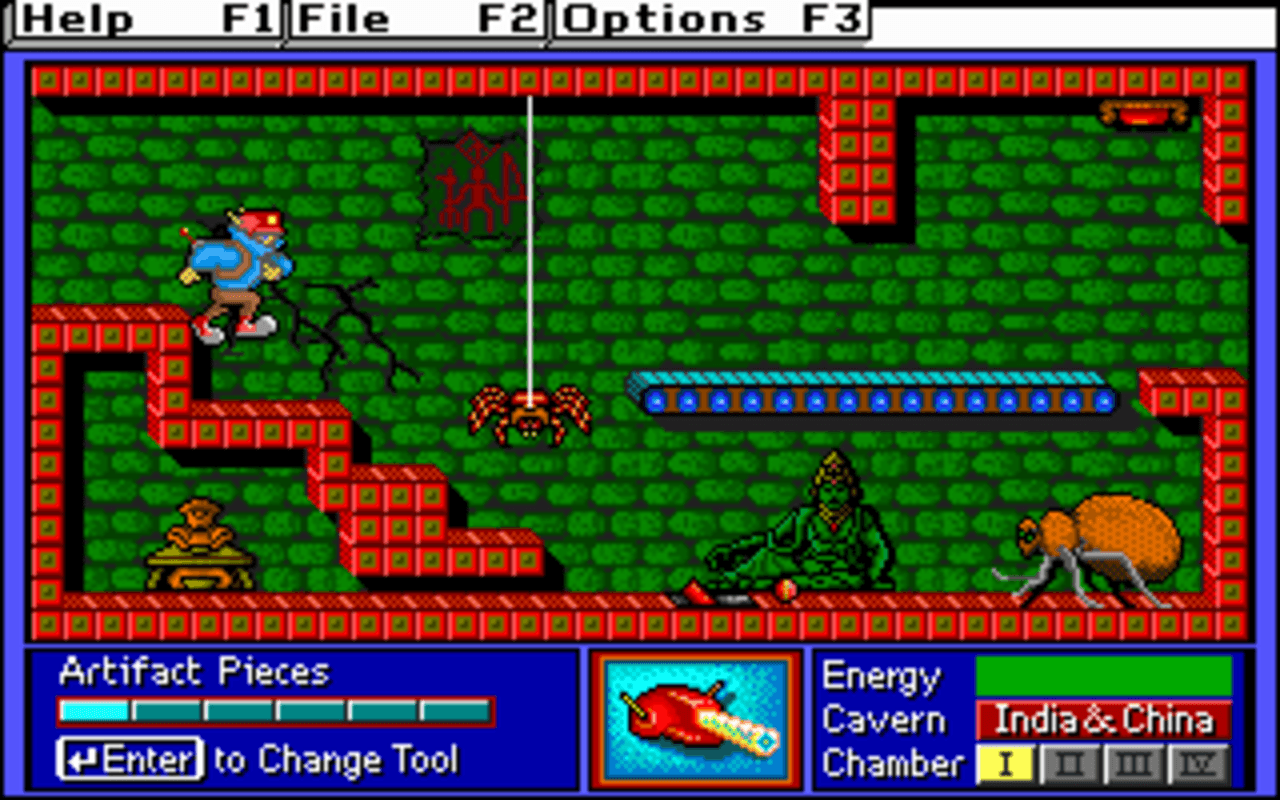
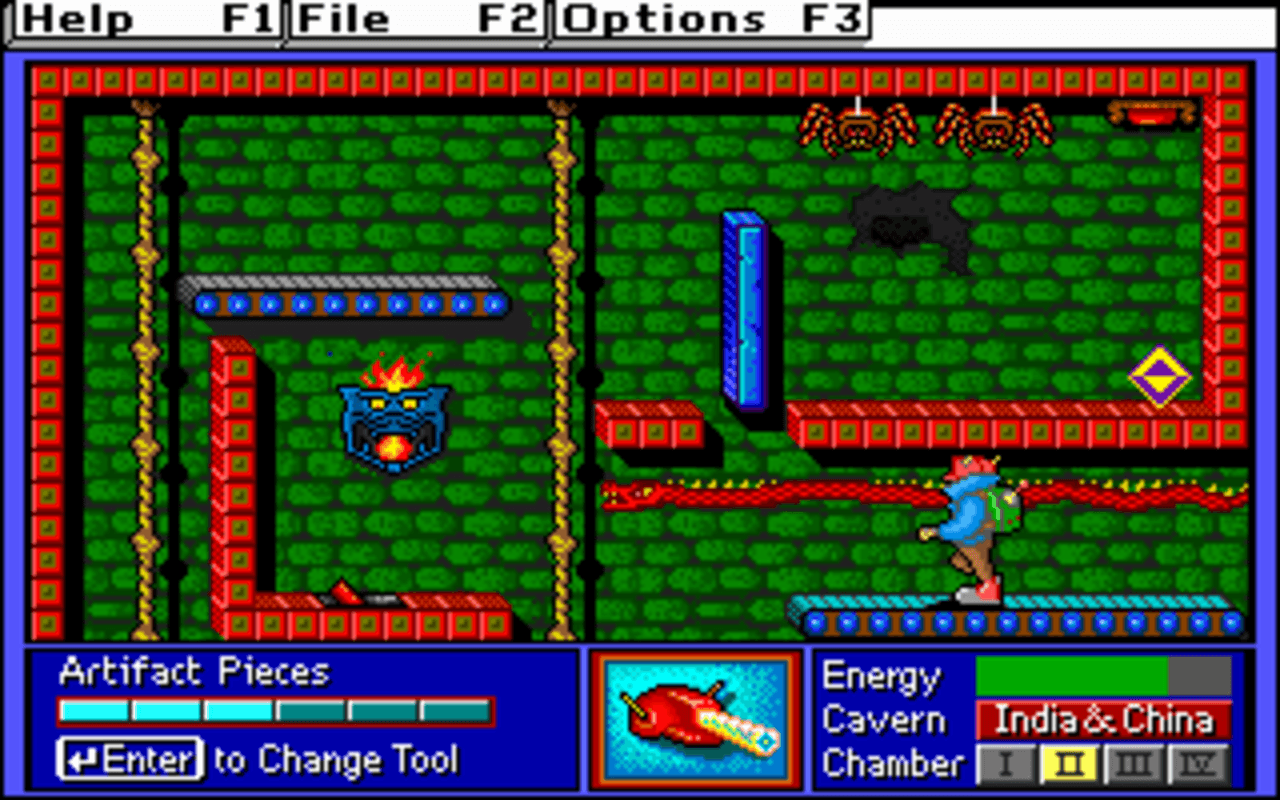
Moment to moment, Challenge of the Ancient Empires! plays like a careful maze run. Chambers are filled with patrolling enemies and obstacles that demand timing and route planning. You learn patterns, test distances, and use tools at the right moment to avoid taking damage or losing progress within a cavern. Because the rooms aren’t just empty hallways, movement becomes a kind of puzzle on its own: every hazard is a question, and every safe corner is a partial answer.
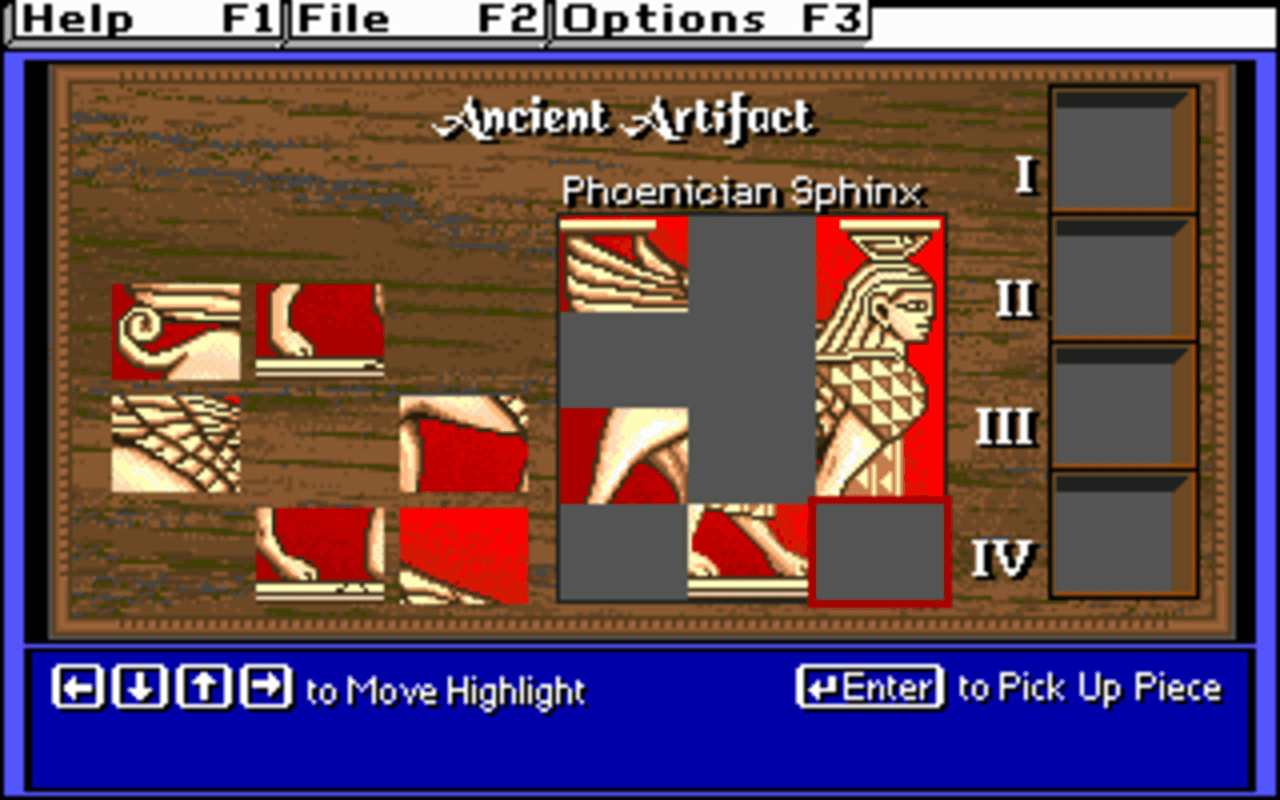
The real hook, though, is what you’re gathering. Instead of collecting generic points, you’re hunting pieces of historically themed artifacts that feel meaningful in context. Finding them is only step one. The game regularly asks you to prove you understand the shapes and relationships you’ve collected by assembling fragments into a complete object, turning your exploration into a tangible “I solved it” payoff.
Difficulty adds another layer of replay value. The challenge isn’t only faster threats or tighter rooms; puzzle demands can shift as well, encouraging you to sharpen spatial reasoning and patience. It’s the kind of design that respects a player’s ability to improve rather than simply outmuscle the game with speed.
Puzzle learning that feels like play, not a worksheet
The educational side is most effective when it leans on logic and pattern thinking. The game mixes action with problem-solving so that your brain gets micro-breaks: you’ll spend a stretch navigating danger, then settle into a focused moment of assembling, deducing, or recognizing what fits where. That rhythm keeps the experience lively and makes the “learning” pieces feel like natural checkpoints rather than interruptions.
Even the presentation supports this tone. The soundscape is memorable, and the music choices give the adventure a surprisingly grand, museum-like mood—more “expedition” than “exercise.” It’s a small touch, but it helps the ancient-world theme stick.
Just as importantly, the game rarely punishes curiosity. Experimenting—trying a route, testing a tool, exploring a chamber for one more fragment—is the point. When you fail, it’s usually clear why, and the next attempt comes with a better plan. That clarity is what makes it work for a wide range of players: newcomers can learn safely, while experienced puzzle fans can optimize and challenge themselves.
Play Super Solvers: Challenge of the Ancient Empires! online
Play Super Solvers: Challenge of the Ancient Empires! online when you want quick puzzle-solving with a classic DOS flavor. It can be played free, in a browser, and on mobile devices without restrictions, which makes it easy to dip into a few chambers, solve a puzzle, and step away without fuss.
That flexibility matches the game’s structure nicely. Because progress is built around chambers and artifact assembly moments, it naturally supports shorter sessions as well as longer “clear the whole region” runs. The design is also readable on smaller screens: bold icons, distinct hazards, and simple movement rules keep the action understandable even when you’re playing on the go.
A lasting classic for puzzle fans and curious explorers
Challenge of the Ancient Empires! endures because it understands something many educational titles miss: fun has to come first. The learning sticks because the game gives you a reason to care—because you want to reach the next chamber, finish the artifact, and see what the next region holds. It’s an adventure game with a brain, not a lesson wearing a costume.
In the end, the best way to describe it is “confidence-building.” You’re constantly practicing observation, planning, and spatial logic, and the game celebrates small wins often. If you enjoy classic exploration mixed with puzzles—especially puzzles that feel physical, like fitting pieces into a whole—this is a rewarding one to play online.
Super Solvers: Challenge of the Ancient Empires! blends ancient-world flavor, light action, and satisfying logic challenges into a smart, approachable game that stays engaging through variety and pacing. Controls are straightforward: move through chambers with directional inputs, use a simple action command to apply tools or interact, and rely on menus or prompts when assembling artifacts and answering puzzle challenges.
All used codes are publicly available, and Super Solvers: Challenge of the Ancient Empires! belongs to its original authors.