A MicroProse Spin on WWI Air Command
The Ancient Art of War in the Skies arrived as a sequel in the broader “Ancient Art of War” line, developed by Evryware and published for MS-DOS by MicroProse. Instead of focusing on infantry blocks or ship formations, it lifts the series’ accessible “big-picture thinking” into the early age of aerial warfare. The setting evokes the World War I sky as a new battleground: fragile machines, short-range objectives, and a constant tug-of-war between daring sorties and the cold arithmetic of attrition.
What makes the game memorable is how it treats air war like a living board game that keeps interrupting itself with playable action scenes. You’re not locked into a pure flight simulator mindset, and you’re not buried in an unreadable wargame rulebook either. The design aims for clarity: choose what matters, see the consequences quickly, then decide whether to intervene personally or let your plan play out. It’s a nimble approach that still feels fresh because it respects the player’s time without flattening the drama of command decisions.
The Map Is Your War Room, Not a Spreadsheet
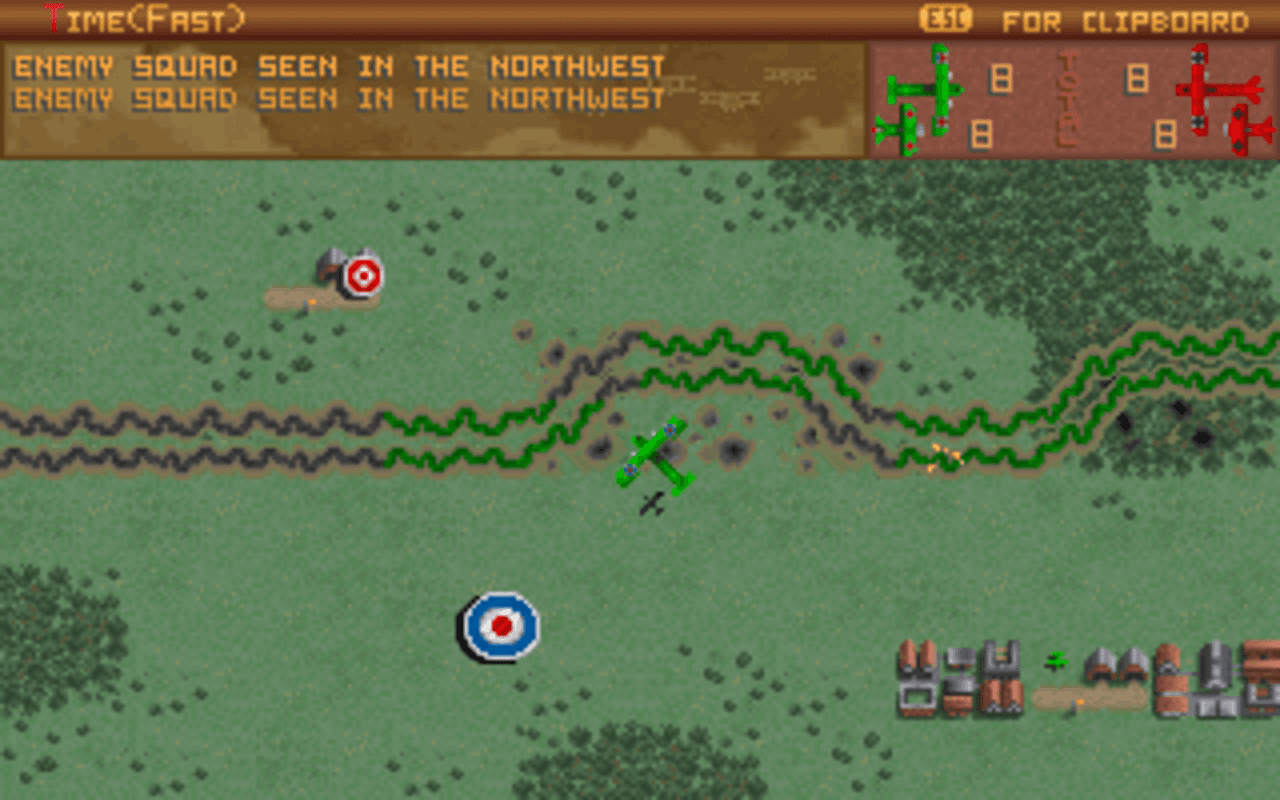
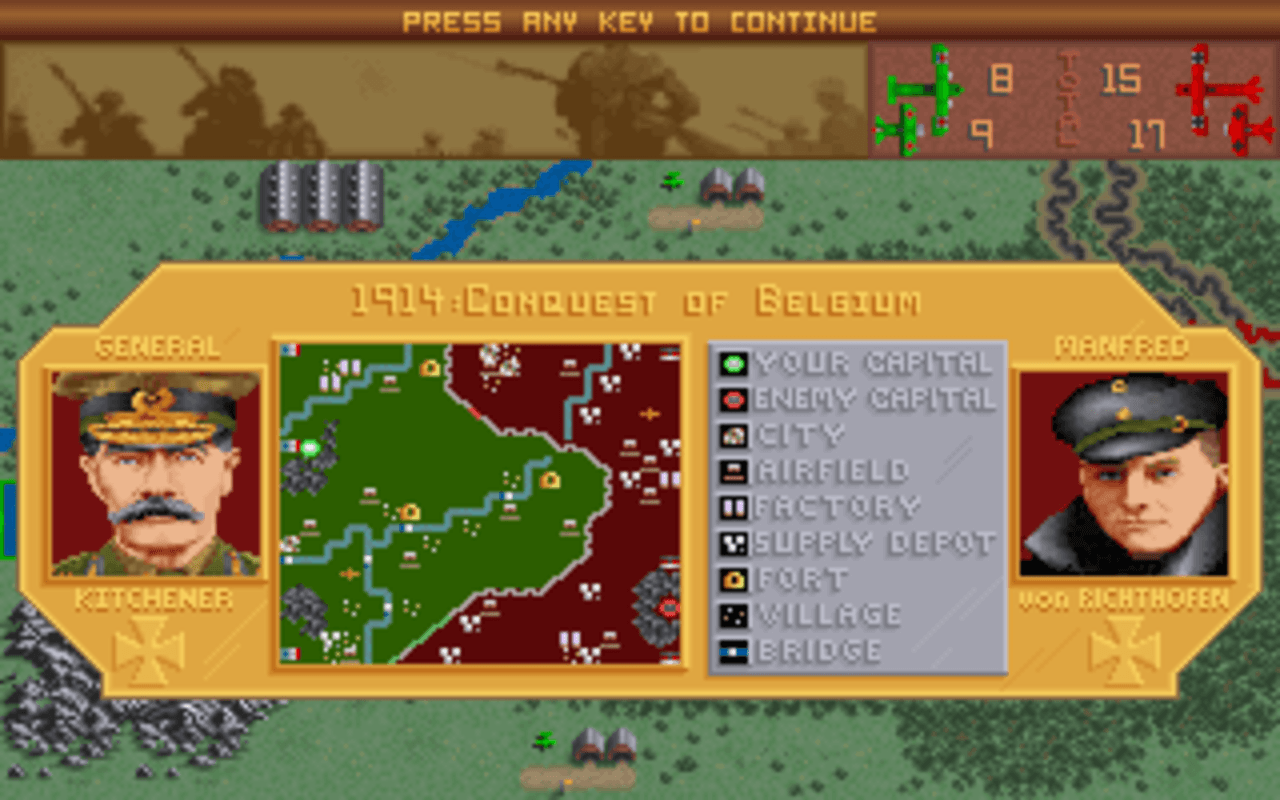
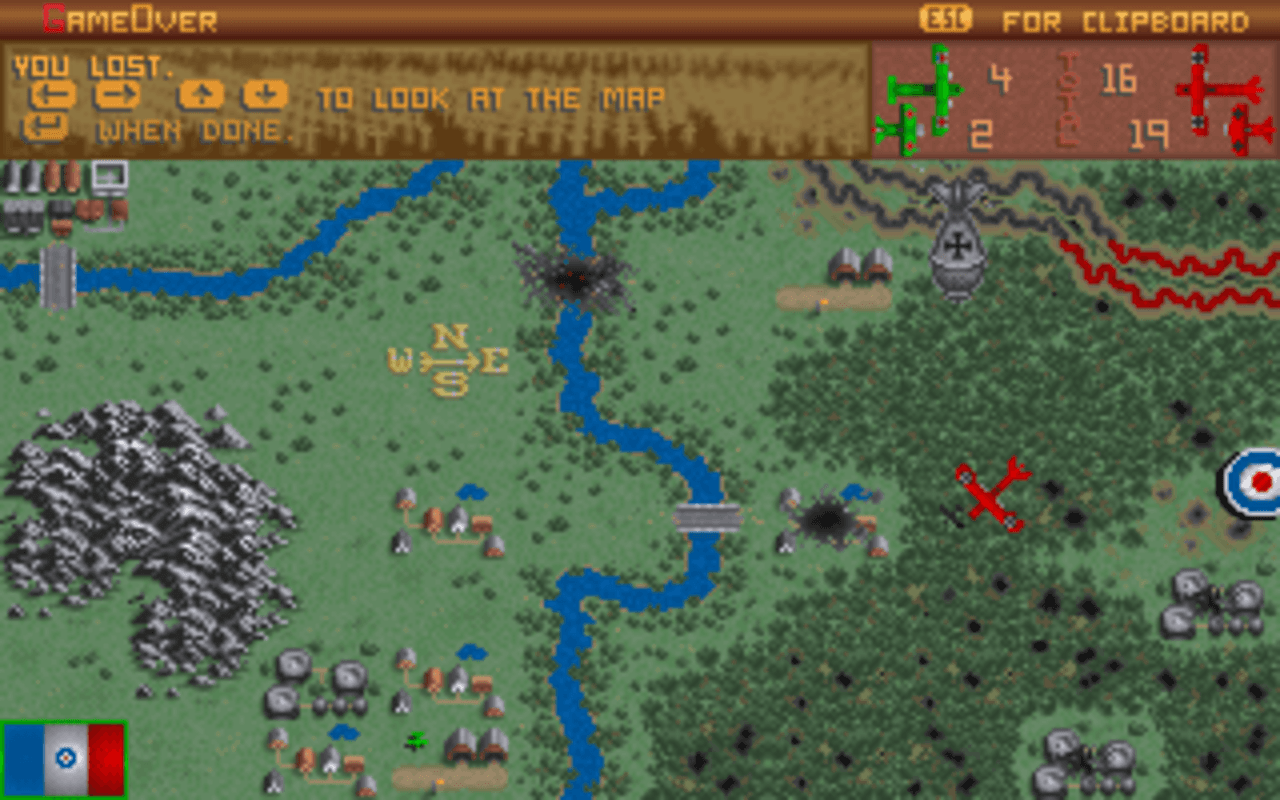
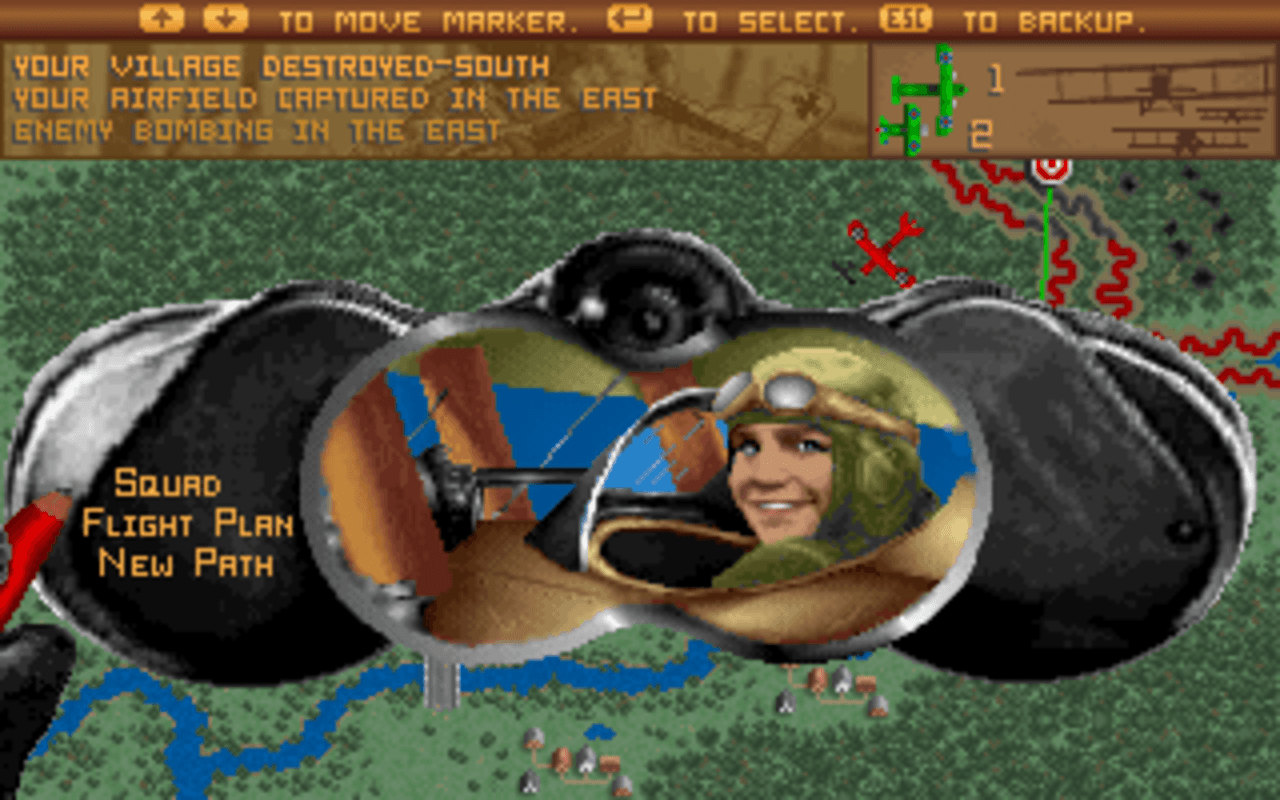
Most of your time is spent in an overhead command layer where you direct flights toward objectives, decide priorities, and shape how pressure builds across the theater. The satisfaction here comes from pacing. Send everything at once and you may win a moment but lose the wider rhythm; play too cautiously and you give the opponent room to dictate the next clash. The game rewards simple, sound instincts: protecting key routes, escorting what must survive, and choosing targets that create a chain reaction rather than a single flashy victory.
A key charm is that the opponent personalities make the campaign feel like a series of duels rather than anonymous math problems. Some enemies feel reckless, others methodical, and you can sense how their “temperament” shapes the tempo of the map. This is where the title’s nod to classic strategy writing pays off: you’re encouraged to win with positioning and timing, not just with better reflexes.
Because it’s an air-war abstraction, the game stays readable even when multiple things happen in sequence. You can keep a mental model of what you’re trying to do: pull the enemy toward a bad engagement, strike a target that forces a response, then capitalize when their planes are out of place. When it clicks, the map layer feels like setting up a trap that you later spring in the action layer.
Dogfights and Bomb Runs That Keep the Pace Snappy
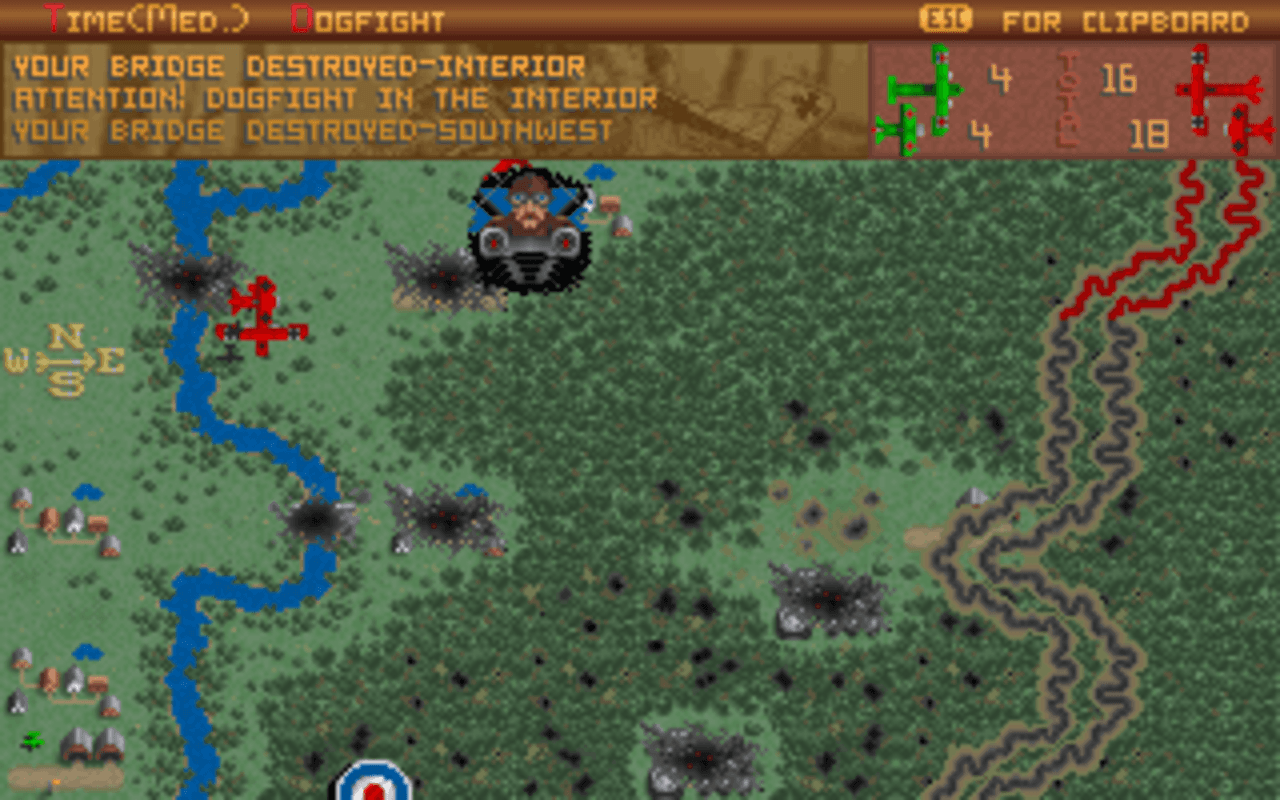
When planes collide with destiny—reaching a target area or meeting enemy aircraft—the game shifts into a hands-on arcade segment. These sequences are deliberately direct: readable movement, immediate stakes, and the sense that your personal performance can tilt the outcome of a broader plan. Dogfights emphasize positioning and timing over realism-heavy instrumentation. You’re not calibrating a cockpit; you’re trying to outmaneuver, line up shots, and survive long enough to turn the engagement into an advantage on the strategic layer.
Bombing runs add a different flavor: a forward push toward marked targets where steadiness matters as much as aggression. The best runs are the ones you planned for—when your route and timing reduce the chance of being intercepted—so the action doesn’t feel separate from strategy. It feels like the “payment due” on the promises you made on the map.
Just as importantly, the game understands that not every player wants to manually fly every encounter. It allows the arcade sequences to be skipped, letting outcomes be resolved by the game’s calculations. That single decision makes the hybrid structure work: you can personally take over when it matters most, then let the campaign breathe when you want to focus on command flow. The result is a rare balance where action is a meaningful spice, not an exhausting obligation.
Play The Ancient Art of War in the Skies online
Part of the enduring appeal of this DOS game is how naturally it fits modern play habits while keeping its original identity intact. You can play The Ancient Art of War in the Skies online free, in a browser, and on mobile devices without restrictions, which makes it easy to jump from planning a sortie to finishing a dogfight whenever the mood strikes. The core loop remains the same: think like a commander, then test your nerve when the screen shifts into combat. Because missions are digestible and the strategic layer is easy to read, it’s also a satisfying “one more sortie” game—perfect for quick sessions that still feel like they have a beginning, a middle, and a consequence.
Playing online also highlights how well the design communicates. The map layer is legible, the action scenes are immediate, and the overall structure doesn’t depend on external context to be enjoyable. Whether you approach it as a strategy game with bursts of arcade action, or as an action game with meaningful planning, it still meets you halfway.
Why This Hybrid Still Works
The Ancient Art of War in the Skies succeeds because it turns command into a narrative engine. Your plan isn’t just a plan; it’s a hypothesis about how the enemy will react. Every time you commit aircraft, you’re telling a story about what you believe will happen next. Then the game challenges that story with an encounter—sometimes one you can personally influence, sometimes one you deliberately hand off to the broader simulation.
MicroProse’s catalog is often associated with deeper simulations and serious war themes, and this title is a fascinating counterpoint: it’s approachable, even playful at times, but still rooted in consequential decisions. It doesn’t try to be a hardcore WWI simulator; it tries to deliver the feeling of being responsible for a slice of an air war, while still letting you taste the adrenaline of a turning fight.
The game’s best moments come when you realize you’re not merely reacting. You’re shaping the battlefield so that the next action scene happens on your terms. That’s the “ancient art” at work: not winning every duel, but winning the pattern.
The Ancient Art of War in the Skies is a confident blend of strategy, online-friendly pacing, and arcade combat that stays engaging because each layer feeds the other. For controls, the strategic map is handled through straightforward cursor movement and selection, while the action segments rely on simple directional control and firing for dogfights and carefully timed releases for bombing runs.
All used codes are publicly available and the game belongs to its original authors.