The Blues Brothers: Jukebox Adventure review for classic platform fans
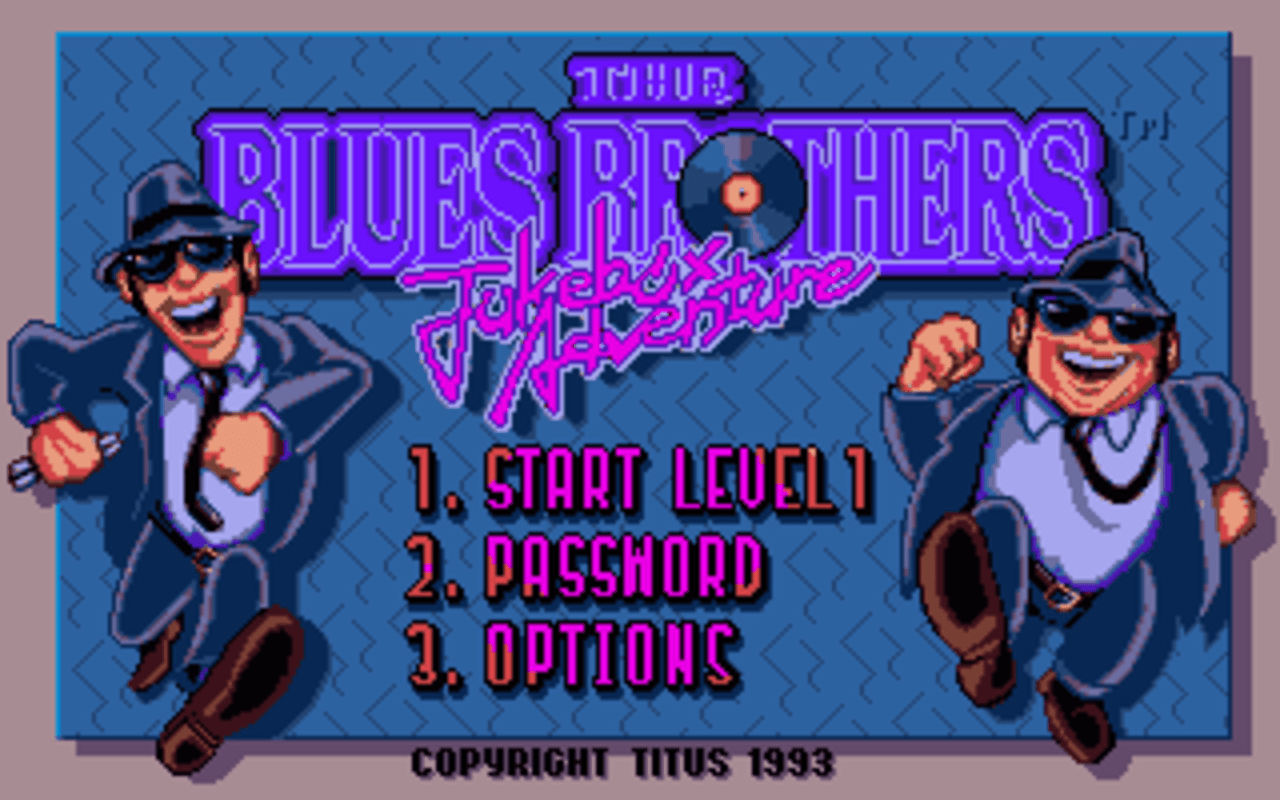
The Blues Brothers: Jukebox Adventure is a side-scrolling platform game published by Titus France and built around the unmistakable spirit of the Blues Brothers license. Released for DOS as part of the era when colorful arcade platformers thrived on home computers, it followed the earlier Blues Brothers game and refined the formula with larger stages, record-based attacks, and a stronger focus on brisk action. Instead of relying only on brand recognition, the game uses its musical identity to create a cheerful, fast-moving adventure that feels immediately inviting to anyone who enjoys classic platform design.
What gives the game its personality is the way it turns familiar platform ingredients into something slightly offbeat. Enemies wander through each level, hazards interrupt progress, and jumps must be measured with care, but the main heroes do not fight with swords or blasters. They throw records, chase the exit jukebox, and move through stages that feel playful rather than aggressive. That light tone is important. The game keeps momentum high, yet it rarely loses its sense of humor or its sense of rhythm, which is exactly what helps it remain memorable among many platform releases from the same period.
Why The Blues Brothers: Jukebox Adventure game still feels lively
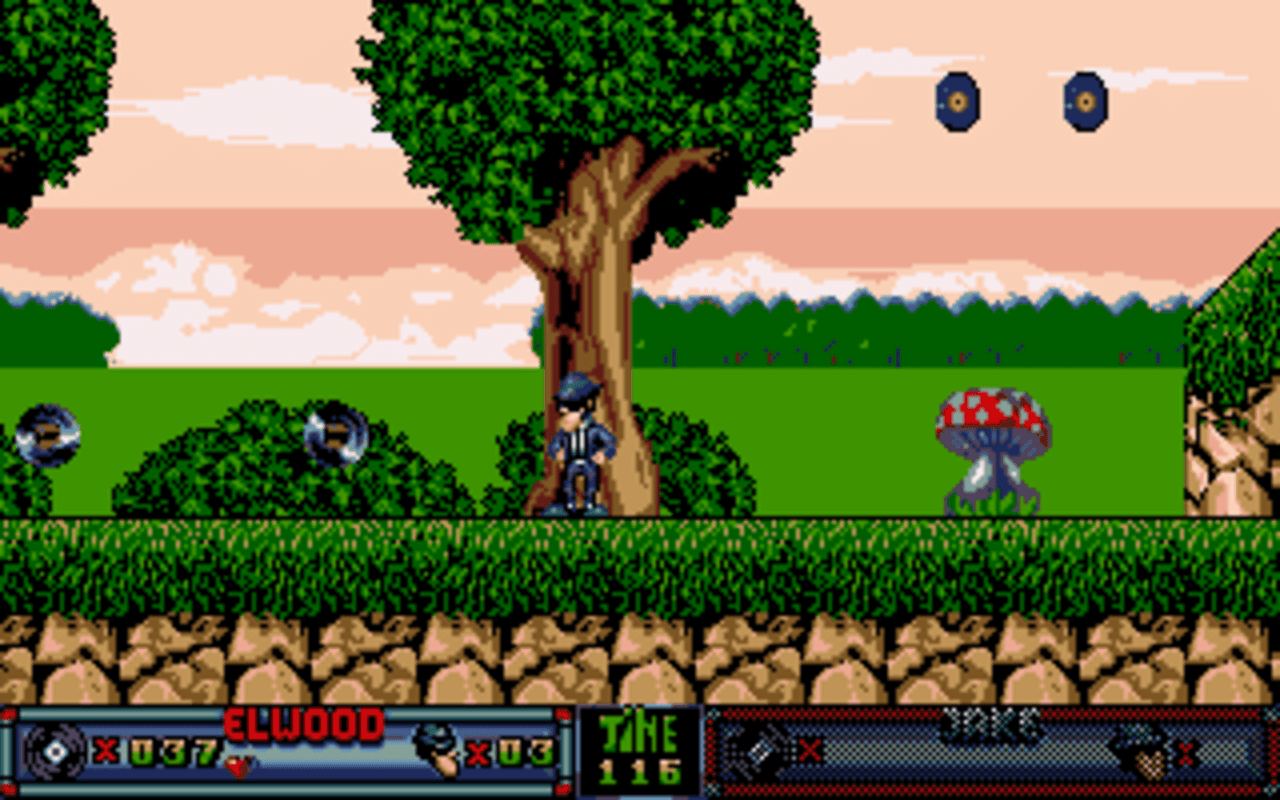
A major reason this game still feels fresh is its readable structure. The objective is easy to understand: move through the stage, collect useful items, fend off enemies, and find the jukebox that opens the path forward. That clarity makes the action satisfying from the very first level. At the same time, the stages are not empty corridors. They ask the player to watch enemy movement, judge jump distance, and think about when to attack and when to keep moving. The result is a game that feels accessible without becoming dull.
The record-throwing mechanic deserves special praise because it gives the whole adventure its own flavor. Many platform games of the time relied on stomping, punching, or generic projectiles, but here the attack fits the musical theme perfectly. Records are funny, visual, and instantly recognizable, yet they also work well as gameplay tools. They let the player control space, deal with approaching foes, and keep the pace moving forward. That design choice strengthens the connection between theme and play, which is often where licensed games struggle. This one handles the idea with confidence.
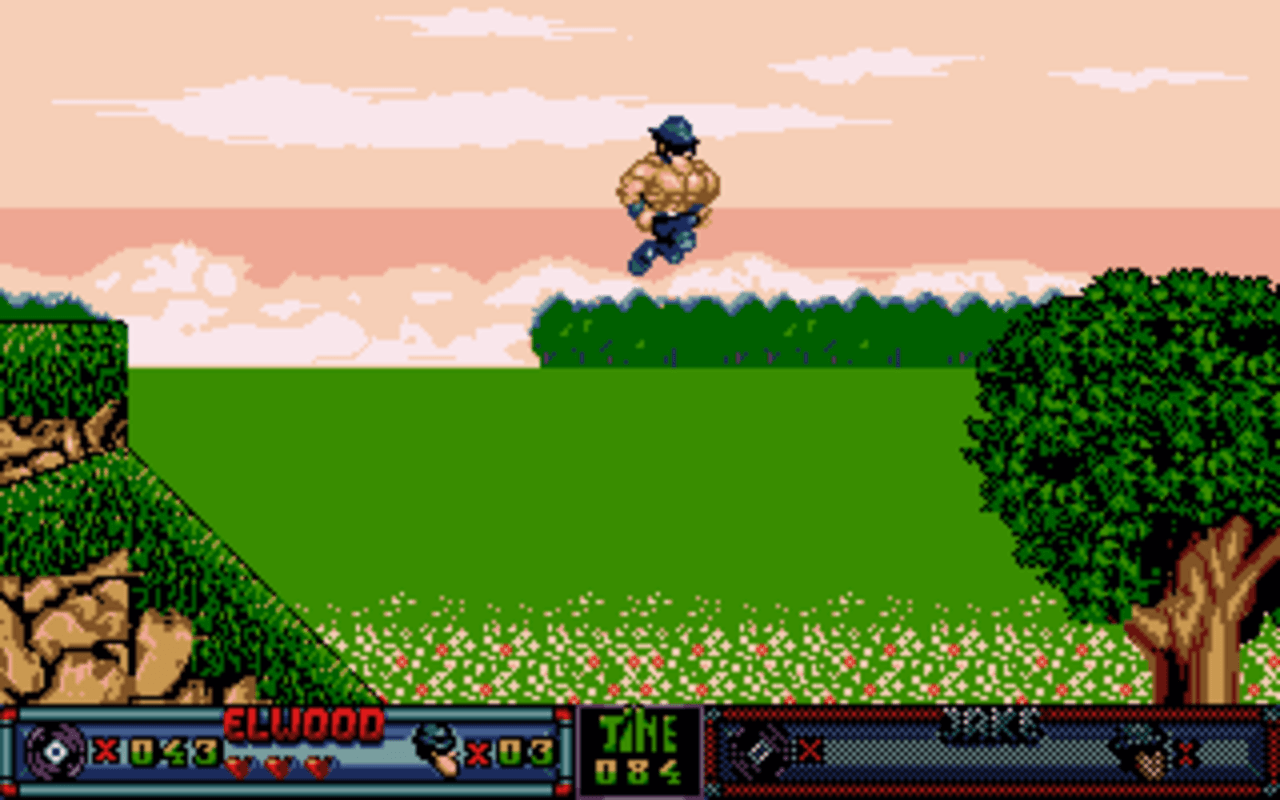
The presentation also helps. The Blues Brothers: Jukebox Adventure uses colorful visuals and expressive animation to keep the journey upbeat. There is a cartoon quality to the action, and even when the challenge rises, the atmosphere stays inviting. The DOS version is especially notable for translating the bright style of console platformers into a computer format that still feels smooth and approachable. It is not trying to be dark, realistic, or complicated. It wants to entertain, and it succeeds by staying focused on motion, timing, and cheerful energy.
Play The Blues Brothers: Jukebox Adventure online
Play The Blues Brothers: Jukebox Adventure online and the game remains just as easy to appreciate because its design is direct, responsive, and free from unnecessary barriers. The experience translates naturally to modern play in a browser, where its short bursts of action, readable visuals, and immediate controls make it a strong fit for quick sessions or longer runs. It can be played free, in a browser, and on mobile devices without restrictions, which suits the pick-up-and-play spirit that has always been part of its appeal.
Playing online also highlights how timeless the structure really is. There is no need for long explanations before the fun begins. You start moving, learn the rhythm of the jumps, collect records, avoid danger, and push toward the jukebox exit. That loop is simple, but it works because the stages keep introducing small pressures and playful variations. The game rewards alert movement and light experimentation, which makes it easy to return to whether someone is discovering it for the first time or revisiting it out of affection for classic DOS platform action.
Another strength of playing The Blues Brothers: Jukebox Adventure online is the way its visual clarity supports different play styles. Some players move carefully, clearing threats before every jump. Others prefer a faster arcade approach, weaving through enemies and trusting their timing. The game accommodates both attitudes. That flexibility is one of the reasons it remains enjoyable outside its original hardware context. Its rules are clean, its goals are visible, and its pace is consistently engaging.
The Blues Brothers: Jukebox Adventure and its co-op arcade spirit
The game can be played by two players simultaneously, and that cooperative element adds a welcome layer of personality. Cooperative platform play often changes the mood of a game, and here it makes the journey feel more chaotic and more entertaining in the best possible way. The screen behavior encourages both players to stay aware of each other, which means success depends not only on jumping skill but also on shared timing and movement. That creates moments of comedy as well as teamwork, fitting the Blues Brothers theme nicely.
Even in solo play, the design still carries that sense of motion and performance. Each level feels like a miniature stage show where action, music, and visual charm work together. The game does not need an elaborate story to stay engaging because the appeal comes from how it feels moment to moment. A good jump, a well-timed thrown record, and a narrow escape from a hazard all deliver the small pleasures that define strong arcade platformers.
There is also something admirable about the game’s restraint. It does not bury the player under systems, inventories, or complicated rules. It trusts stage design, movement, and cheerful theme work to carry the experience. That restraint gives The Blues Brothers: Jukebox Adventure a timeless quality. It is easy to understand, fun to revisit, and memorable because it knows exactly what kind of game it wants to be.
Musical platform action that rewards timing and momentum
Taken as a whole, The Blues Brothers: Jukebox Adventure is a polished and charming platform game that uses a recognizable license in smart, playful ways. Titus France delivered an adventure that feels lively because the mechanics match the theme, the levels stay active, and the presentation keeps the tone light. For players who enjoy classic action games, it offers the right blend of accessible movement, arcade challenge, and colorful personality.
This game stands out as a bright DOS platformer with musical identity, energetic stage design, and a memorable record-throwing twist. Control is typically straightforward, with directional movement for running and jumping, plus a key or button for throwing records or interacting as needed, so the action remains easy to learn and enjoyable to master.
All used codes are publicly available, and the game belongs to its original authors.