The Terminator: Rampage and the DOS Shooter Era
Bethesda Softworks released The Terminator: Rampage as a first-person shooter for DOS, arriving in a period when PC action games were rapidly defining what “3D” combat could feel like. The result is a title that wears its heritage openly: it favors quick readability, tight corridors, and a forward-driving rhythm that keeps you hunting for the next doorway, the next key moment, and the next burst of danger. It’s not a sprawling simulation of the films; instead, it channels a specific fantasy that fits the technology of its time—being dropped into an oppressive, mechanized stronghold and asked to survive on nerve and momentum.
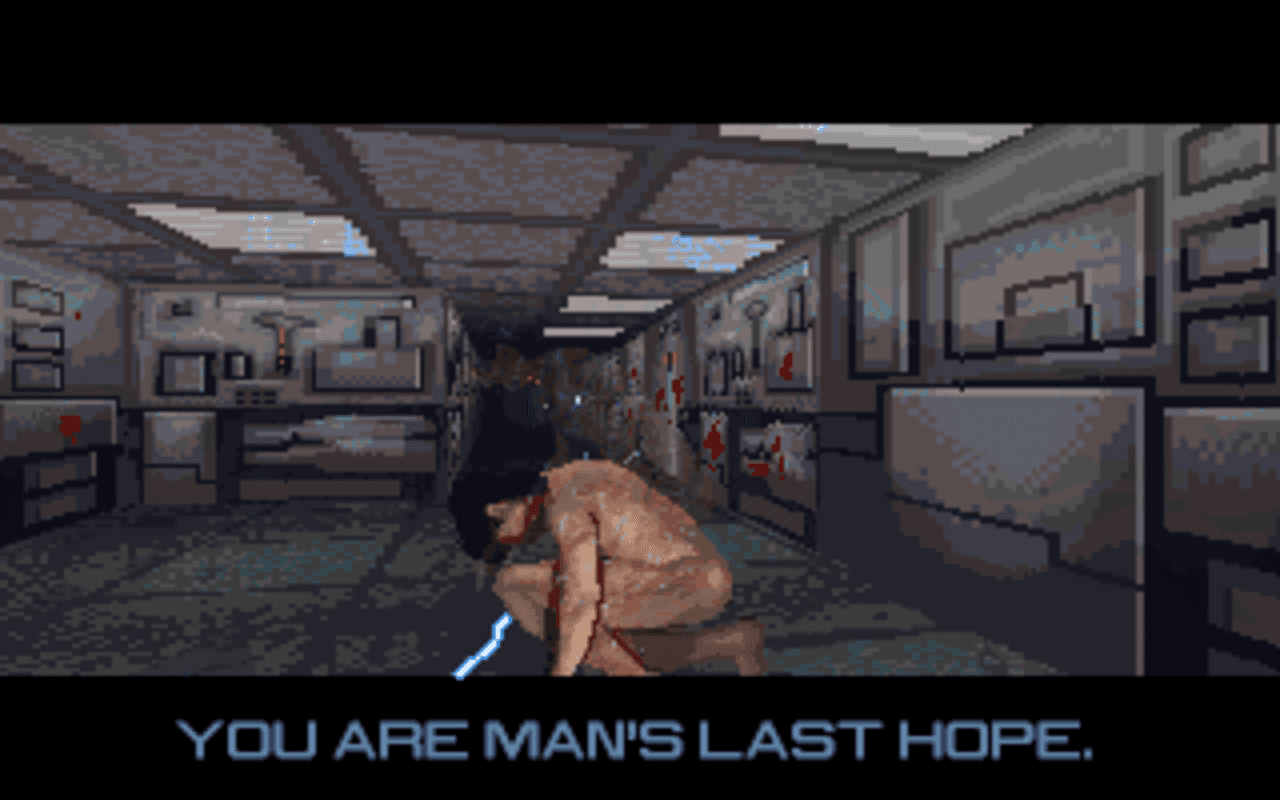
What gives Rampage its distinct flavor is how it merges familiar shooter instincts with a license that naturally suggests dread. Even when the environments are stark and repetitive by design, the theme does a lot of work: cold hallways, utilitarian rooms, and the persistent idea that you’re trespassing in a place built for machines, not people. The game’s pulse comes from that contrast—your human fragility against relentless metal—while the moment-to-moment action stays rooted in swift engagements and constant repositioning.
Maze Combat, Momentum, and The Terminator: Rampage Tension
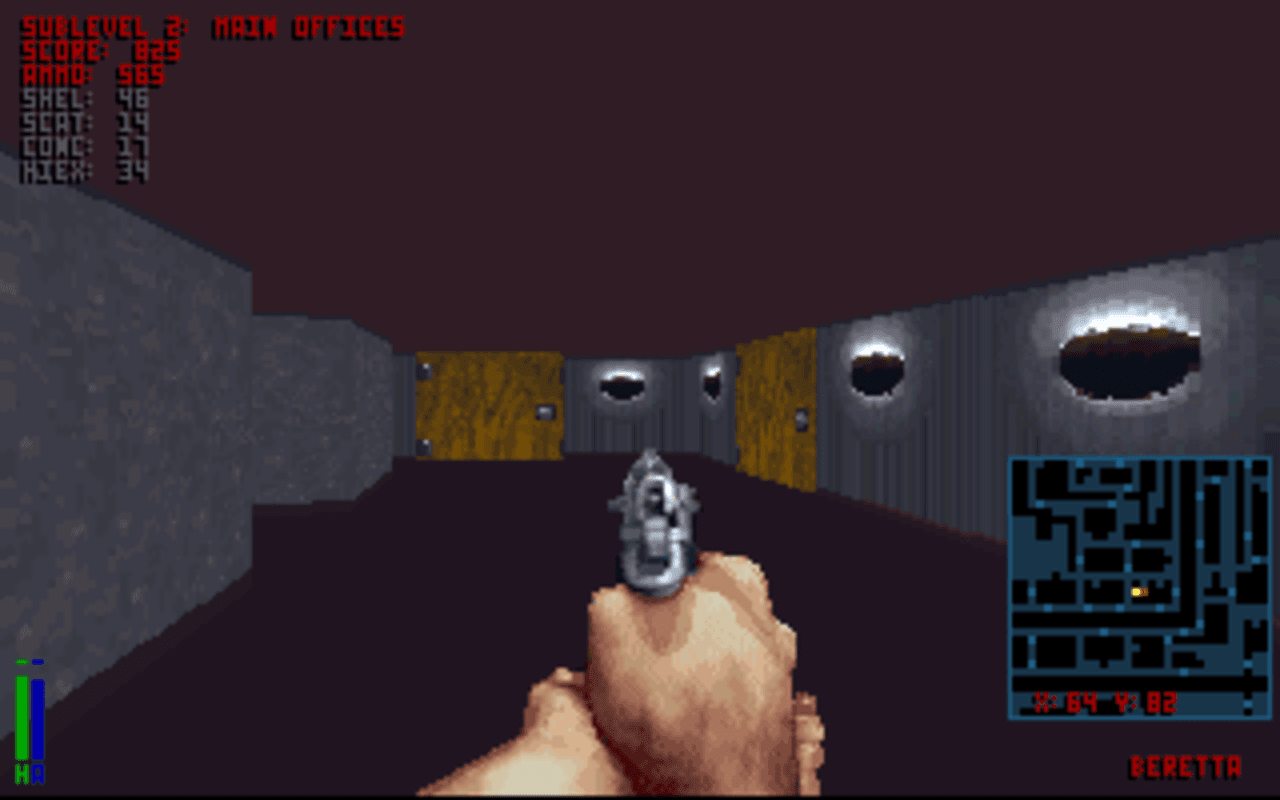
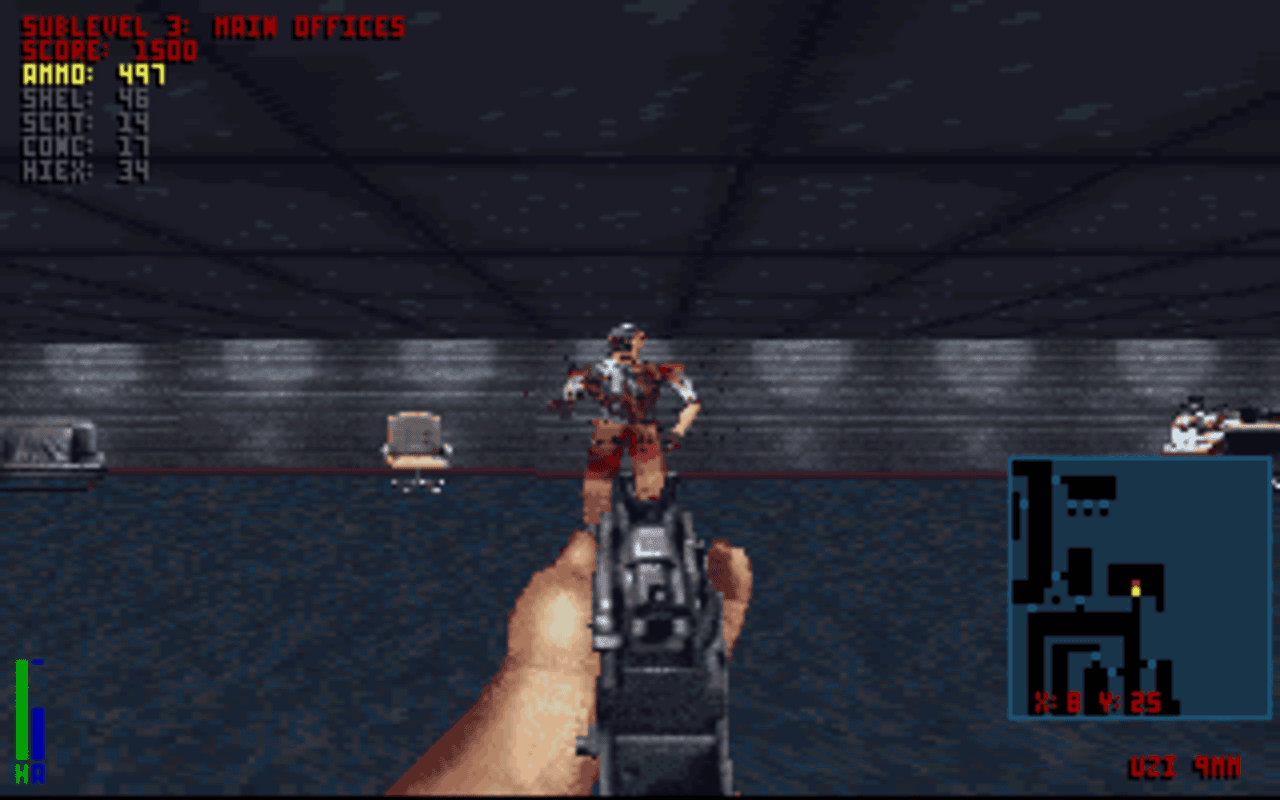
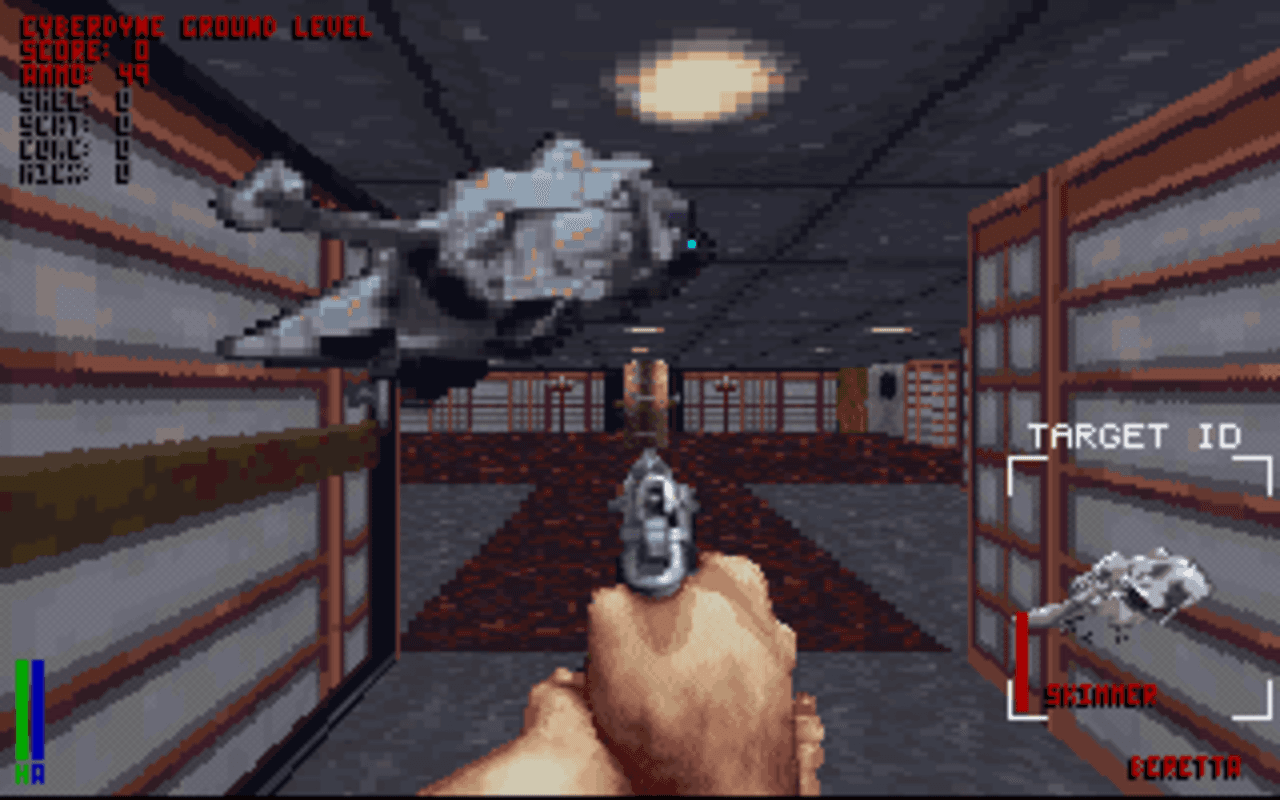
Rampage is structured around grid-based, maze-like levels, a style often associated with early first-person action and especially compared to Wolfenstein 3D’s approach to navigation and encounter flow. That design choice shapes everything. You learn to read corners, listen for trouble, and treat each intersection like a decision point: commit, retreat, or bait an enemy into a cleaner line of fire. Because spaces can look similar, your sense of direction becomes a skill in itself, turning exploration into part of the challenge rather than mere downtime between fights.
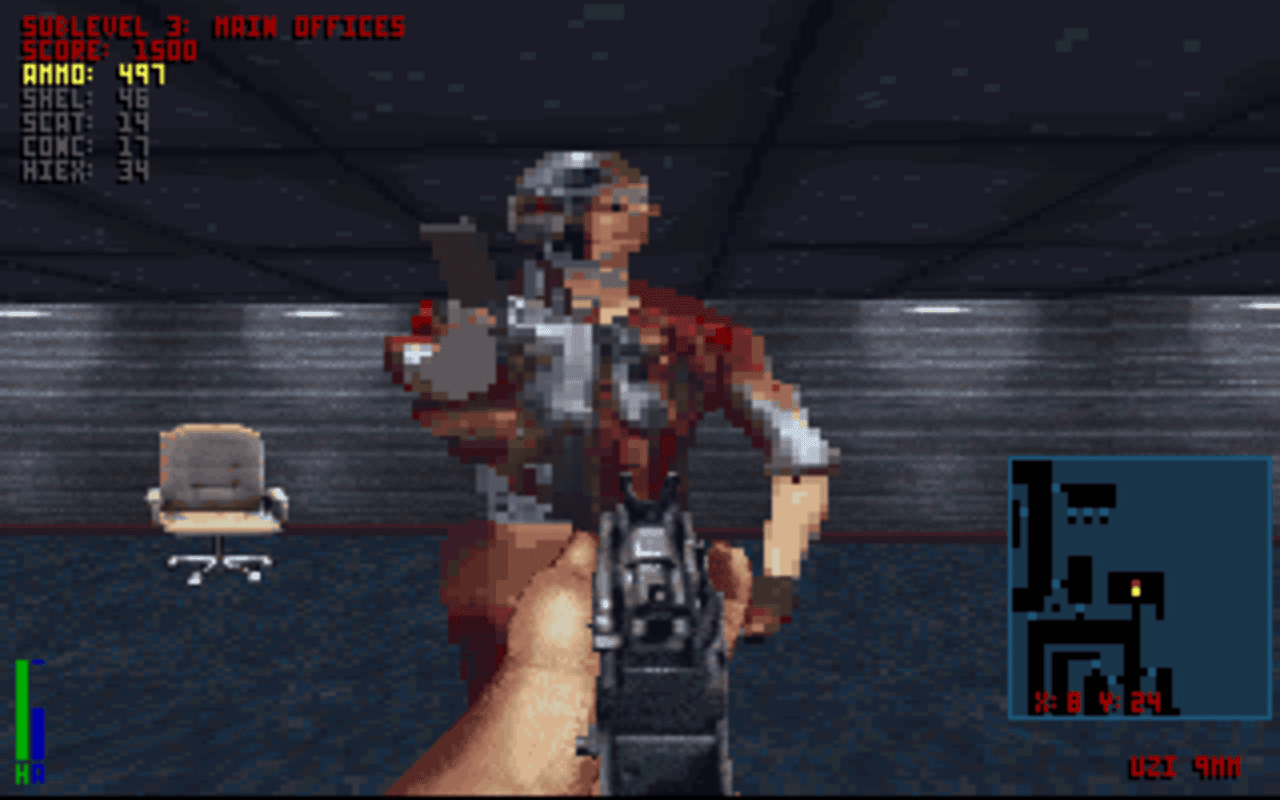
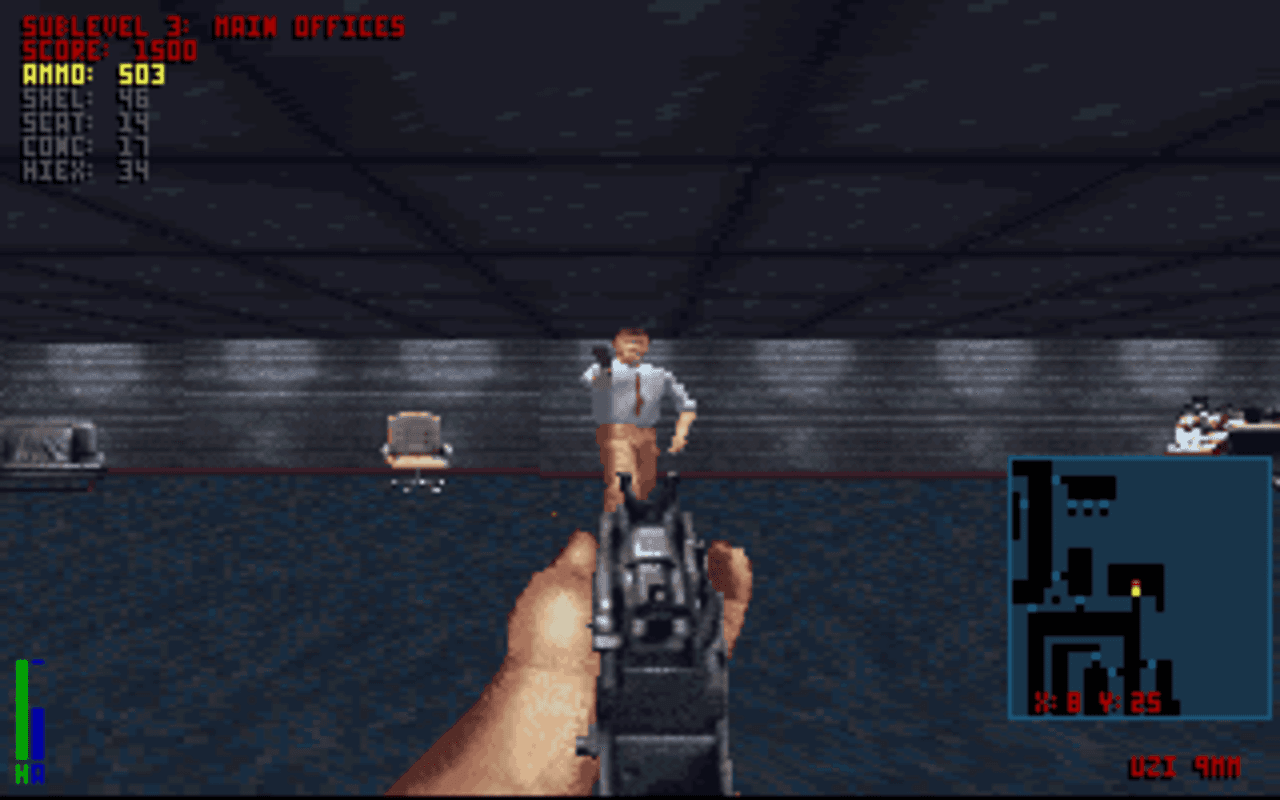
Combat leans on straightforward shooter logic—acquire weapons, manage health and resources, and keep moving—but the pacing often feels like a pressure test. You’re rarely encouraged to admire scenery; you’re encouraged to clear angles, take what you need, and push deeper. The best moments come when the game’s simplicity becomes an advantage: there’s a crispness to stepping through a door, spotting a threat, reacting quickly, and resetting your position before the next encounter collapses on you.
The Terminator framing also helps the play experience feel more purposeful than a generic corridor crawl. Even without lavish storytelling, the idea of battling Skynet forces gives weight to each skirmish. You’re not just collecting pickups; you’re fighting for inches inside an enemy machine-world, trying to stay alive long enough to complete a mission that sounds desperate because it is.
Weapons, Objectives, and the Sci-Fi Feel of the Game
A big part of Rampage’s identity is how it turns objectives into forward motion. Rather than existing purely as an arena shooter, it nudges you to explore and assemble progress through what you find and where you can reach. Different releases and summaries describe the core arc as a push through an imposing facility toward a decisive strike against Skynet’s power structure, with a notable emphasis on assembling or securing a prototype plasma-style weapon concept along the way. Whether you treat that as strict narrative or as motivating flavor, it supports the game’s main strength: giving you a reason to keep pressing through the maze.
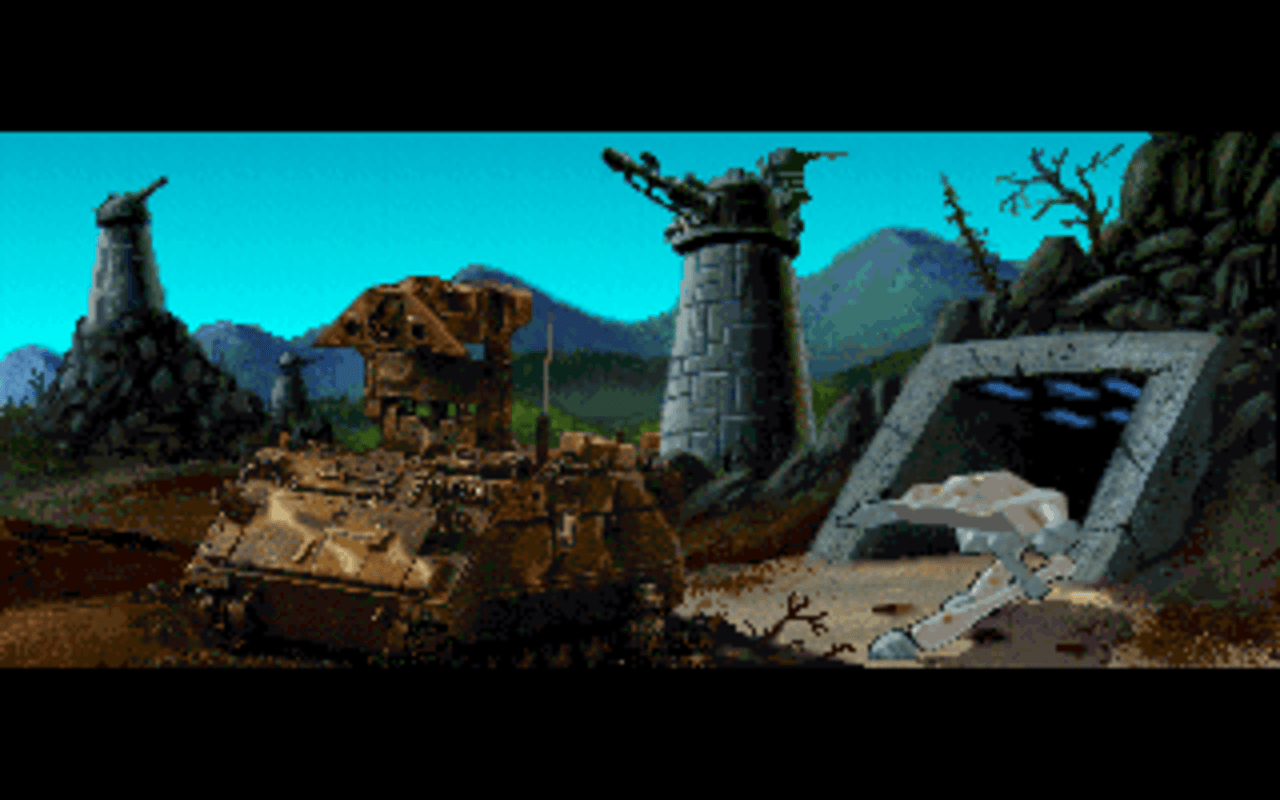
The sci-fi tone is carried by the enemies and the environment more than by cinematic cutscenes. The world feels built for function, not comfort, and that makes every “safe” room feel temporary. When the action clicks, it creates a clean loop: explore to advance, fight to survive, upgrade to endure harsher resistance, and repeat. The game doesn’t need complicated systems to feel intense; it needs you to believe the next corridor is worse than the last—and it often succeeds.
At the same time, Rampage can be demanding in a very classic way. Landmarks can be subtle, routes can blur together, and progress sometimes depends on patience and methodical searching rather than raw reflex alone. For players who enjoy that older style of first-person shooter, the friction becomes part of the charm: you’re not being guided by glowing arrows, you’re earning your way through a hostile layout.
Play The Terminator: Rampage online
If you want the experience in its most accessible form, you can play The Terminator: Rampage online free in a browser, with mobile devices supported, and without restrictions that force you into a specific machine or setup. That ease of access highlights what still works about the game: the immediate “drop in and survive” energy, the quick feedback of corridor firefights, and the satisfaction of mapping a confusing place in your head until it finally makes sense. The online play angle also fits Rampage’s pick-up-and-push structure: it’s the kind of game where you can jump in, clear a stretch, and feel like you advanced through pure nerve and navigation.
Why The Terminator: Rampage Still Works as a Retro Shooter
Viewed as a classic DOS game, Rampage is best appreciated for its directness. It delivers a focused first-person shooter loop: exploration, sudden danger, scrappy victories, and the persistent tension of being under-equipped inside an enemy stronghold. The license adds atmosphere, but the engine-driven fundamentals are what keep it moving. Its grid-based construction, a hallmark of its era, gives it a distinctive rhythm that modern players may find either refreshing or punishing, depending on how much they enjoy building mental maps and learning routes by repetition.
In the end, Rampage is a game about determination as much as firepower. The most memorable stretches are the ones where you feel truly embedded in the maze—where you’ve been lost, fought your way back to familiar ground, and then discovered the next step forward. That arc turns confusion into mastery, and mastery into momentum.
The Terminator: Rampage is a lean, atmospheric DOS shooter that blends maze navigation with brisk sci-fi firefights, anchored by Bethesda Softworks’ early PC action sensibilities. Controls are typical for the era: move with the keyboard, turn and aim with your chosen input setup, interact with doors and items as you explore, and keep your weapon ready because enemies often appear with little warning.
All used codes are publicly available, and the game belongs to its original authors.