Boot Camp Turns Training into a Competitive Sport
Boot Camp is Konami’s military-themed multi-event action game, released for MS-DOS in North America under a title that suits its premise: basic training as an arcade spectacle. The DOS version is closely tied to Konami’s arcade hit Combat School, carrying that late-1980s confidence in fast reflexes, bold scoring, and “one more try” momentum.
You play as a fresh recruit pushed through a sequence of drills where speed, timing, and nerve matter more than careful planning. The “story” is simple but effective: survive training, beat the rival soldier, and prove you belong. Because the events are short and sharply defined, Boot Camp feels like a chain of tense moments rather than a long campaign, which keeps it easy to revisit and hard to put down once you start chasing better results.
Boot Camp is about racing your own mistakes. Each event asks for quick decisions—when to jump, when to climb, when to strike, when to steady an aim—and it immediately rewards clean execution with better time or higher score. The game often frames progress as a head-to-head contest against a computer-controlled recruit, creating constant pressure even when you’re playing solo.
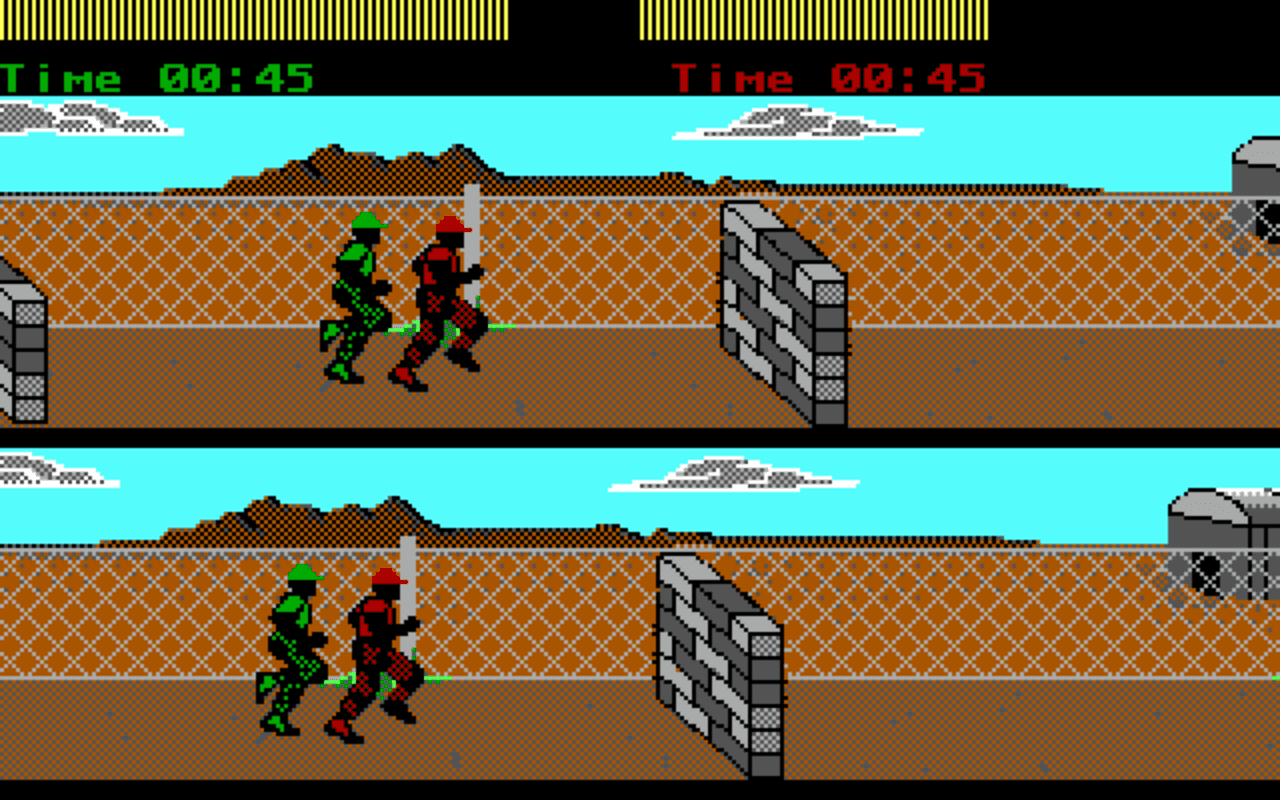
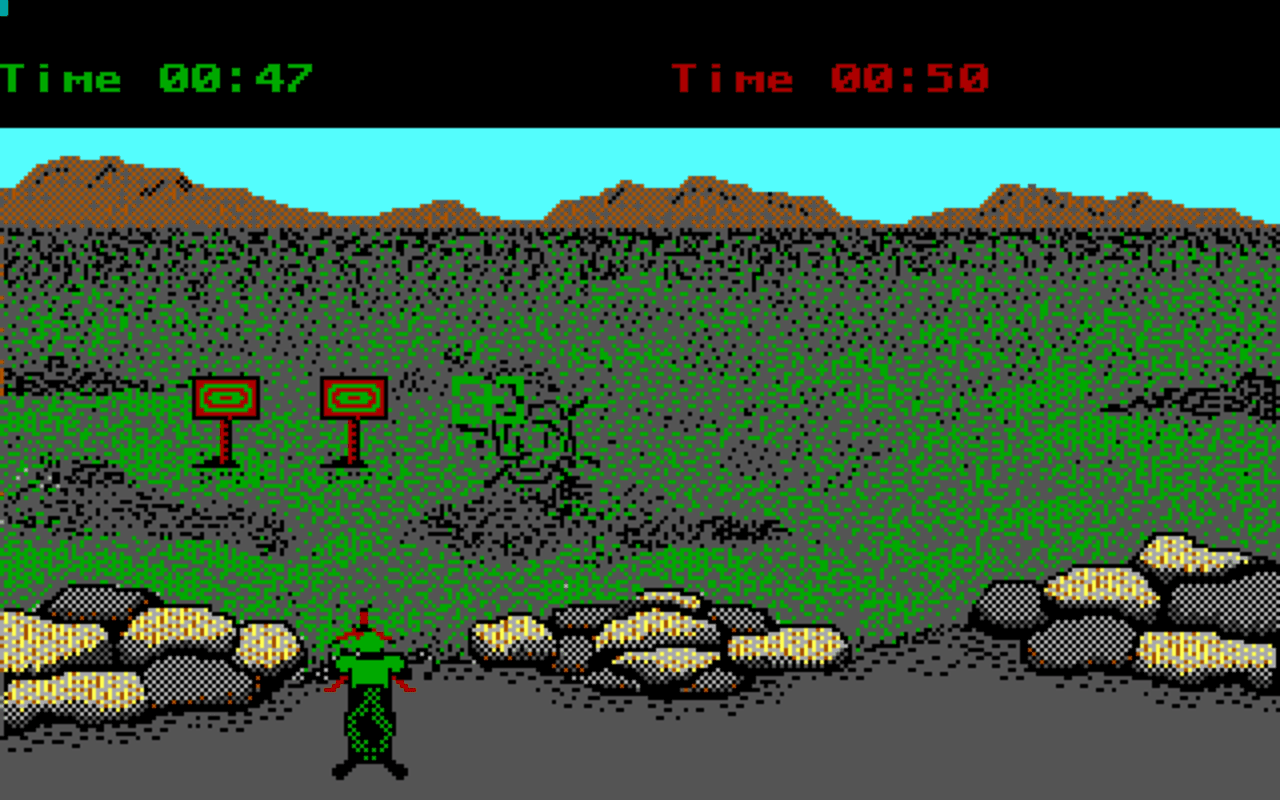
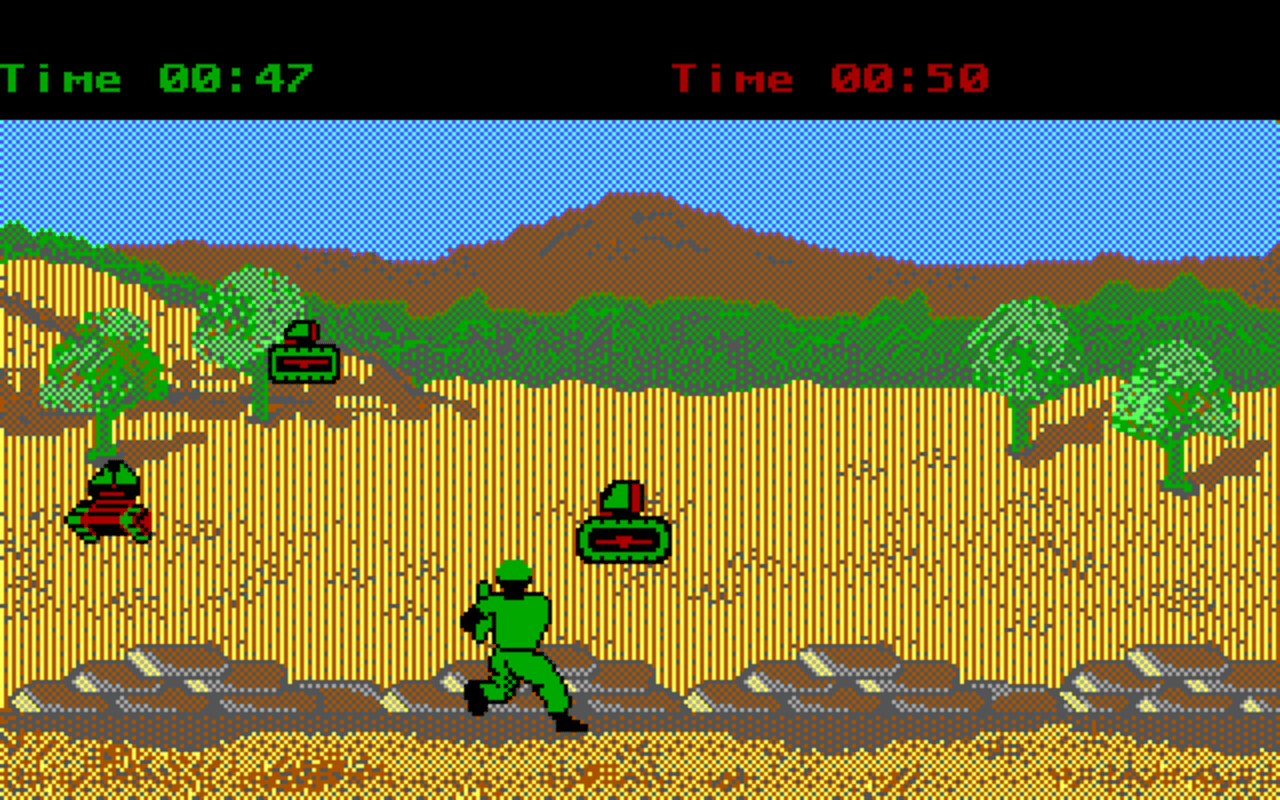
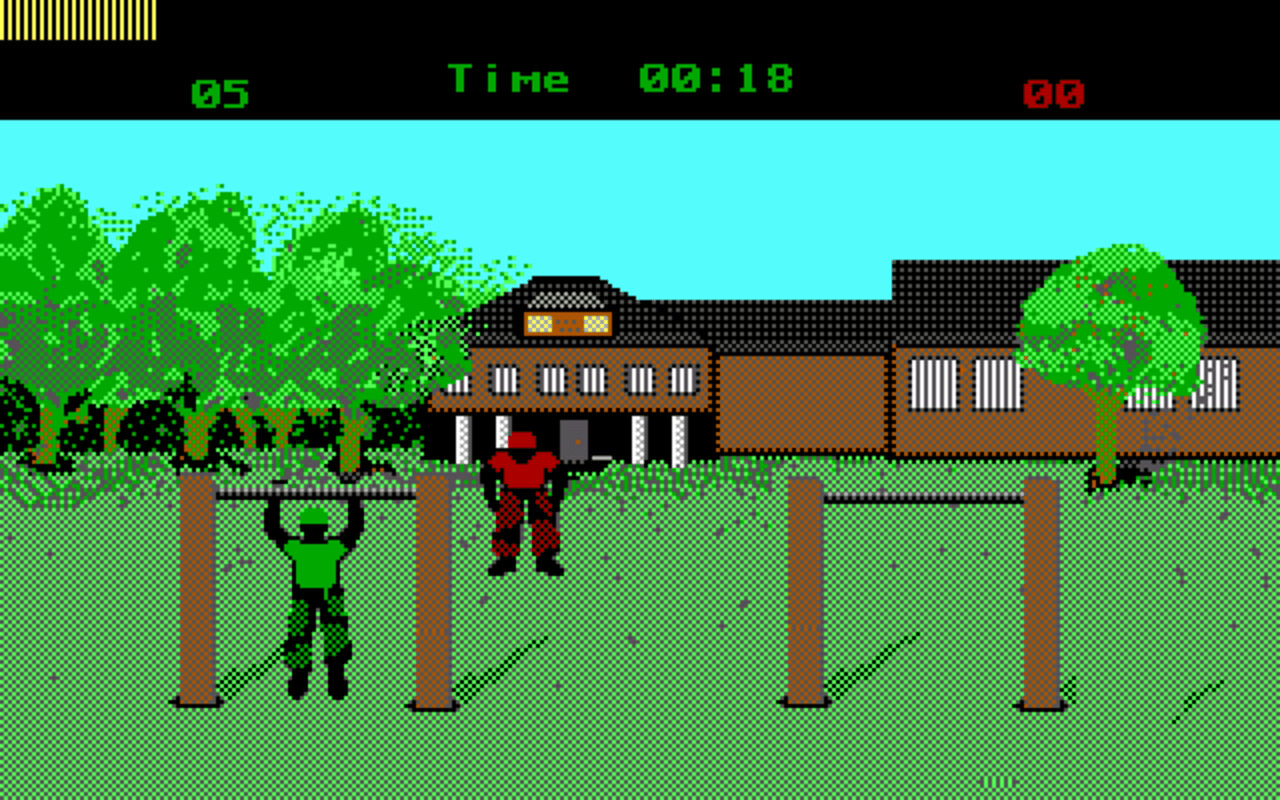
The drills feel distinct without losing a shared identity. An obstacle course becomes a rhythm of hurdles, walls, and bars that punishes hesitation and celebrates flow. A shooting sequence flips the tempo, shifting your focus from motion to precision. A sparring-style encounter compresses the tension into seconds of feints and reactions. The military theme ties the variety together, and the straightforward goals make retrying feel purposeful rather than stubborn.
You can learn the shape of a course, but you still need to respond in the moment: a mistimed leap, a slow climb, or a late punch can swing the result instantly. That’s the same appeal found in other multi-event classics like Track & Field or California Games, yet Boot Camp’s barracks flavor gives it a cheeky identity of its own. Even when you’re ahead, the game nudges you to keep pushing, because slowing down is often how the rival closes the gap.
The Feel of a Konami Arcade Port, Refined for DOS
Boot Camp comes from a lineage of Konami cabinet design where physicality is the point. Even on DOS, it preserves that “hands on the controls” sensation—quick bursts of motion, crisp reactions, and events that end before they overstay their welcome. Clear animations and brisk feedback make every stumble land like a comedic thud and every clean run feel earned.
The presentation prioritizes readability. Characters and obstacles are drawn with clear shapes so you can judge distance quickly, and sound effects make success and failure unmistakable. Each drill feels like a tiny performance, with your time or score serving as the final verdict.
Difficulty is part of the flavor. Early drills teach you the rules, but later ones demand calm under speed, and the game can be strict about late inputs. Still, failure rarely feels like a long setback because each event is short; you learn, restart, and immediately test a better plan. That loop becomes satisfying once you realize the goal isn’t perfection, but consistency under pressure.
Play Boot Camp online for Free Arcade-Style Drills
Because Boot Camp is built from self-contained events, it translates naturally to modern play habits. You can play Boot Camp online free in a browser, and it also fits mobile devices well, letting you jump into a drill, chase a better time, and revisit later without restrictions getting in the way.
This way of playing highlights what the game always did best: immediate goals, rapid feedback, and visible improvement. A single event can be a complete mini-story—clean execution, a mistake, a scramble to recover, and a finish that’s either triumphant or hilariously short of the mark. Even a brief session can feel satisfying because the game is always offering a measurable target to beat.
Why Boot Camp Still Deserves a Spot in Retro Play
Boot Camp endures because it commits to a specific fantasy and executes it with discipline: training as entertainment, rivalry as motivation, and repetition as the path to mastery. It doesn’t try to be a deep simulation of military life; it’s an arcade game with a boot-camp costume, and that honesty gives it charm. The humor is in the exaggeration, the tension is in the timing, and the payoff is in the tiny gains that add up.
Konami published the DOS release in 1989, bringing the arcade concept to personal computers while keeping the focus on fast, readable events. If you enjoy quick skill tests, score chasing, and a theme that feels different from standard olympiad compilations, Boot Camp remains a lively, replayable pick.
This is a game about getting knocked down, laughing, and immediately trying again—until you finally look like you belong on the parade ground. To control it, you generally use directional inputs to move and event-specific action keys to jump, punch, grab, or aim; once you learn how each drill maps those actions, the challenge becomes timing and composure rather than guesswork.
All used codes are publicly available and the game belongs to its original authors.