Cereal-Sci-Fi Setup That Still Works in Chex Quest
Chex Quest began as an unusual idea with a very clear goal: make a fast, exciting FPS game that feels energetic without leaning on violent imagery. Developed by Digital Café and released as part of the Chex brand’s broader promotion, it quickly became memorable precisely because it takes its own silliness seriously.
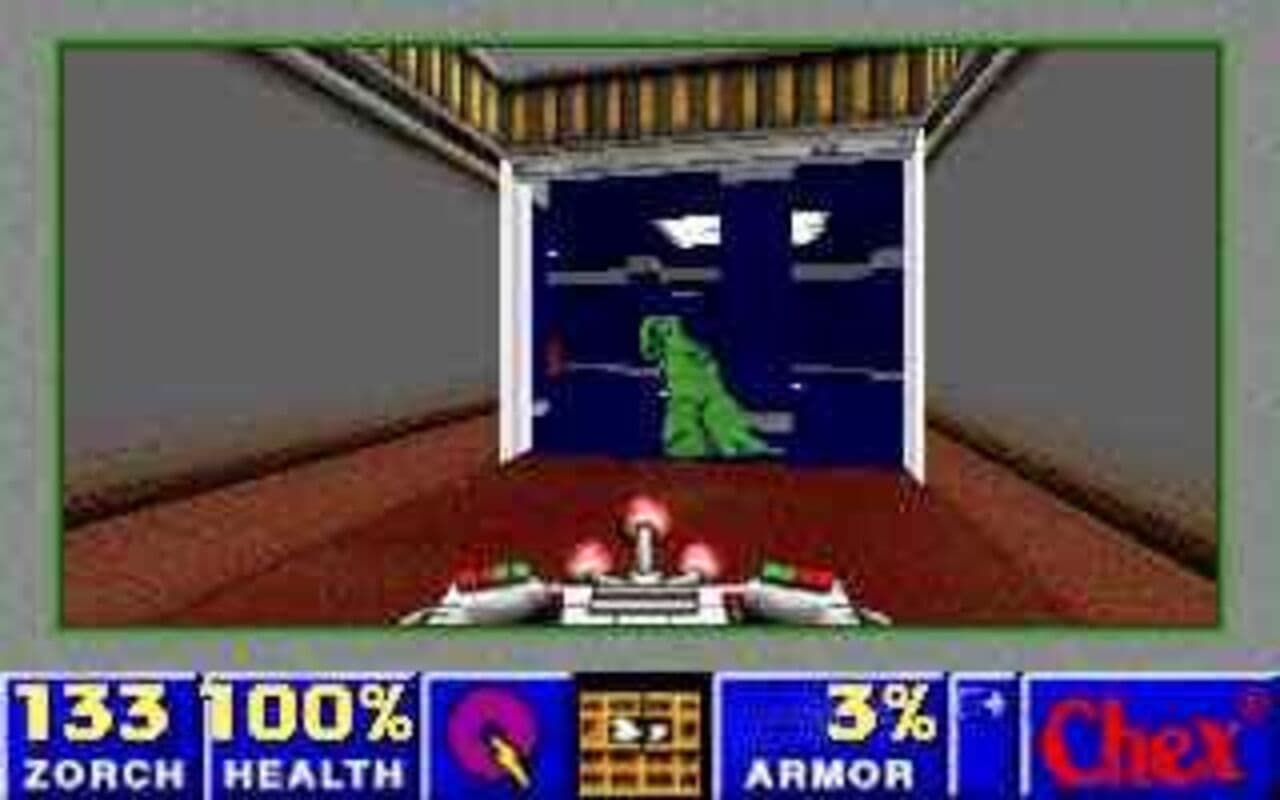
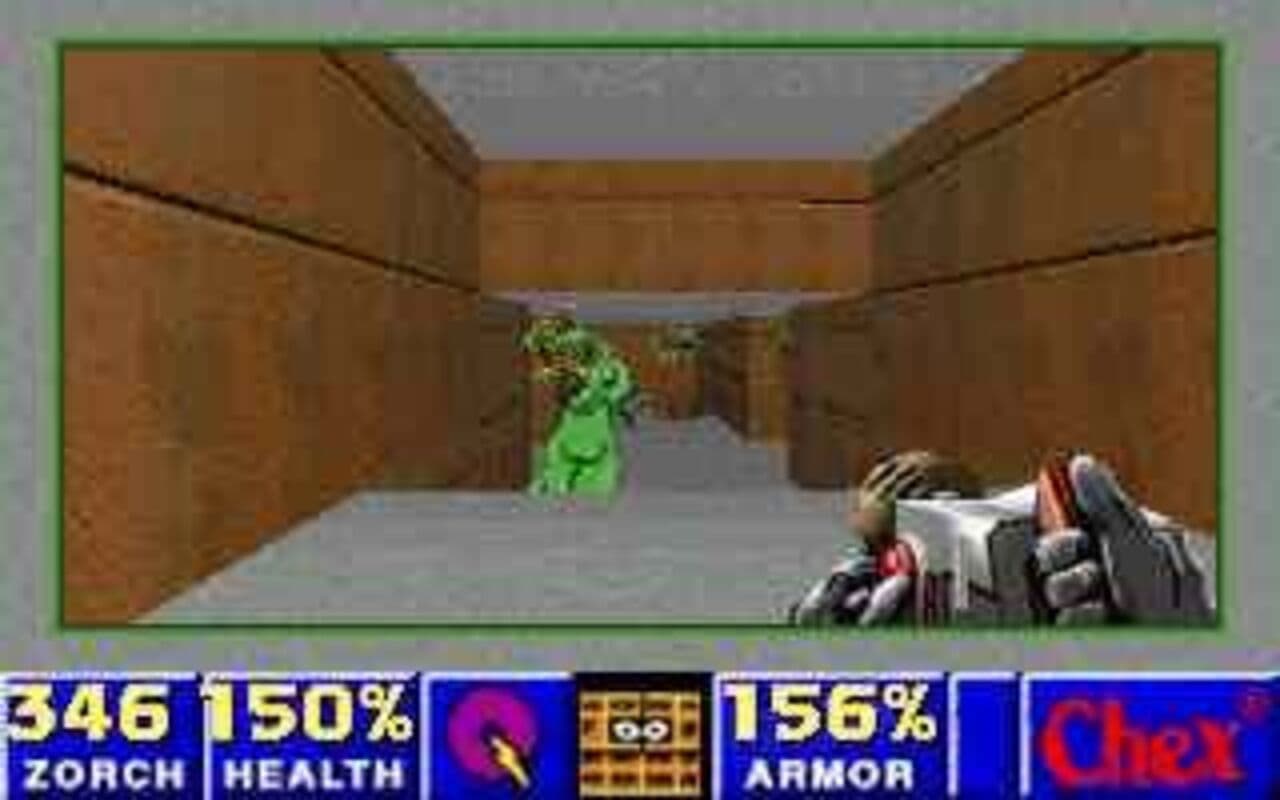
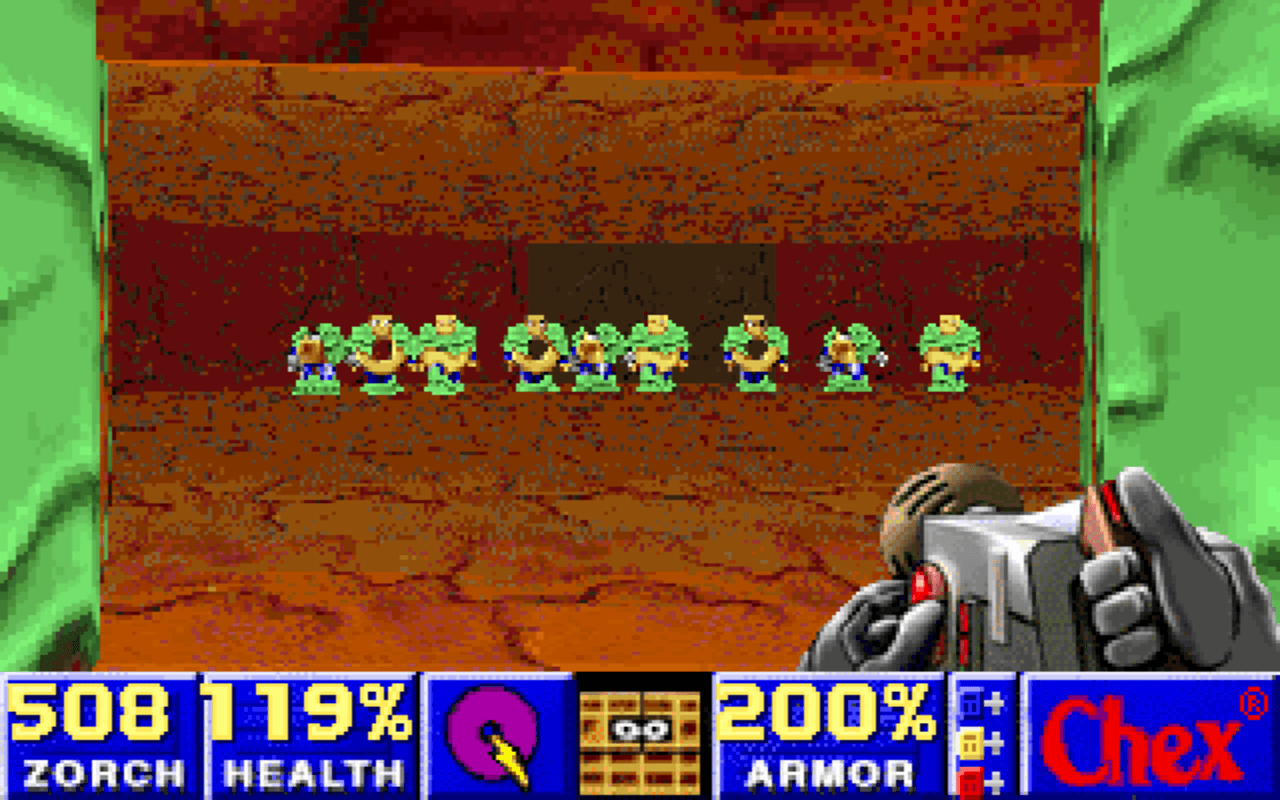
Instead of demonic hordes, you’re up against the Flemoids, elastic slime creatures that ooze into space stations and snack-world outposts. Your mission is both simple and charmingly earnest: protect innocent Chex characters, clear infestations, and restore order with tools designed to be more comedic than cruel. That “nonviolent” promise isn’t just marketing; it’s reinforced by the game’s language and feedback, where enemies are typically “zapped” or “sent back” rather than portrayed with grim consequences.
What makes the premise endure is how quickly it gets you playing. Chex Quest doesn’t overexplain itself. It hands you a clear role, a goofy threat, and a string of compact scenarios that feel like episodes of a sci-fi cartoon, each one built to keep you moving forward rather than bogging you down in complexity.
Doom-Born Speed With a Friendlier Face
Under the cereal glaze, Chex Quest is powered by the same design DNA that made early FPS games so endlessly replayable: swift movement, readable spaces, and an immediate rhythm of exploration and action. It’s famously built as a total conversion on id Tech 1 foundations associated with The Ultimate Doom, which means the pacing is naturally punchy and the core “feel” is tight.
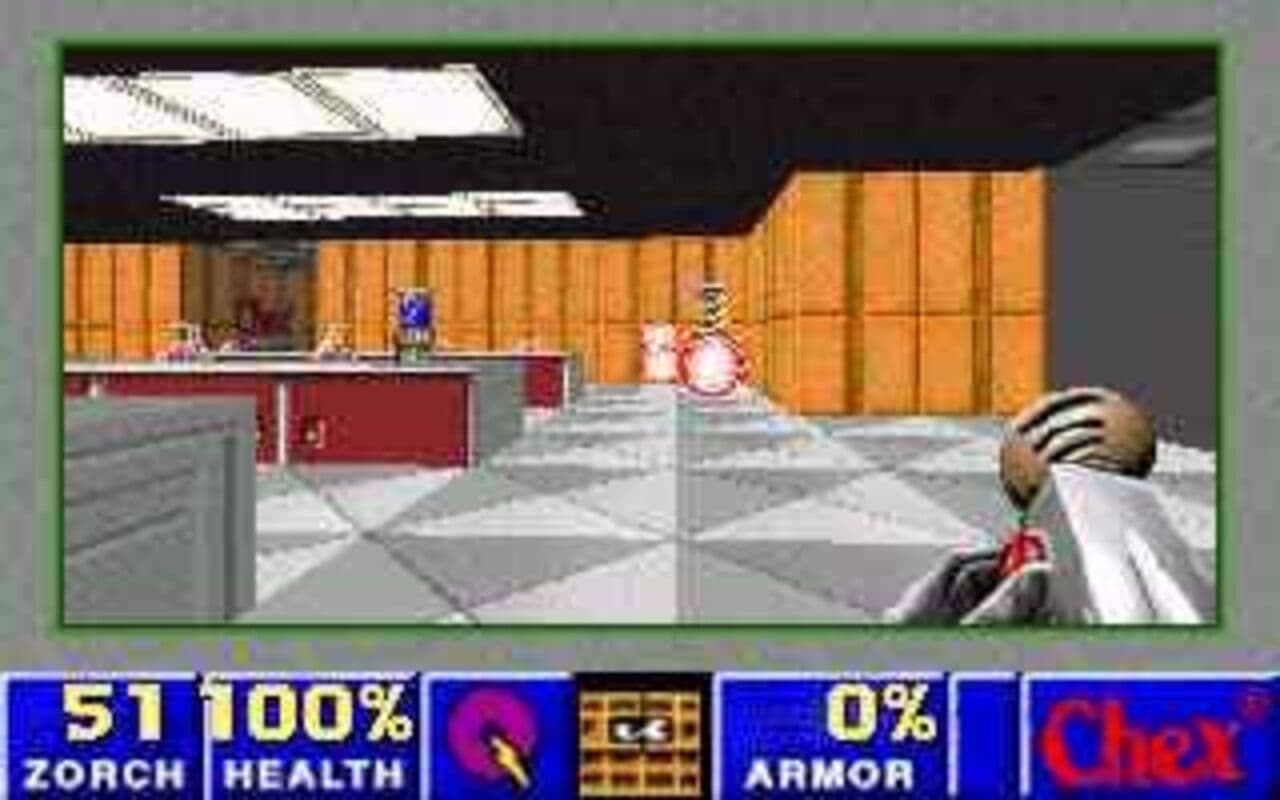
Levels are designed around keys, barriers, and loops that guide you into new encounters, then fold you back through previously locked paths. This structure creates that satisfying “I know this place now” sensation, where you learn a map by surviving it. Chex Quest keeps that classic maze logic but dresses it in bright textures, snack-themed details, and a tone that’s far more welcoming than its mechanical ancestors.
The game’s arsenal also reflects that shift in mood. Weapons look like playful gadgets, and the soundscape leans into bouncy, spacey energy rather than dread. Yet the moment-to-moment decisions still matter. You’re constantly choosing when to press forward, when to retreat, which corridor is safer, and whether grabbing that tempting pickup is worth waking up more trouble.
Flemoid Encounters, Exploration, and the Joy of Momentum
Chex Quest shines when you treat it like what it is: a compact sprint through cleverly arranged spaces. The Flemoids are readable opponents, and the game often tests you with placement rather than raw difficulty. A doorway that seemed harmless becomes a pinch point when you’re chased; a wide room becomes dangerous when threats approach from multiple angles; a quiet hallway becomes tense when you realize you’ve committed to it with low resources.
Exploration is the other half of the experience. Like many classic FPS titles, Chex Quest rewards curiosity with supplies and helpful surprises. The best runs come from scanning corners, recognizing patterns, and building a mental map. It’s a game where you can feel yourself improving quickly, not by grinding stats, but by learning routes, anticipating ambushes, and moving with purpose.
Tonally, it also nails a rare balance: it’s playful without being flimsy. The snack-world theme is funny, but the game still respects the player’s time with responsive action and clear objectives. That combination is a big part of why it has remained a point of reference in conversations about creative “advergames” and unexpectedly high-effort promotions.
Play Chex Quest online and jump into the mission
Play Chex Quest online as an easy way to experience this classic game with minimal friction: you can play it free in a browser, and it’s also well suited to mobile devices without restrictions, since its straightforward objectives and quick levels fit shorter play sessions just as well as longer ones. The game’s simple structure makes it perfect for hopping in, clearing a level or two, and coming back later purely for the joy of movement and exploration, not because you must keep up with a sprawling narrative.
That accessibility also highlights what Chex Quest does best. The humor lands faster, the pacing feels brisker, and the “one more try” loop becomes even more inviting when you can simply start playing and get right to the action. If you’re revisiting it, the online approach makes it easy to appreciate the clever reskinning and the way it transforms familiar FPS fundamentals into something distinctly lighthearted. If it’s your first time, it’s an approachable gateway into the classic era of first-person shooters, showing how much fun the genre can be even when the theme is deliberately gentle.
Why Chex Quest Still Deserves a Replay
Chex Quest remains memorable because it’s more than a novelty. Yes, it’s a cereal-box artifact, but it’s also a well-constructed FPS experience that understands pacing. It moves quickly, communicates clearly, and keeps the player engaged with compact goals and readable spaces. Its cartoon tone helps it stand apart, but the underlying craftsmanship is what keeps it playable.
In many classic shooters, atmosphere is built through menace. Chex Quest proves you can build atmosphere through identity instead: colorful art direction, a consistent comedic vocabulary, and a clear sense of place. The Flemoids feel like “this game’s” enemies, not generic targets, and the Chex Warrior’s role gives the adventure a surprisingly coherent flavor. The result is a game that’s easy to recommend for curiosity, nostalgia, or simply a different kind of old-school action.
Chex Quest is a fast, friendly FPS game with classic roots, clever presentation, and a satisfying loop of exploring, unlocking, and clearing infestations. For controls, it generally follows familiar first-person shooter conventions: move with the keyboard, aim with either mouse or keyboard inputs depending on your setup, and use a primary action key to fire your current gadget, with additional keys for swapping equipment and interacting with doors.
All used codes are publicly available and the game belongs to its original authors.