Ocean Software’s Nightbreed Turns Horror Into Arcade Urgency
Clive Barker’s Nightbreed: The Action Game arrived under Ocean Software’s banner as part of a wave of late-era DOS titles that chased cinema’s mood while still honoring the pick-up-and-play spirit of arcade design. The license matters here, not because it demands you know every detail of the film, but because it shapes the game’s personality: grotesque silhouettes, unsettling locations, and a sense that danger is always just off-screen. Rather than leaning into slow dread, Nightbreed goes for pressure. It’s horror presented as pursuit, where movement and survival carry the story forward.
You step into the role of Boone, a reluctant figure caught between human hostility and the strange sanctuary of Midian. The narrative is conveyed with a practical economy typical of the era: enough context to point you toward the next threat, then straight back into action. That brisk approach ends up suiting the premise. Nightbreed isn’t trying to be a long, chatty adventure; it’s trying to make you feel hunted, tested, and forced to react.
Clive Barker’s Nightbreed: The Action Game and the Shape of Midian
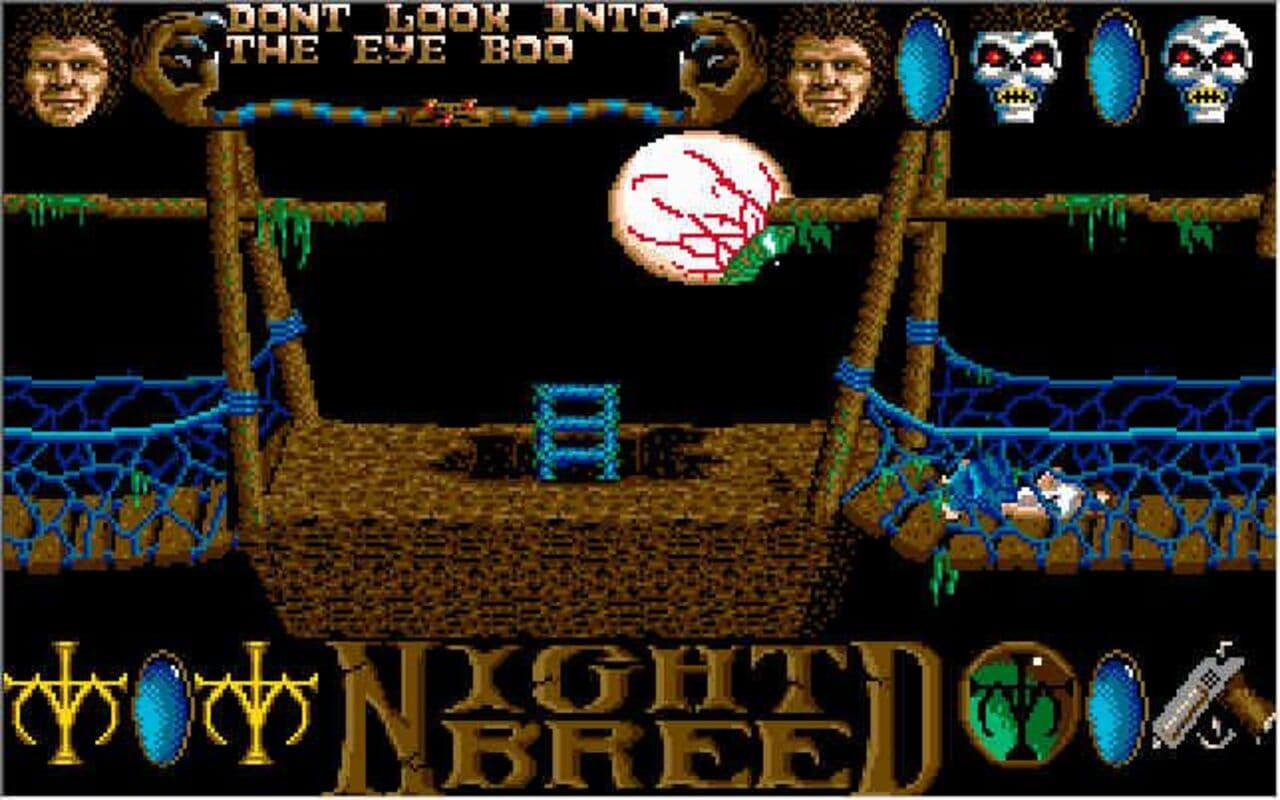
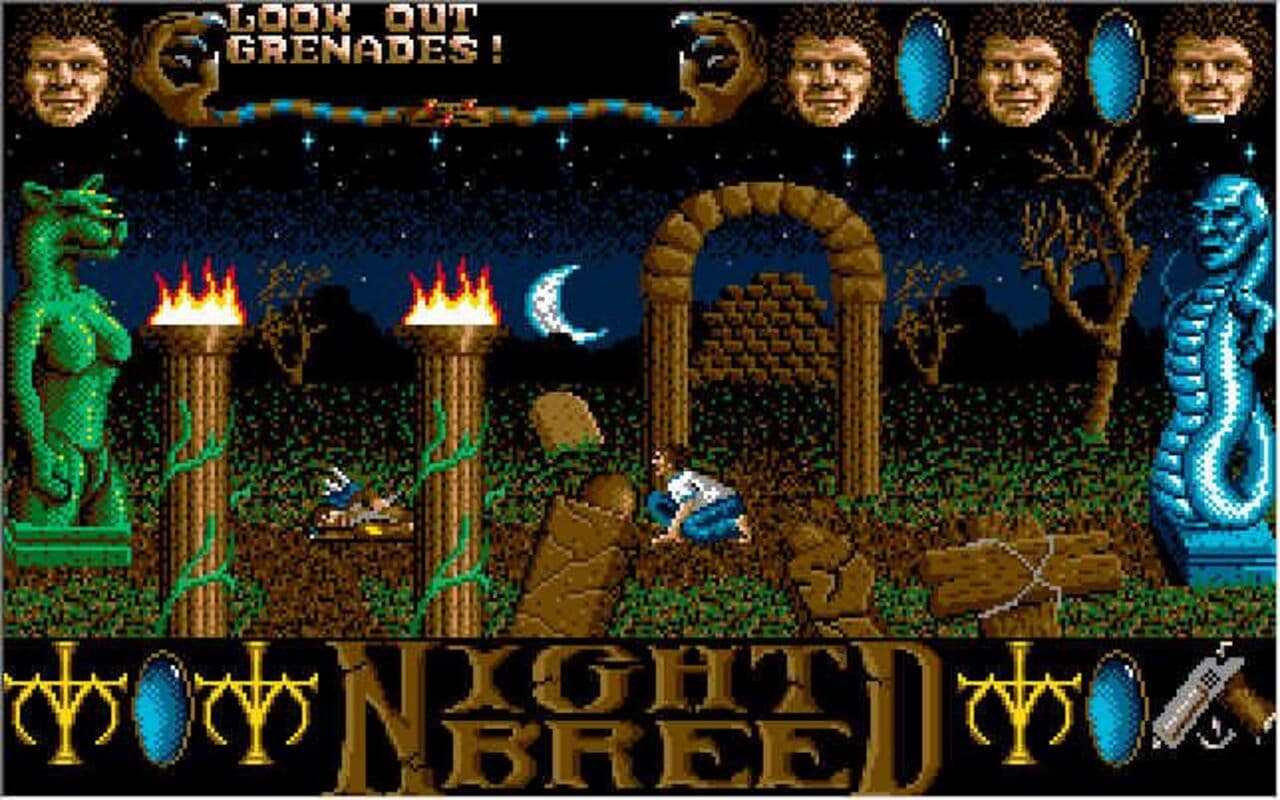
The most memorable quality is how the game frames its world as a series of grim stages. Environments feel like corridors of tension, pushing you onward with enemy placement that’s rarely casual. Even when the background details are sparse by modern standards, the direction aims for the grotesque and the uncanny. Midian, in particular, carries that “forbidden refuge” energy: it’s not a safe haven so much as a different kind of risk, a place where survival depends on learning the rules quickly.
As Boone, you’re frequently forced into uncomfortable choices: press forward and risk contact damage or mistimed jumps, or hesitate and let the screen fill with trouble. That constant squeeze is where the game’s licensed identity shines. The best horror games don’t merely show strange creatures; they make you feel cornered by them. Nightbreed’s levels often behave like traps that happen to look like places, which is exactly the right tone for a story about being pursued by enemies who don’t want you to exist.
Combat That Rewards Nerves and Rhythm
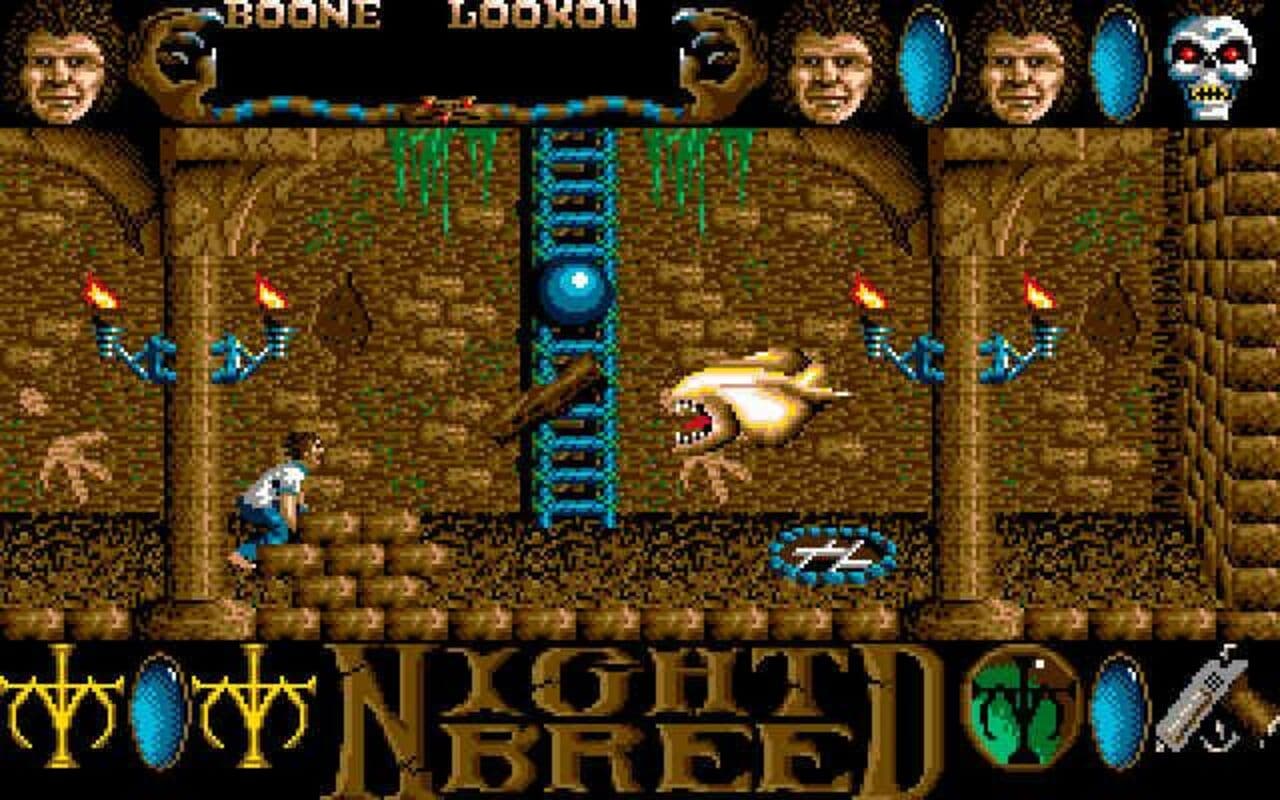
At its core, this is an action game built around readable patterns and the discipline to execute them. Encounters ask for rhythm: step into range, strike, retreat, repeat, and stay aware of what’s entering from the edges of the screen. Some opponents function as simple blockers, while others punish impatience, forcing you to respect spacing. The challenge can feel abrupt, but it’s a deliberate kind of abruptness—the sort that dares you to improve rather than to grind.
The game’s side-scrolling structure creates a familiar push-and-pull for genre fans. If you enjoy learning how a screen “breathes”—where threats appear, how far you can safely commit, when to prioritize movement over attacking—Nightbreed provides that classic feedback loop. Mistakes are usually obvious in hindsight: a greedy approach, a mistimed jump, a late reaction to an enemy entering your lane. When you start reading the tempo, the experience becomes less about raw difficulty and more about staying composed.
Visual Mood, Sound Texture, and Licensed Energy
Nightbreed’s audiovisual identity leans into the uncanny without overcomplicating the presentation. Character shapes and creature designs aim for immediate recognition: dangerous, unnatural, and purposefully unsettling. The screen doesn’t need cinematic realism to be effective; it needs contrast, silhouette, and a sense of “wrongness,” and the game frequently hits those notes. The result is a title that feels distinct in a crowded era of action releases, even when it shares genre fundamentals with other side-view staples.
Sound and music serve as tension tools rather than showpieces. Effects emphasize impact and threat, reinforcing the feeling that Boone is constantly one misstep away from being overwhelmed. It’s the kind of audio that nudges you to stay alert, and in a game with this much forward pressure, that matters. The license becomes less about recreating scenes beat-for-beat and more about sustaining an atmosphere: grim, urgent, and just strange enough to keep you uneasy.
Play Clive Barker’s Nightbreed: The Action Game online
A big reason this title remains easy to revisit is how naturally it fits quick sessions. You can play Clive Barker’s Nightbreed: The Action Game online free, in a browser, and on mobile devices without restrictions, which makes it simple to jump into a level, test your timing, and chase a cleaner run. That accessibility pairs well with the game’s structure: short bursts of action, immediate consequences, and that classic “I can do better” momentum that defines arcade-flavored design.
Playing this way also highlights what Nightbreed does best: delivering a concentrated mood. The horror theme isn’t buried in long exposition; it’s embedded in the pace, the enemy pressure, and the uneasy spaces you move through. Whether you’re taking a few minutes to replay a tricky stretch or pushing for a longer session, the game’s straightforward format helps the atmosphere land quickly.
Why Nightbreed Still Works as a Retro Horror Action Game
Nightbreed endures because it commits to a clear identity. It doesn’t try to be everything; it tries to be tense, fast, and strange. For players who like retro action with a darker edge, that focus is refreshing. The game is at its best when you treat it like a test of composure: learn the threats, respect spacing, keep moving, and don’t let the grim visuals distract you from the rhythm underneath.
Clive Barker’s Nightbreed: The Action Game is a compact, horror-tinged action experience that channels its license into pressure and mood rather than lengthy storytelling. For controls, movement and jumping do most of the work, while attacks are timed to manage spacing and prevent enemies from crowding you; a keyboard or a controller-style setup both suit the stop-and-go rhythm.
All used codes are publicly available and the game belongs to its original authors.