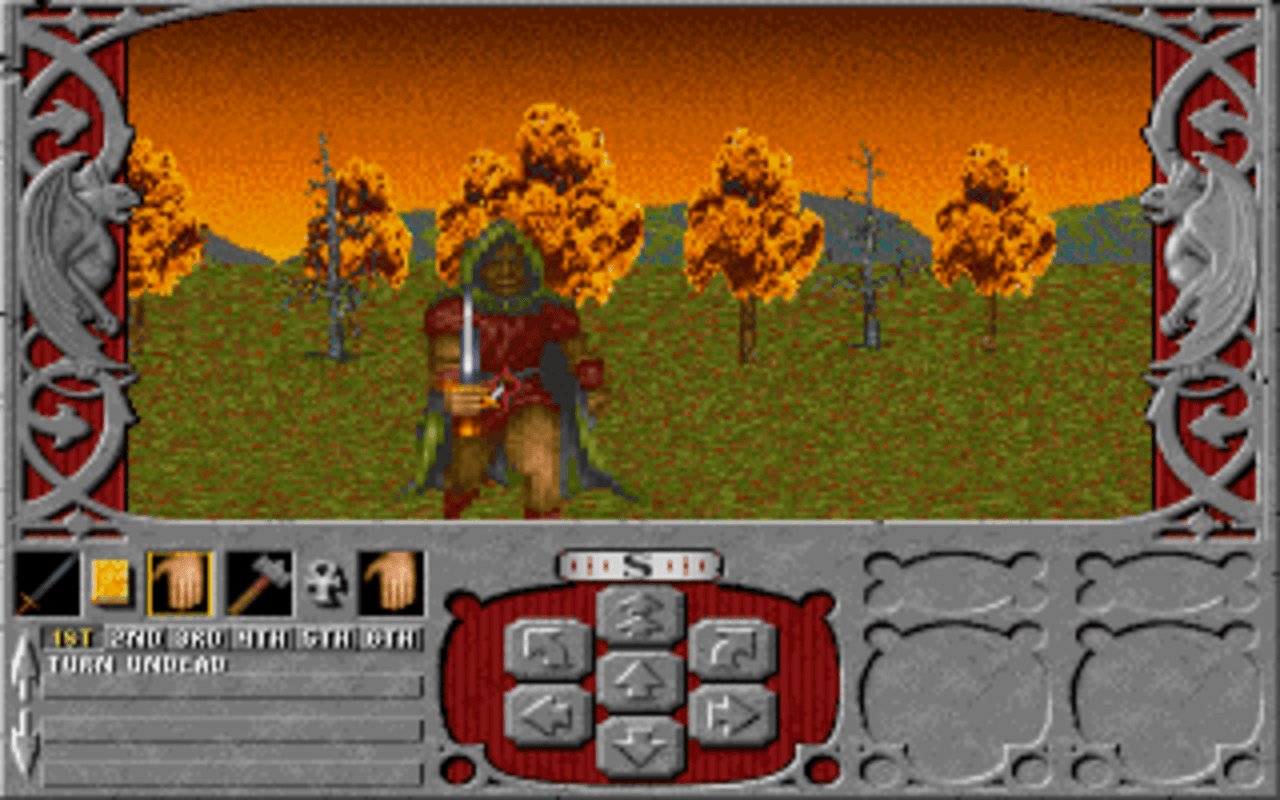
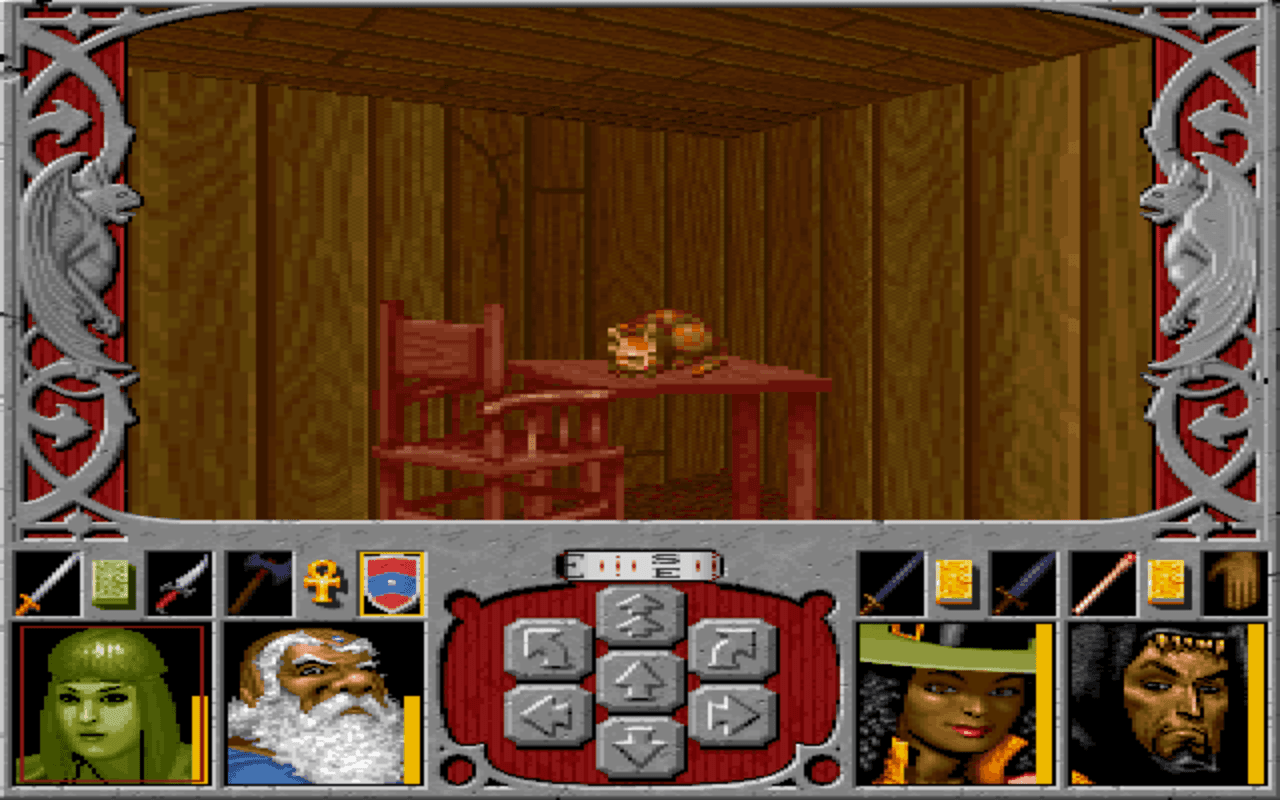
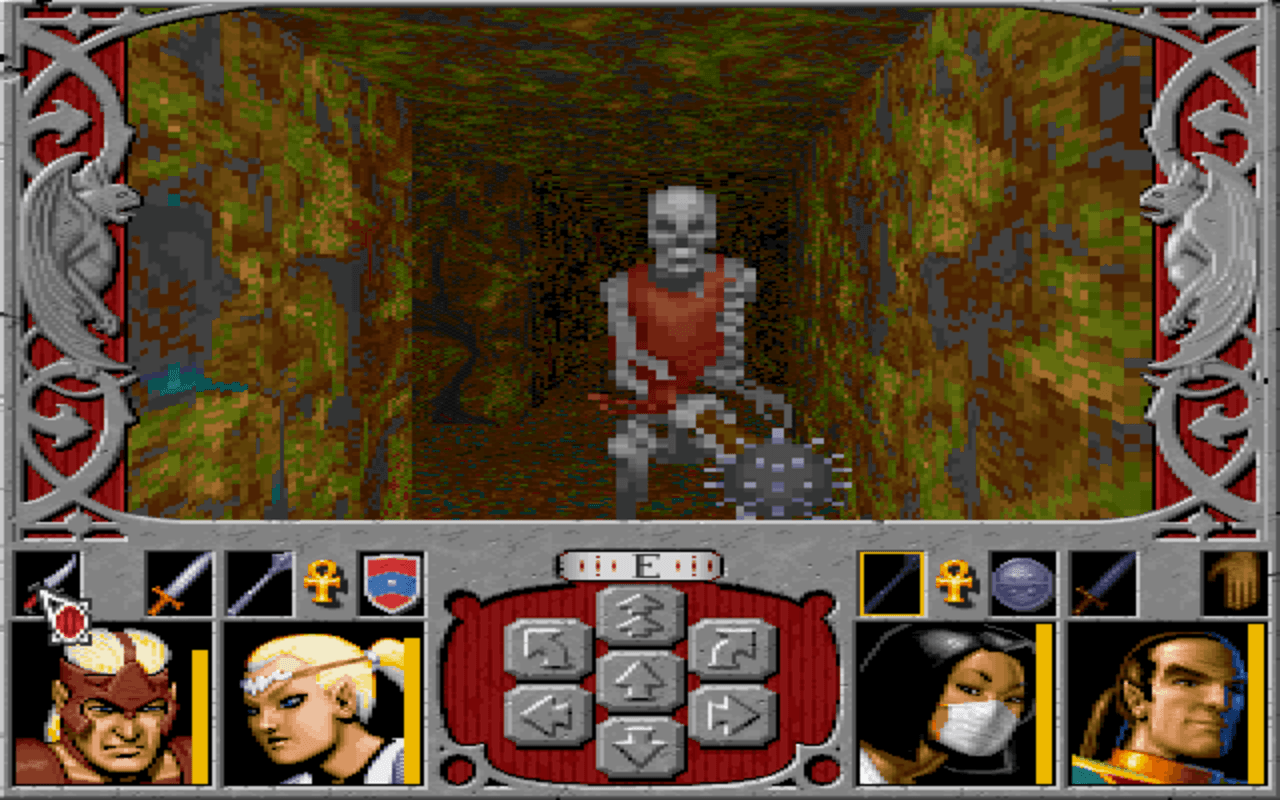
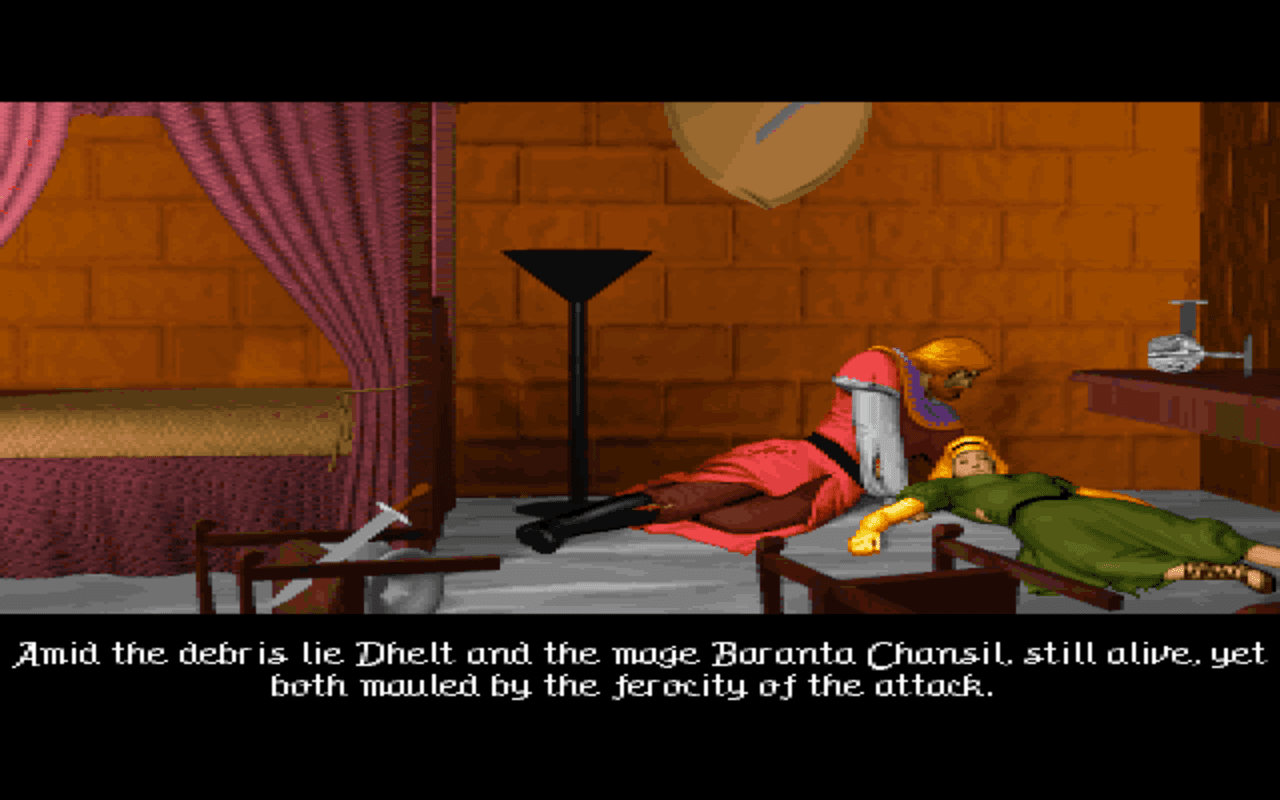
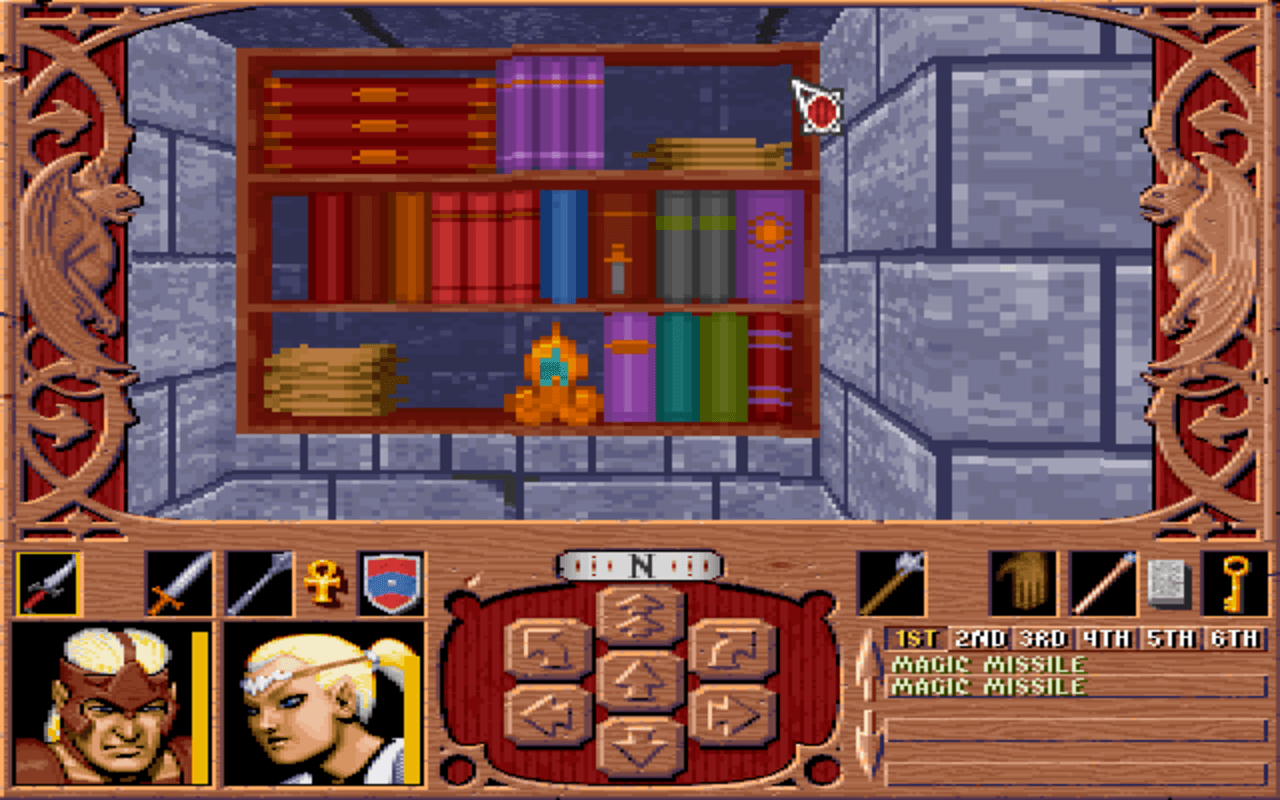
At its core, Ravenloft: Strahd’s Possession is about being trapped in a hostile domain ruled by Count Strahd von Zarovich, a charismatic and terrifying vampire lord. Your party begins in the familiar Forgotten Realms, only to be pulled into the mists of Barovia during the pursuit of a stolen holy symbol. That simple chase quickly transforms into a desperate struggle to escape a land that seems determined to consume you.
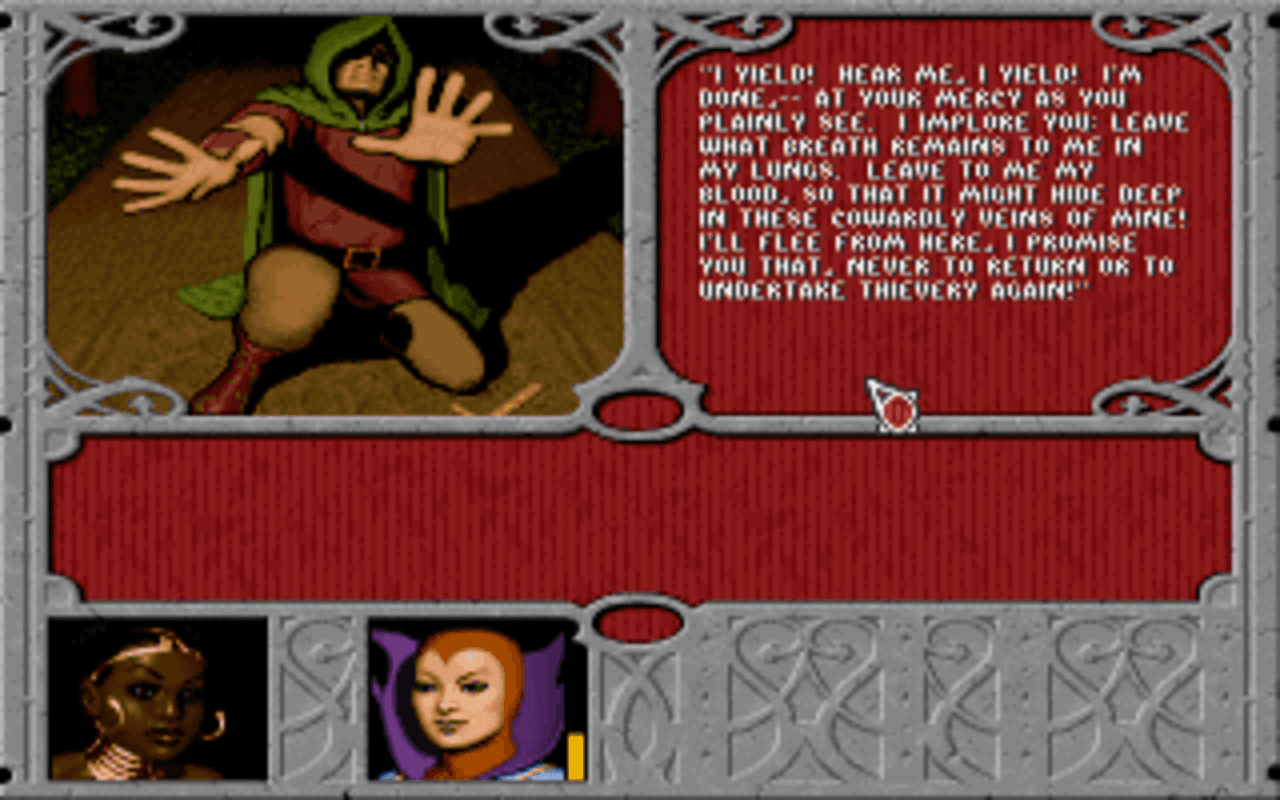
Barovia is presented as a bleak, enclosed world: dense woods, narrow roads, and small, fearful settlements surrounded by an ever-present wall of mist. The story unfolds as you explore, uncover cursed artifacts, meet tragic NPCs, and gradually learn that Strahd is less a simple villain and more a tragic, tormenting force at the heart of the realm. Dialogue, item descriptions, and encounters all build an unsettling atmosphere where even small victories feel hard-earned.
The narrative is paced like a tabletop campaign, with quests that lead deeper into castles and catacombs rather than long expository cutscenes. This gives players room to role-play their party, experimenting with different approaches to combat, magic, and problem-solving as they uncover what truly keeps Barovia bound to its dark master.
Party-Based AD&D Gameplay and First-Person Exploration
Mechanically, Ravenloft: Strahd’s Possession takes the framework of AD&D 2nd Edition and adapts it into a real-time first-person engine. You guide a party of up to four characters, mixing classes such as fighters, clerics, mages, and rangers to cover the classic roles of melee power, divine protection, and arcane utility. Character creation and development follow familiar AD&D concepts: attributes matter, spell lists feel authentic, and class choices genuinely affect how you approach encounters.
Exploration happens in a grid-based, first-person view, but with fluid movement that helps the game feel more immediate than older step-based dungeon crawlers. You move through forests, villages, underground tunnels, and the infamous Castle Ravenloft itself, checking walls for secret passages and scanning shadows for lurking undead. The ever-present mini-map helps navigation without spoiling the tension of getting turned around in a maze-like crypt.
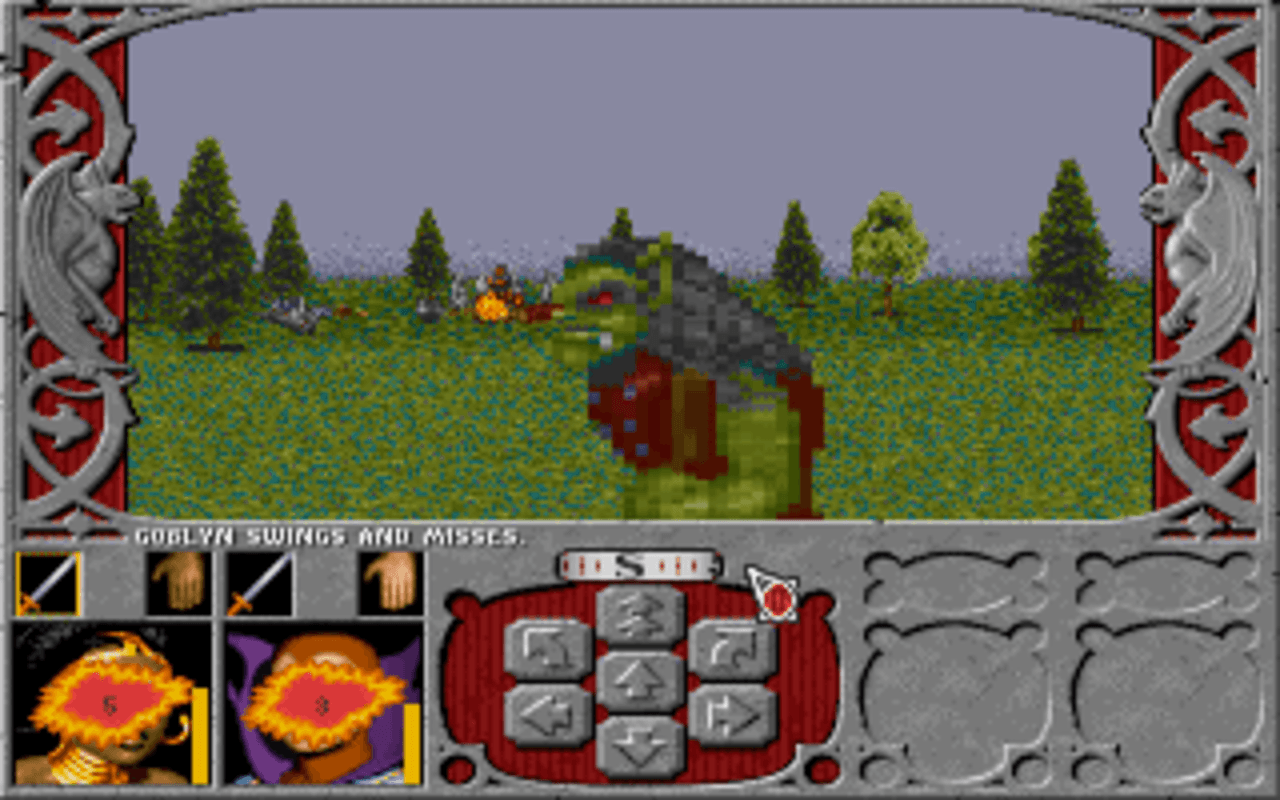
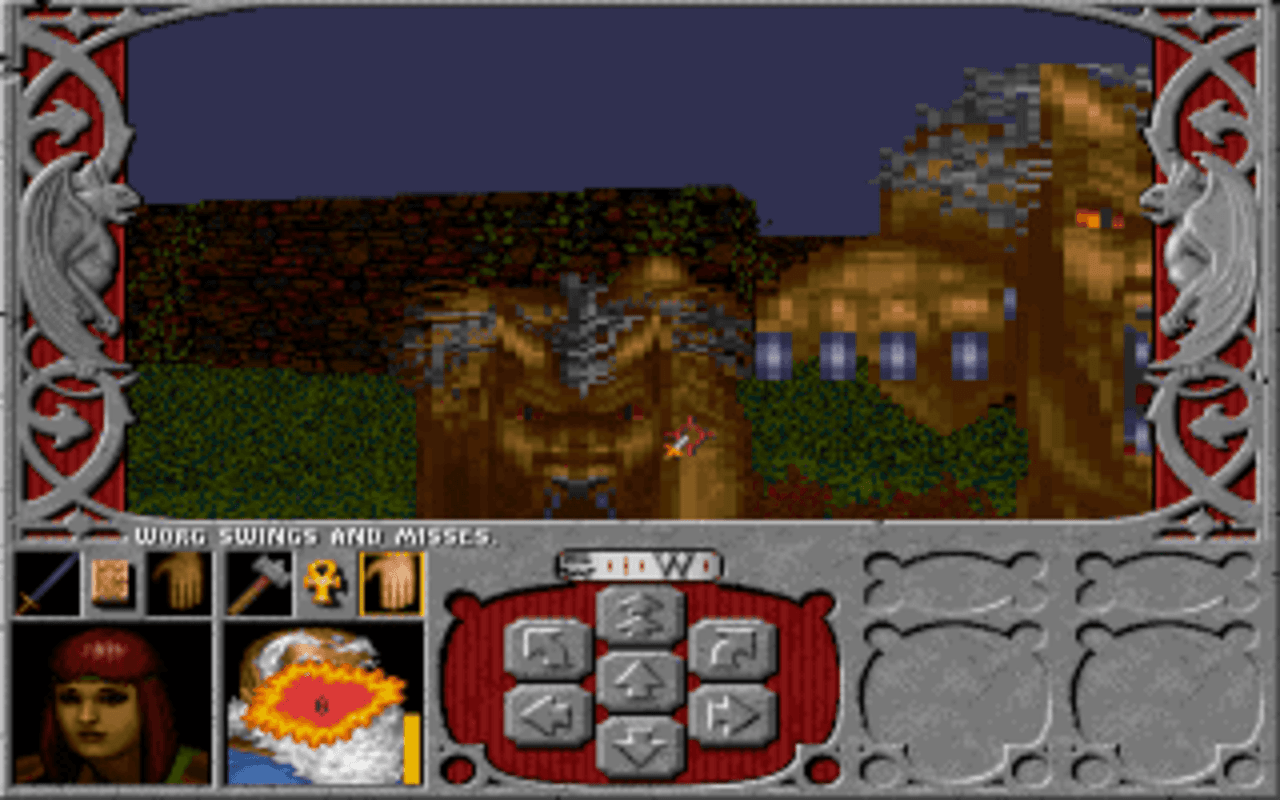
Combat plays out in real time, with your party striking, casting, and reacting in quick succession. Timing and positioning matter: you want the heavily armored characters up front, spellcasters safely behind, and everyone ready to act when enemies close in. Magic is powerful but limited, pushing you to think strategically about when to unleash fireballs or turn undead, and when to conserve spells for nastier threats deeper inside the castle.
The interface, while clearly from the DOS era, is thoughtfully arranged: portraits, inventory slots, spell lists, and quick access to key commands keep the pace manageable once you learn the layout. Over time, the combination of party management, spell planning, and careful exploration creates a satisfying rhythm that rewards methodical, thoughtful play.
Play Ravenloft: Strahd’s Possession online
Ravenloft: Strahd’s Possession has enjoyed a long afterlife thanks to its timeless AD&D design and memorable horror setting, and it can be experienced today through various emulated versions that allow you to play the game online. Instead of configuring old hardware, players can enjoy the adventure directly in a browser, with the original DOS code running behind the scenes so that the look, feel, and pacing remain authentic to the original release.
Modern emulation also means this classic can be enjoyed for free in many legal collections, making it easier than ever to revisit Barovia’s haunted valleys without technical barriers. Because the game is lightweight and runs through emulation, it adapts well to mobile devices, letting you play on phones or tablets as comfortably as on a desktop, without restrictions on when or where you dive into the mists. This flexibility keeps Ravenloft: Strahd’s Possession relevant to new generations, who can step into the world of AD&D horror role-playing with just a few taps or clicks.
Atmosphere, Sound, and Lasting Appeal of this DOS Horror RPG
One of the most striking features of Ravenloft: Strahd’s Possession is its atmosphere. The visuals, while based on early 3D technology, lean heavily into mood: dark palettes, looming walls, and eerie outdoor environments combine to make Barovia feel oppressive. Flickering lights in dungeons, misty exteriors, and the looming silhouette of Castle Ravenloft all contribute to the sensation that danger might be waiting just beyond the edge of your vision.
Sound further deepens that mood. The music often leans on organ tones and somber melodies, evoking classic gothic horror films. Ambient effects, spell sounds, and combat noises help keep players alert, even during quieter exploration. In some versions, voice acting enhances key scenes, lending Strahd an unsettling presence whenever he appears or addresses the party.
What keeps the game compelling over time is its blend of old-school challenge and narrative richness. Barovia is not simply a backdrop; it is a character in itself. Townsfolk fear the night, graveyards feel genuinely dangerous, and seemingly small decisions can lead to tough battles or surprising story turns. The AD&D rules provide depth, making character development and spell choices meaningful, while the horror setting ensures that even experienced RPG players cannot simply charge forward without caution.
For fans of classic role-playing games, Ravenloft: Strahd’s Possession offers a bridge between dungeon crawlers and narrative-driven adventures. It anticipates later story-focused RPGs by weaving character, setting, and rules into a cohesive whole, yet retains the satisfying complexity and tactical thinking of its tabletop roots. Whether you compare it to other AD&D titles or to gothic fantasy games that came later, it still holds its own as a distinctive, moody experience.
In practical play, learning the controls is part of the charm. Movement is typically handled with the keyboard, nudging your party forward, turning, or sidestepping through corridors, while the mouse is used to interact with the environment, target enemies, manage inventory, and choose spells or abilities. After a short adjustment period, these controls become second nature, allowing you to focus on the story, the battles, and the atmosphere rather than on the interface itself.
All used codes are publicly available, and Ravenloft: Strahd’s Possession remains the property of its original authors and rights holders.