ZZT’s Shareware Spirit and Why It Still Clicks
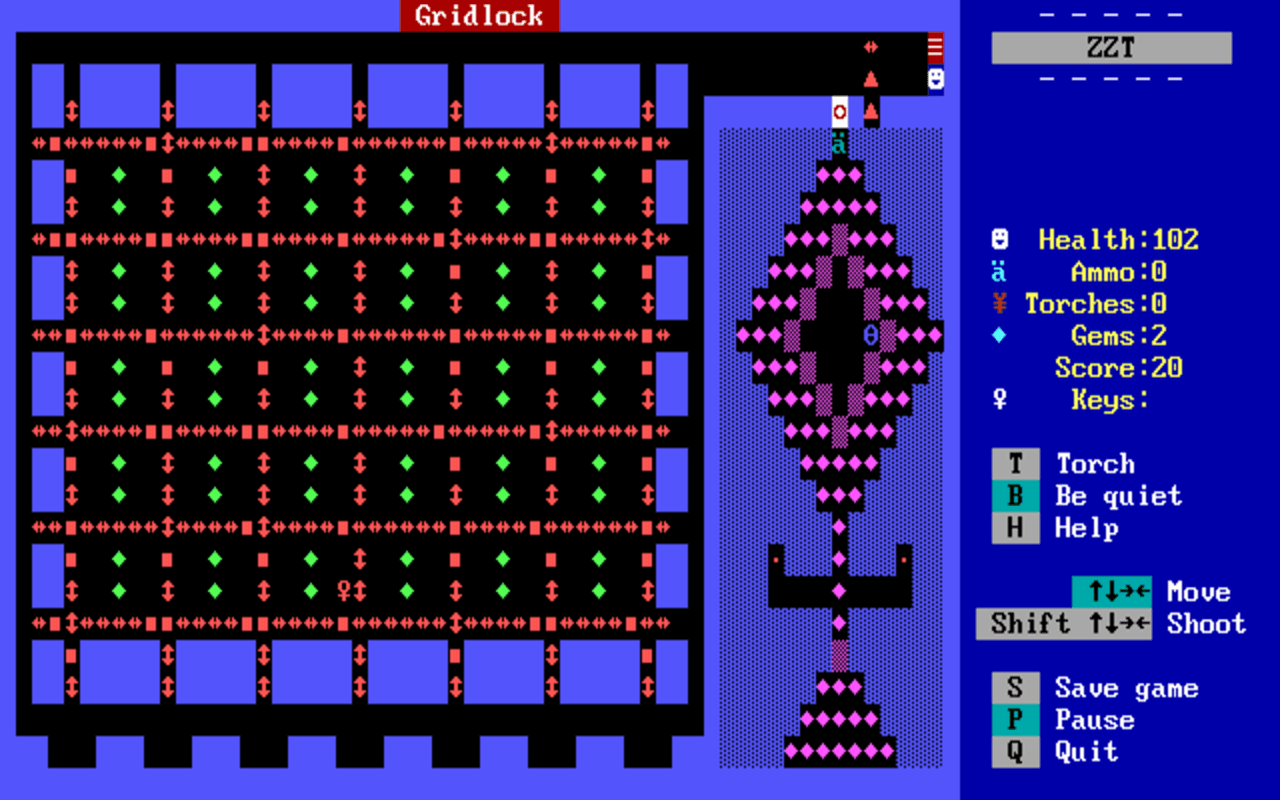
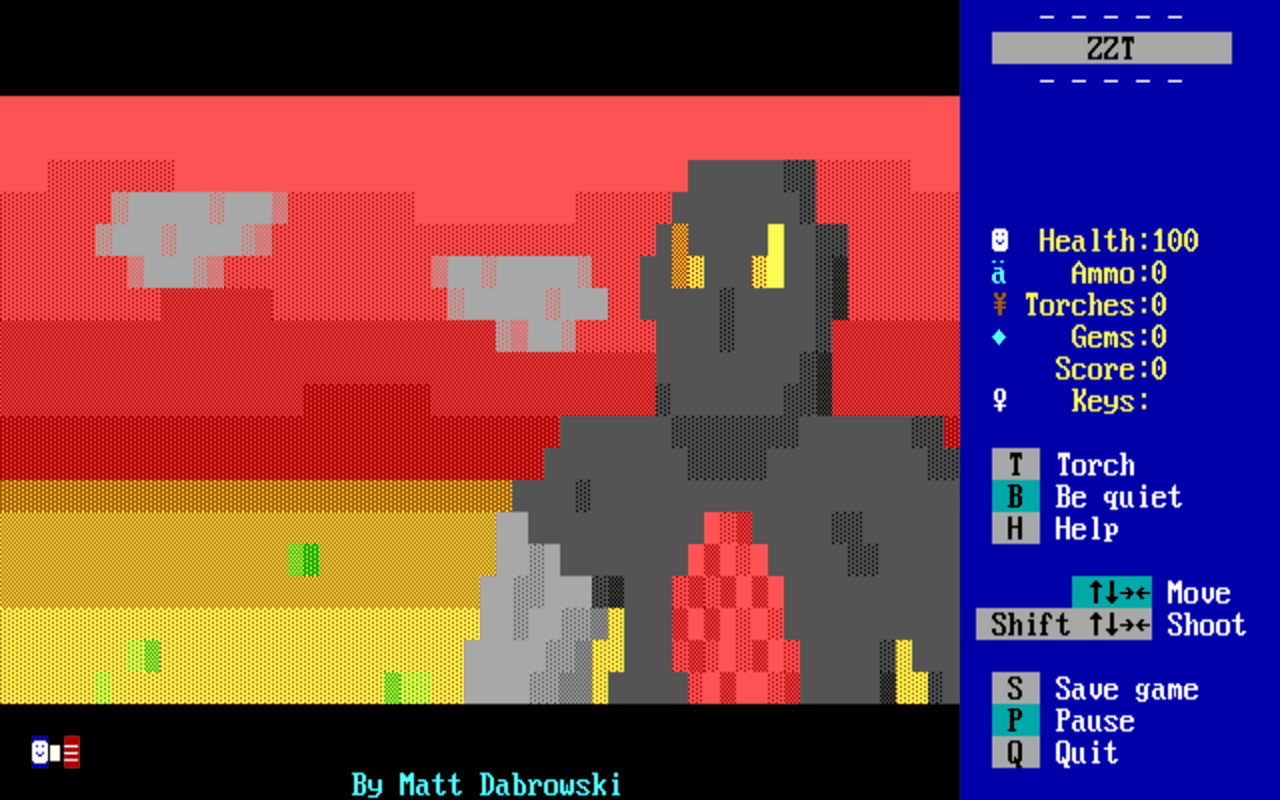
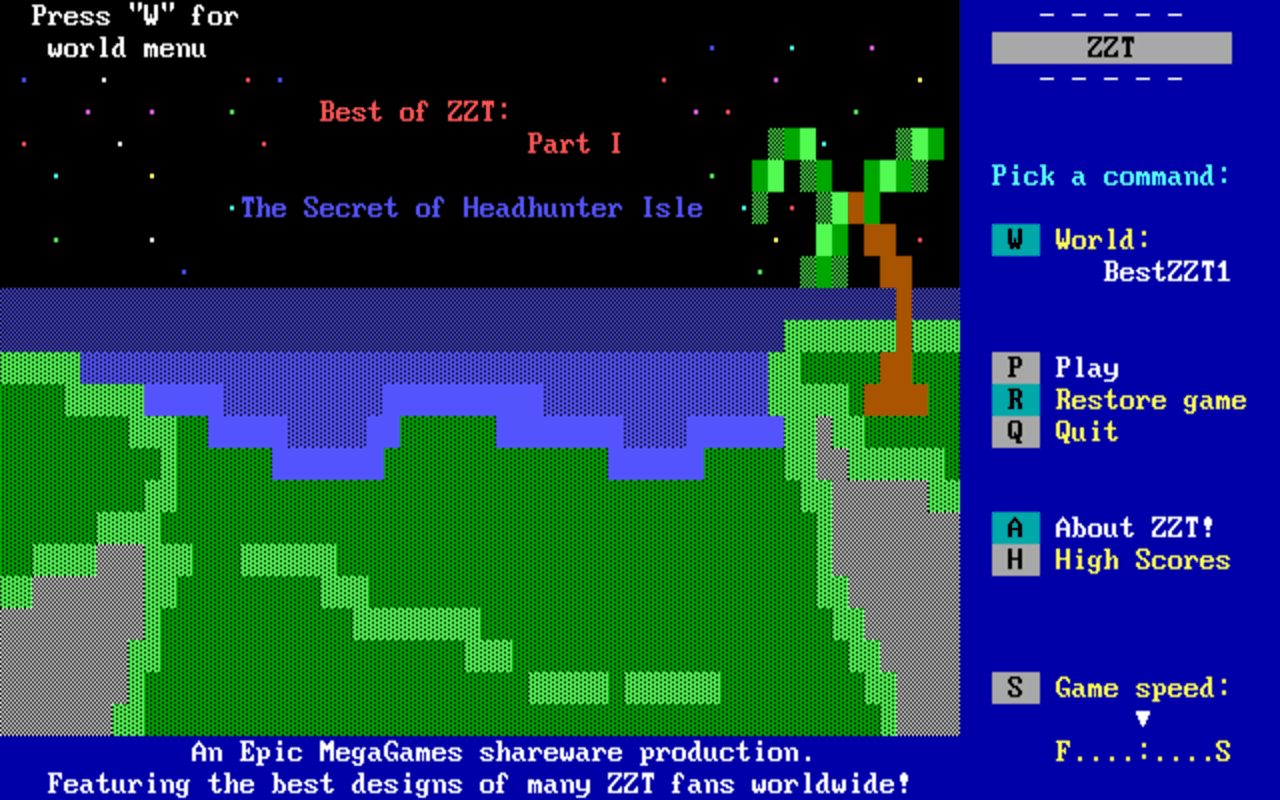
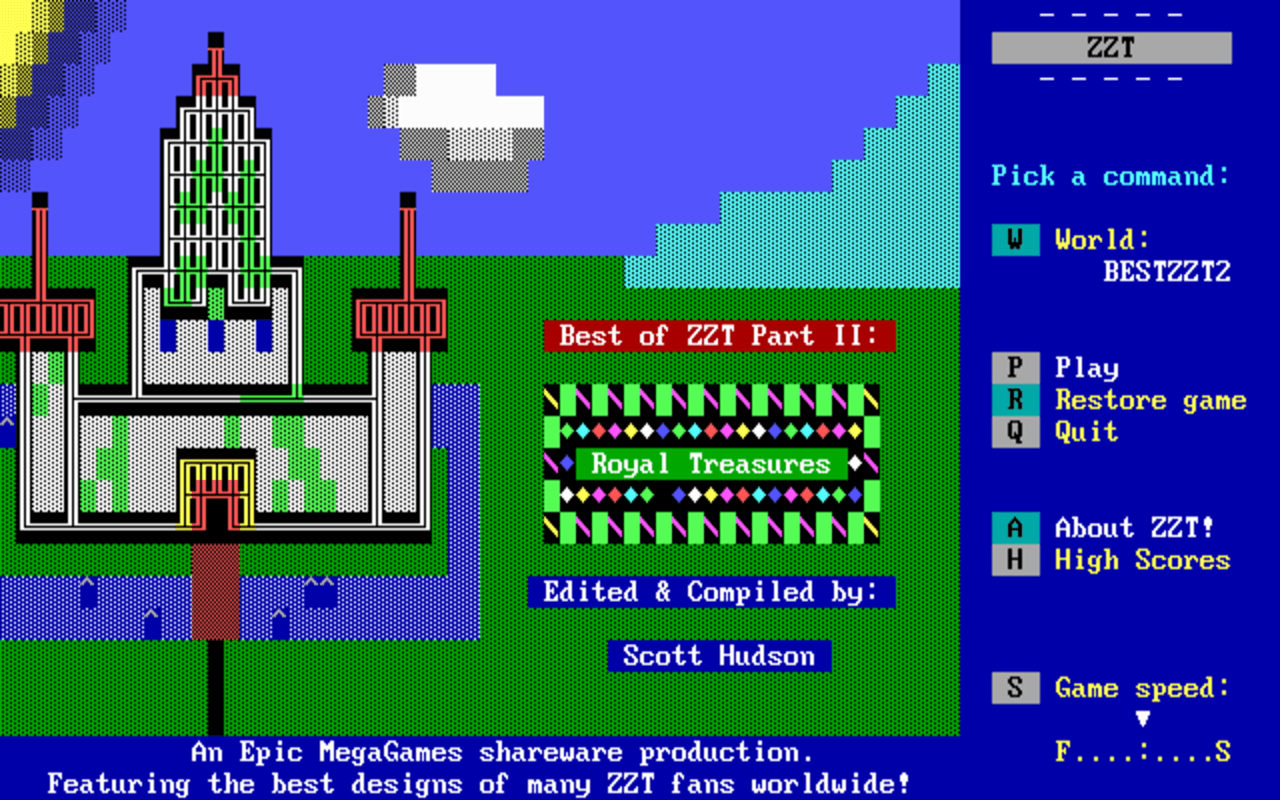
When ZZT arrived under the Epic MegaGames label, it carried the era’s shareware energy: compact, approachable, and bursting with ideas that stretched far beyond its modest look. At first glance, the game seems almost minimal—letters, symbols, and colored blocks arranged on a grid. But after a few minutes, that simplicity becomes its strength. Every tile reads like a clear sentence in a visual language: walls define space, water suggests risk, gems tempt you forward, and enemies patrol like punctuation marks that demand attention. The result is a puzzle-adventure that feels instantly legible yet endlessly surprising.
What makes ZZT stand apart from many classic action puzzlers is the way it treats “world” as both a place to explore and a thing you can author. Even if you never touch the editor, the design philosophy shows up everywhere. Rooms feel like they were built to be understood, tested, and replayed. Switches are placed to teach cause and effect. Hidden passages reward observation rather than reflexes alone. You’re not just reacting—you’re reading the board, predicting outcomes, and choosing a route that keeps you alive.
Adventure on a Grid: Puzzles, Pressure, and Personality
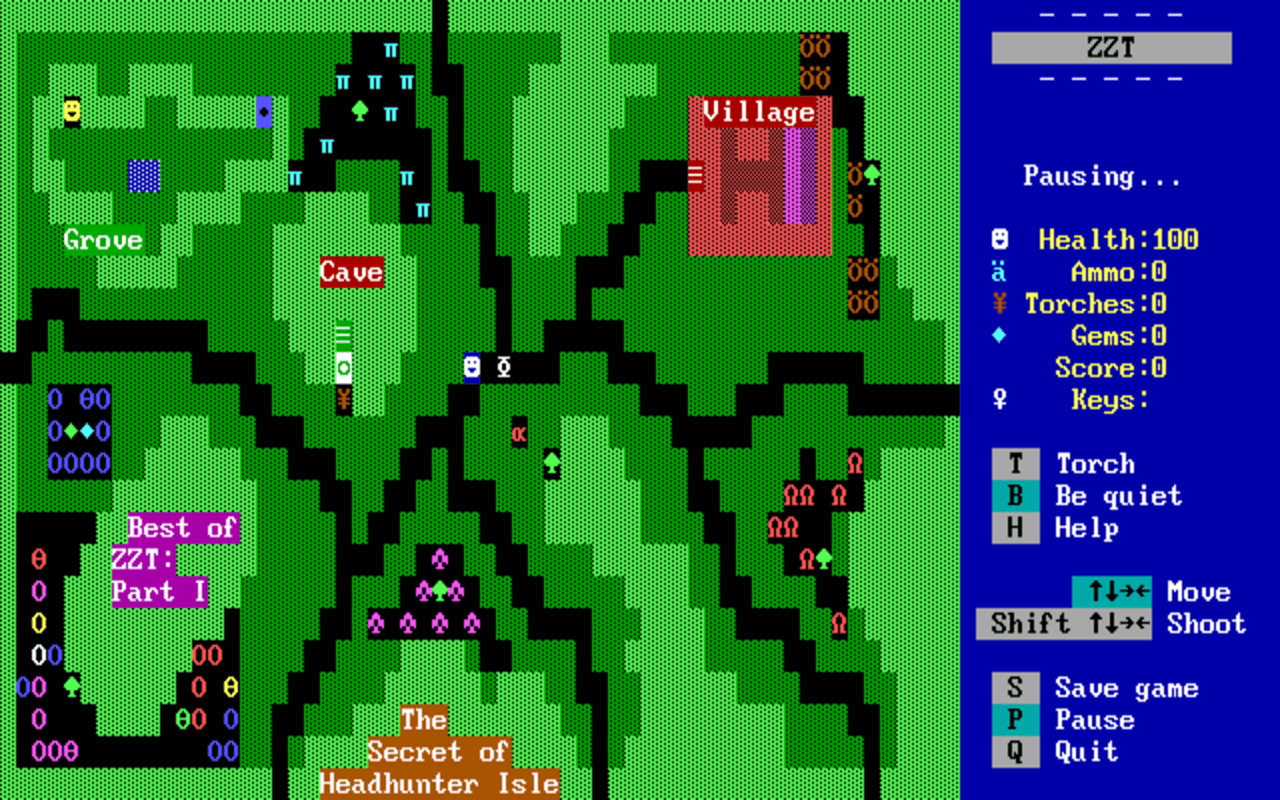
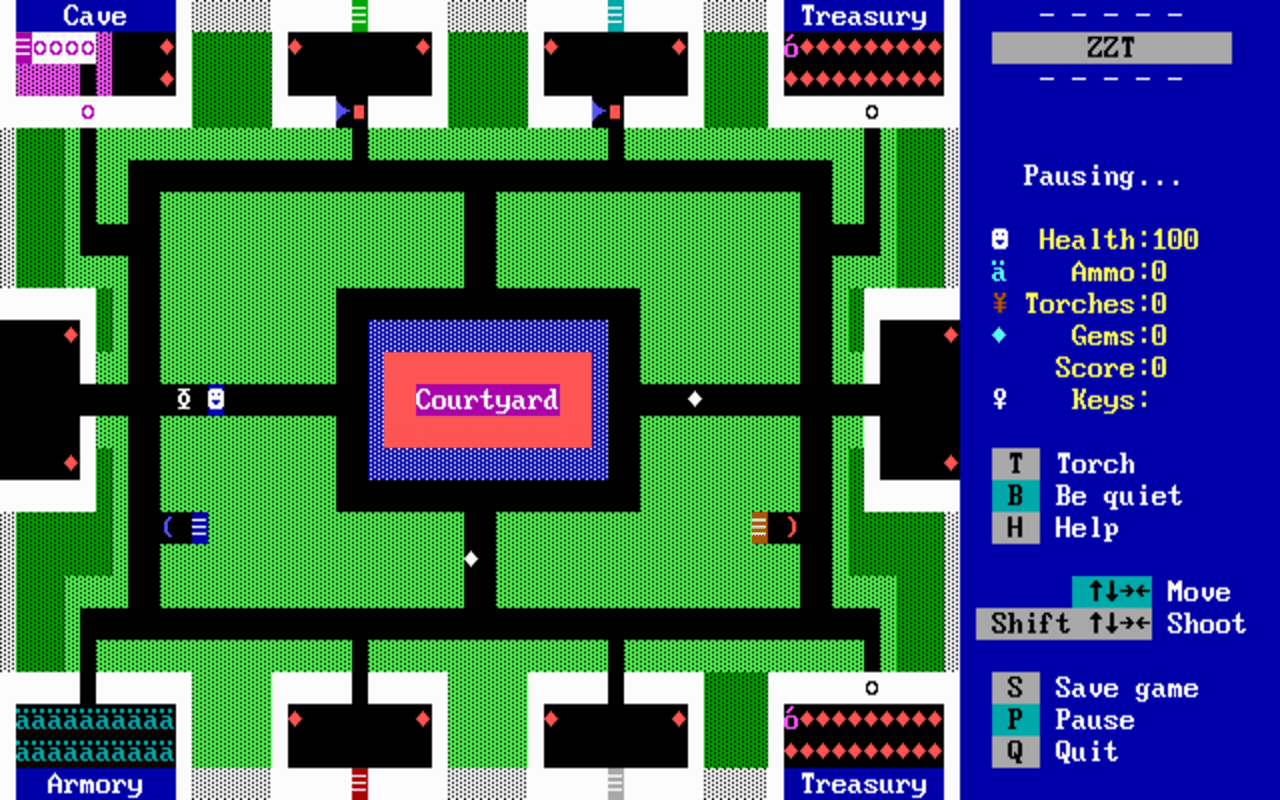
ZZT’s moment-to-moment play is a blend of exploration and problem-solving. Movement is tile-based, so each step is a decision: do you spend a precious key here, lure an enemy away, or risk crossing a corridor that could become a dead end? The game’s hazards aren’t only about speed. They’re about timing, positioning, and understanding how objects interact. A narrow hallway can be safer than an open room, or it can be a trap if something fast gets behind you. A pile of gems might be a reward, or bait that pulls you into a puzzle you aren’t ready to solve.
Enemies in ZZT have a charmingly abstract menace. Because they’re represented by simple symbols, your imagination fills in the gaps, and the game leans into that. A creature becomes memorable not through animation, but through behavior: how it moves, how it corners you, how it forces you to think two steps ahead. Many boards create tension with nothing more than a few patrol patterns and the knowledge that one mistake can cascade into chaos. That’s where ZZT feels timeless: the design relies on readable rules and clever spaces, the same foundations that make great puzzles work in any era.
Build, Script, Surprise: ZZT as a Creative Game Engine
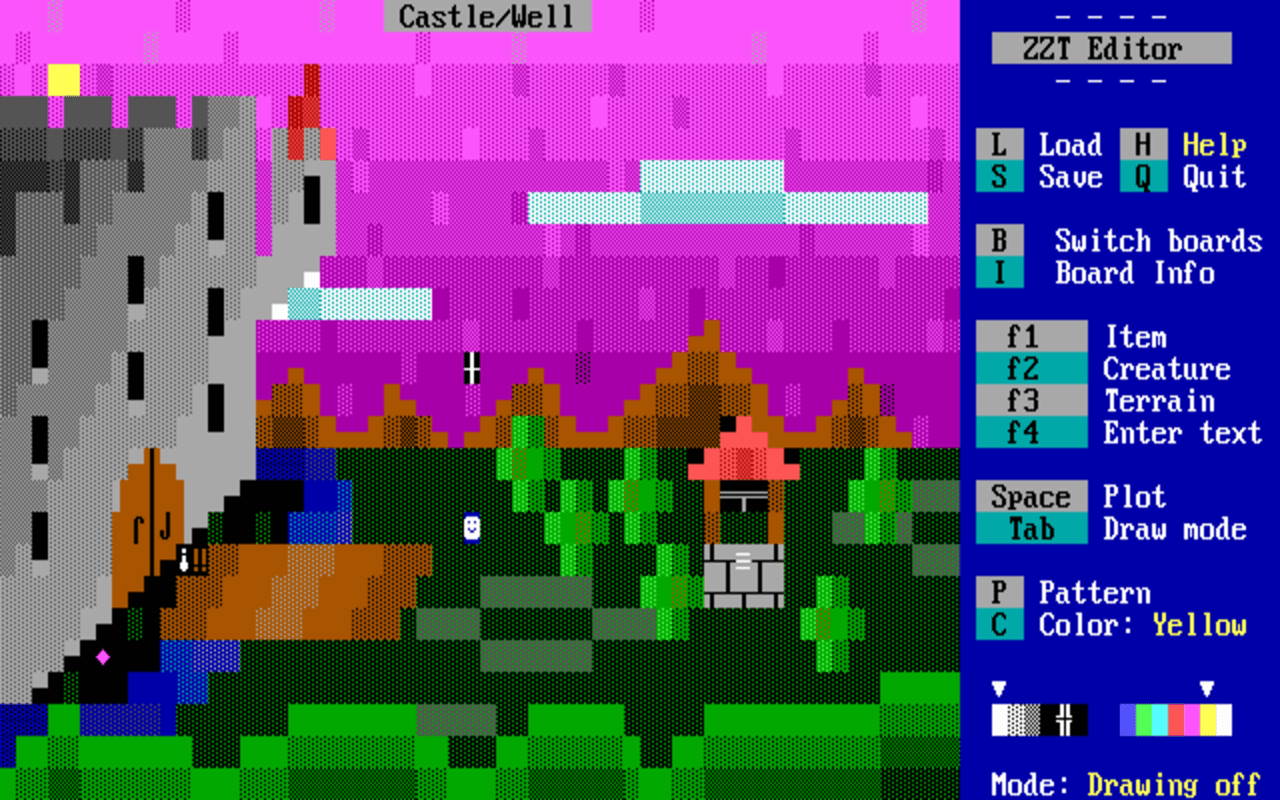
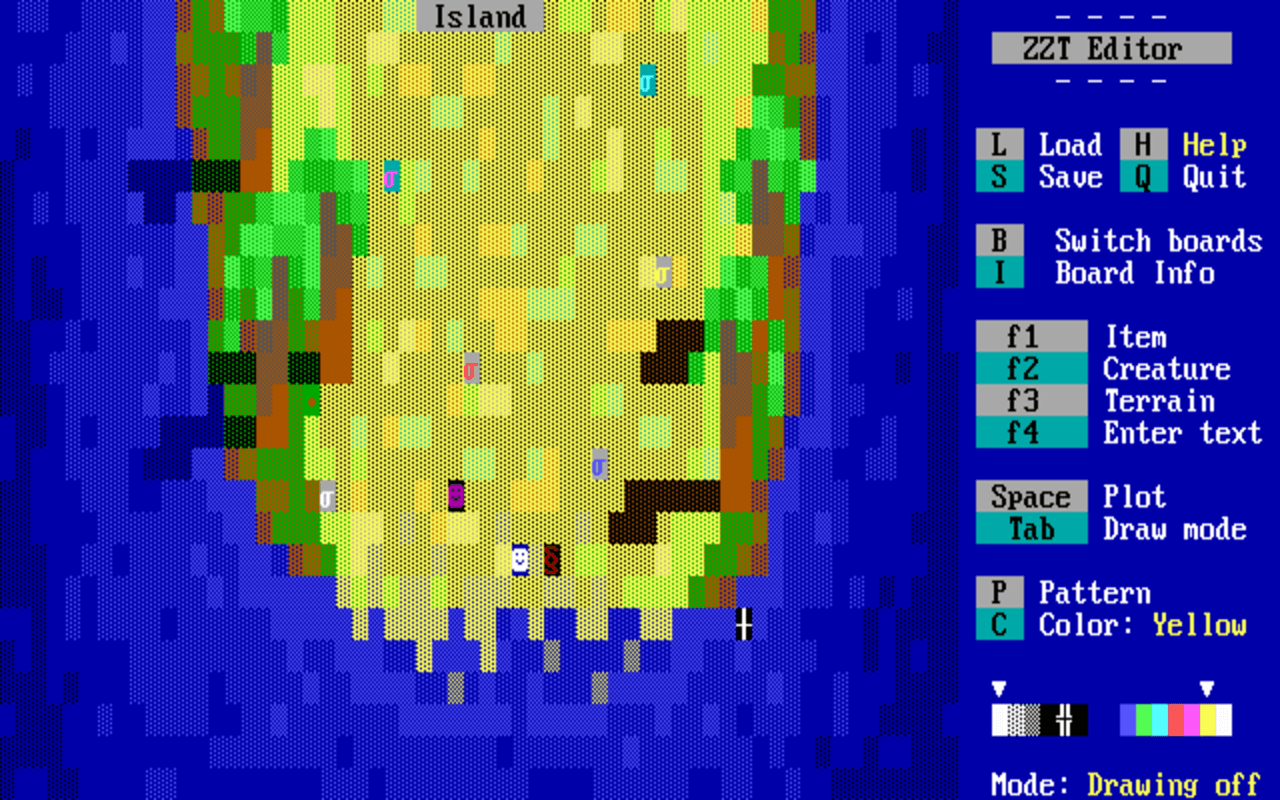
For many players, ZZT’s greatest trick is that it doubles as a miniature game engine. The built-in editor makes it possible to craft your own boards, link them into worlds, and set up challenges with a distinct tone—mysterious, comedic, spooky, or pure arcade. You can place objects, shape mazes, create resource puzzles, and design encounters that feel dramatically different from the stock adventure.
Then there’s the scripting layer, often discussed with awe because it turns “simple” tiles into actors with rules. With it, you can make doors that speak, statues that transform, enemies that negotiate, and puzzles that respond to your actions. This is where ZZT becomes more than a single classic game: it becomes a platform for invention. Even if you only play other people’s worlds, you’ll feel that handmade quality—each board reflecting the author’s sense of humor, pacing, and mischief.
Because of that, ZZT has a particular kind of replay value. It isn’t just “beat it again with better score.” It’s “discover a new world that uses the same pieces in a completely new way.” One creator might focus on tight combat puzzles; another might make a narrative quest with riddles and characters; another might build a surreal maze that feels like a dream rendered in ASCII. ZZT’s constraints give it identity, and identity gives creations staying power.
Play ZZT online and Keep the Classic Alive
ZZT remains easy to enjoy in a modern way because you can play ZZT online free, in a browser, and on mobile devices without restrictions. That matters for a game like this: its charm isn’t tied to a specific setup, but to the clarity of its rules and the imagination it sparks. When you play online, the experience still feels direct and tactile—tap or press a key, move one tile, watch the board respond. The game’s text-mode presentation also translates surprisingly well to small screens, since symbols remain crisp and the grid stays readable.
Playing ZZT online also highlights what it does best: quick, self-contained challenges that invite “one more board.” You can dip in for a short puzzle, then linger because you want to see what’s behind the next door. And if you’re exploring fan-made worlds, the online approach makes it easier to treat ZZT like a library of bite-sized adventures rather than a single campaign. The format fits the game’s original spirit: accessible, shareable, and built around the joy of discovery.
What It Feels Like to Master ZZT
ZZT rewards a particular mindset: curious, cautious, and willing to experiment. Early on, you learn to treat space as a resource. Corners can protect you. Narrow passages can control enemy movement. Items are not just collectibles; they’re options that widen your problem-solving toolkit. As you get better, you start reading boards the way a designer reads them. You notice patterns. You anticipate tricks. You recognize when a room is teaching you a rule versus testing your understanding of it.
The satisfaction comes from clean solutions. You find a route that uses minimal resources. You lure danger away instead of brute forcing through it. You solve a puzzle not because you got faster, but because you got smarter. That’s why ZZT still stands comfortably beside bigger names. Like The Legend of Zelda, it turns exploration into a series of meaningful decisions. Like Chip’s Challenge, it makes the smallest interactions feel like a logic problem with personality. It’s a game that respects attention and rewards thoughtful play.
ZZT is a classic puzzle-adventure game that turns simple symbols into memorable places, then hands you the keys to build places of your own. Its blend of readable rules, playful danger, and creative possibility makes it easy to return to and hard to exhaust. Control is straightforward: move with the arrow keys, use action/confirm with Enter or Space depending on your setup, and rely on Escape to back out of menus; the rest is learning how each board’s rules push and pull against your choices.
All used codes are publicly available, and the game belongs to its original authors.