The Evolution of Game Saving: From Passwords to Autosaves
In the early days of computing, when pixels were large and resolutions low, the concept of saving games was a novel one. As games grew more complex, the need for save systems evolved rapidly, transforming not just how we play, but how we engage with virtual worlds. Today, we take for granted the seamless autosave features that preserve our progress, yet this convenience is the result of decades of innovation and experimentation in the gaming industry.
Unlocking Progress: The Password Era
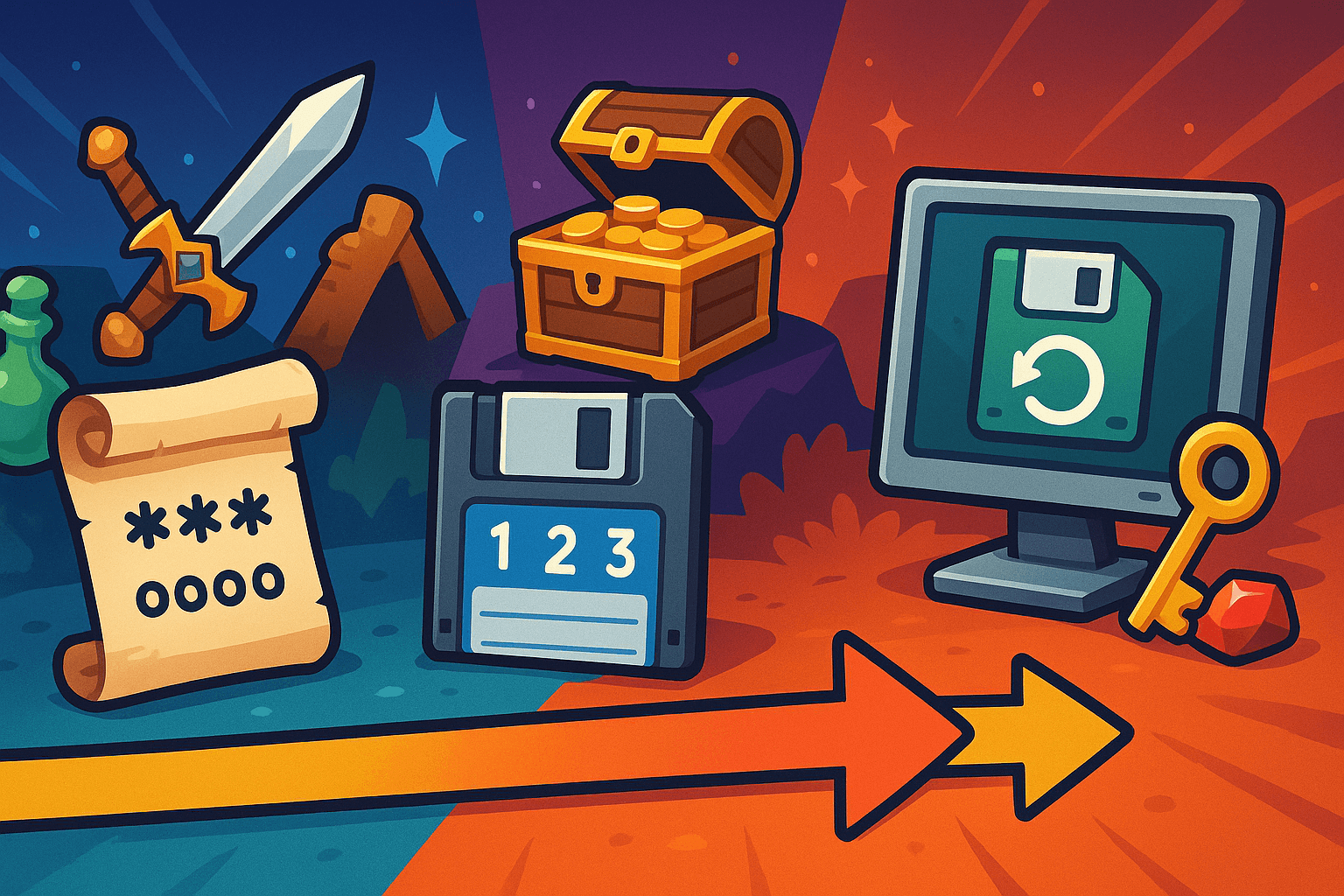
The earliest save systems offered a primitive yet effective solution: passwords. This method allowed players to jot down a code that could later be entered to resume their adventure. While convenient for developers due to its simplicity, the downside was clear—one incorrect character could render a password useless, resetting hours of progress. Games like ‘Metroid’ popularized this system, leaving many players with notebooks filled with cryptic codes.
Storage Revolution: The Rise of Save Slots
As technology progressed, so did the sophistication of save systems. The introduction of save slots marked a significant leap forward. These slots allowed players to store multiple states of their game directly on their computer, eliminating the risk of lost progress due to a forgotten or incorrect password. Save slots also facilitated experimentation, letting players try different approaches within a game without fear of permanent consequences.
For instance, Daryl F. Gates Police Quest: Open Season demonstrated the utility of save slots by allowing players to navigate its intricate puzzles and narrative-driven gameplay with ease. The ability to save at crucial moments or before making critical decisions enriched the player’s strategic experience.

Daryl F. Gates Police Quest: Open Season
A Seamless Experience: The Advent of Autosaves
With the dawn of more advanced gaming experiences, autosave features began to emerge. Autosaves remove the need for manual saving by automatically saving the player’s progress at regular intervals or significant milestones. This innovation has become a staple in modern gaming, ensuring that players can focus on the action without worrying about losing progress due to an unforeseen power outage or a system crash.
While not a feature in early DOS games, the concept of autosaves as we know today began to take shape as games became more complex and narratively driven, setting the stage for what would become a standard expectation in the gaming industry.
Why Save Systems Matter Across Game Genres
The type of save system used could significantly impact gameplay across different genres. Adventure games, like The Last Express, often relied on save slots to help players navigate branching narratives. By allowing multiple save points, players could explore different story paths without restarting from scratch. This flexibility was crucial in games where story and decision-making were central.
On the other hand, role-playing games (RPGs) like Bloodwych benefited from both save slots and manual saves. Here, the ability to save before a challenging battle allowed players to experiment with different strategies or revert to an earlier point if their party suffered a defeat, enhancing the tactical depth of the game.

Bloodwych
Looking Ahead: The Future of Game Saving Systems
As we look to the future, the evolution of save systems seems poised to continue alongside advancements in technology. Cloud saving and cross-platform progression are already becoming more common, allowing players to pick up their games on any device seamlessly. As virtual reality and more immersive genres emerge, save systems will need to adapt, potentially offering even more intuitive and integrated solutions.
With these innovations, players may soon experience a blend of personalized autosaves and cloud-based synchronizations, ensuring that no progress is ever truly lost, no matter where or how they choose to play.
From the days of jotting down passwords to the sophisticated autosave features of today, the evolution of save systems has transformed the landscape of gaming. These innovations have not only enhanced player experience but also paved the way for new styles of gameplay and storytelling. As we continue to explore new technological horizons, saving our progress will remain a cornerstone of our gaming adventures, bridging the past with the future.
Related articles

1996: A Year of Pivotal Changes in DOS Gaming
Explore the transformative year of 1996 in DOS gaming, highlighting key releases, technological innovations, and cultural shifts.
From Beeps to Orchestras: The Sound Evolution in DOS Gaming
Explore the evolution of sound in DOS gaming, from early PC speaker beeps to rich orchestral soundtracks.